Lessons Learned From Shipping AI-Powered Healthcare Products
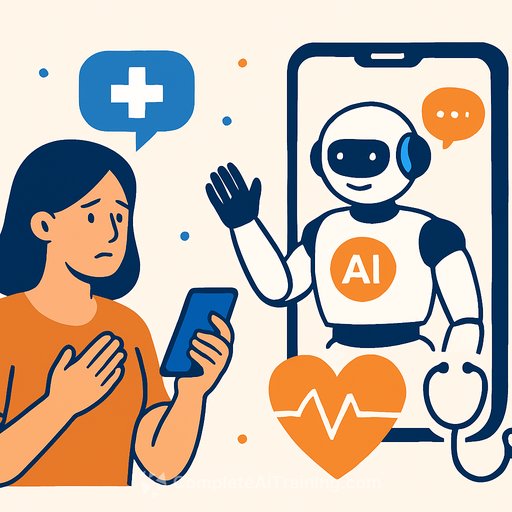
Healthcare has a persistent tension: high-quality care tends to be expensive, and affordable care often compromises quality. AI care agents can help close that gap by supporting patients between sessions, assisting clinicians with routine tasks, and making guidance available on demand.
But in regulated settings, "good enough" isn't good enough. You need safety, consistency, and repeatability. Here's a practical blueprint that has worked in production across patient-facing and clinician-facing features.
1) Build Guardrails First
Guardrails are the safety layer between users and the model. They filter inputs that should never reach the model and outputs that should never reach the user.
Two layers that matter
- Input guardrails: block prompt injection, jailbreak attempts, and unsafe content before inference.
- Output guardrails: enforce medical advice boundaries, structural requirements, and content safety before anything is shown to a patient.
What this looks like in practice
- Patient chat after a rehab session: the agent can provide pain-management tips only within strict, clinician-approved guidance.
- Domain nuance matters: for pelvic health, content safety thresholds must account for medically appropriate sexual terminology.
- Latency is real: online guardrails added ~30% latency for real-time feedback. Use prompt constraints where possible, move some checks offline, and optimize the hot path.
- Expect false positives: overtuned filters will block valid content; continuously review and recalibrate.
2) Treat Evals Like Unit Tests
LLMs are non-deterministic. Without evaluations, you can't ship reliably, compare models, or catch regressions. Evals make prompt work feel like software delivery, not guesswork.
Rating approaches
- Human-based: subject matter experts rate outputs (tone, reasoning, factuality). High quality, but slow and costly. Track inter-rater agreement explicitly.
- Non-LLM metrics: use classifiers, BLEU/ROUGE, or string similarity when outputs are objective. Fast and scalable, but blind to nuance.
- LLM-as-a-judge: ask a model to rate outputs with a carefully crafted rubric. Use simple binary labels (pass/fail) plus short critiques. Measure agreement with humans and tune until aligned.
Practical eval workflow
- Assemble a test set from SMEs and real production data.
- Prototype, then run offline evals and live checks.
- Iterate until you meet thresholds, then run SME review.
- A/B test in production; monitor with product metrics, audits, and offline evals.
- Repeat on every iteration. No exceptions.
3) Start With Prompt Engineering (and Often Finish There)
Most problems are solvable with better prompts. Use this to reach a baseline and decide if you need more.
- Write crisp instructions with explicit do/don't lists.
- Use few-shot examples to demonstrate style and structure. Keep examples current.
- Dynamic in-context learning: retrieve similar past examples from a vector DB and insert as few-shots at inference time.
- Break complex tasks into smaller steps or simple agent states.
- Try different models. A switch alone can deliver a meaningful lift with minimal changes.
If the model still struggles to follow instructions or hit tone, consider fine-tuning. If the model lacks domain knowledge, use retrieval-augmented generation.
4) Use RAG When the Model Needs Domain Knowledge
Long context helps, but models favor information at the start and end of prompts-an effect known as "lost in the middle." See related Research and the paper: Lost in the Middle.
RAG lets you ground answers in your knowledge base. For example, embed your support articles, retrieve the most relevant chunks, then generate an answer using only that context.
Evaluate the full RAG pipeline
- Generation: faithfulness (fact accuracy), answer relevance.
- Retrieval: context precision (how much retrieved content was actually relevant), context recall (did we pull the needed facts).
- Consider a framework like RAGAS to standardize these metrics.
Fix common retrieval misses
- Query rewriting: expand acronyms, add synonyms, or normalize phrasing using world knowledge.
- Ask clarifying questions when similarity is low.
- Chunking: if your knowledge is already "article-sized" and focused, use the article as the chunk.
5) Build Feedback Loops Into the Product
Feedback compounds quality over time. Use both implicit and explicit signals.
- Implicit: conversation sentiment, deflection rates, time-to-resolution, patient engagement. If 50% of users don't engage, that's a product question, not a model question.
- Explicit: thumbs up/down, short reason picklists, optional free text. Use this to seed datasets for guardrails, few-shot prompts, and fine-tuning.
6) Look at the Data. Then Look Again.
Manual review pays for itself. Sample conversations weekly. You'll spot new failure modes early and fix them before they scale.
- Make review easy: simple dashboards, Google Sheets, a quick Streamlit app, or observability tools like Langfuse/LangSmith.
- Bake audits into release gates. No release without evals and a short human review.
- Build culture by leading with examples. Finding one production bug convinces more than a dozen reminders.
Clinical Safety and Compliance Notes
- Human-in-the-loop for clinical decisions: keep AI as a co-pilot. Clinicians approve, edit, or reject recommendations before they affect care plans.
- Regulatory posture: many AI-assisted tools qualify as lower-risk decision support when clinicians retain control. Your quality system and development process must reflect this.
- Privacy: in the U.S., HIPAA allows access to patient data for the purpose of providing or improving care. Still consider anonymization or pseudonymization where practical.
- Latency trade-offs: for live interactions, run stricter constraints in the prompt and move heavy checks to post-conversation analysis when needed.
- Memory and data stores: mix relational stores and vector DBs depending on the data type (events, notes, embeddings). Keep PHI handling consistent across systems.
A Practical Checklist for Healthcare Teams
- Define red lines with clinical leaders; encode them as input/output guardrails.
- Create a gold-standard test set with SMEs. Version it.
- Start with prompts. Add dynamic few-shot examples at inference time.
- Introduce RAG for domain knowledge; evaluate both generation and retrieval.
- Set up LLM-as-a-judge with binary labels and short critiques. Calibrate to human ratings.
- A/B test changes; monitor acceptance, deflection, safety flags, and latency.
- Collect explicit feedback in-product; mine it weekly.
- Run manual audits on every release. Track new failure modes.
- Document clinical workflows with clear human approval steps.
- Continuously prune prompts, guardrails, and KB content based on real usage.
Final Thought
Reliable AI in healthcare isn't magic. It's guardrails, evaluations, thoughtful prompts, grounded retrieval, feedback loops, and relentless data reviews. Do those well, and your AI care agent becomes a dependable teammate for both patients and clinicians.
Further Learning
- Lost in the Middle: How Language Models Use Long Context
- RAGAS: Evaluation for RAG Systems
- AI courses by job role for teams building clinical-grade AI workflows
Your membership also unlocks: