
AI news ·
Building Trust and Driving Value: How AI-Focused Change Management Transforms Business Integration
AI-focused change management builds trust and transparency, addressing employee concerns while boosting skills and agility. This approach supports ethical AI use and drives business growth.
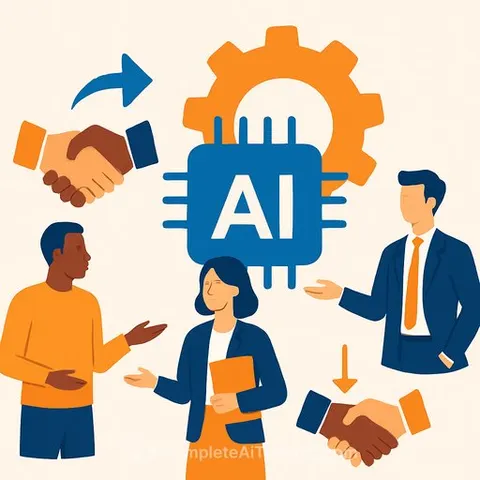
How AI-Focused Change Management Builds Trust and Accelerates Business Value
As companies adopt generative and agentic artificial intelligence (AI) in their workflows, traditional change management methods need to adapt. Conventional approaches rely on training, communication, leadership alignment, and stakeholder engagement to ease transitions and reduce disruption.
Integrating AI into daily operations offers clear benefits. It can improve decision-making, predict talent gaps, uncover growth opportunities, and enhance employee support. However, it also raises concerns—especially around job security and role changes—that traditional change management may not fully address.
AI-focused change management targets these unique challenges. It helps organizations align AI adoption with strategic goals and risk tolerance while addressing employee uncertainties. Using AI-driven data analytics, companies can adjust their change strategies in real time, making responses more effective and timely.
Change management doesn’t stop after AI rollout. Continuous efforts—including ongoing training, program updates, and stakeholder collaboration—are essential to stay aligned with evolving business needs and AI capabilities.
Four Pillars of AI-Focused Change Management
- Trust: Trust reduces resistance and helps employees feel secure and confident using AI. Focus on user-centered solutions, set clear performance metrics for AI, provide AI upskilling, and educate on AI ethics and responsible use.
- Transparency: Clear communication about AI tools and objectives encourages adoption. Integrate AI education into core programs, explain how jobs will evolve, offer training resources, and create channels for employees to question AI decisions or raise ethical concerns.
- Skills: Building AI literacy fosters a culture of continuous learning and responsible AI use. Maintain skill inventories, apply personalized learning, encourage collaboration, and celebrate innovations through events like hackathons and pilot programs.
- Agility: Developing adaptability at every level helps manage AI’s uncertainties. Introduce AI changes gradually, keep resources updated, prepare for unexpected outcomes, and maintain flexible leadership to pivot strategies as needed.
By focusing on trust, transparency, skills, and agility, businesses can address the unique challenges AI integration brings. This approach supports ethical AI use and creates an environment where innovation and growth are encouraged.
For professionals seeking to deepen their understanding or skills in AI and change management, exploring targeted courses can be valuable. Resources like Complete AI Training’s latest AI courses offer practical learning paths aligned with real-world business needs.