Why government is right to move slowly on AI adoption
Half of public-sector teams say they're still in the experimental or pilot stage with AI. Meanwhile, many private industries have already reworked workflows. That gap can look like a problem from the outside. Inside government, it's the right move.
Why a slower pace makes sense
Public service isn't built to "move fast and break things." It's built to be steady, dependable, and accountable. Your work touches entire populations, not just paying customers.
Errors can affect millions. A data leak can threaten national security. Any AI-assisted decision may be challenged in court, audited, or questioned by the public. That demands caution by design.
The reality on the ground
Most agencies are still exploring where AI fits and where it clearly doesn't. The common pattern looks like this:
- Small, controlled pilots
- Internal tools tested in low-risk workflows
- Heavy attention on security, privacy, and compliance
- Longer approval cycles for procurement and rollout
Policy work is hard to automate. In highly regulated environments, finding safe, relevant use cases takes time-and that's a feature, not a bug.
Security and compliance are non-negotiable
Security and compliance concerns in government are on par with financial services. The data you hold is sensitive by default. On top of that, many teams report practical blockers:
- Lack of relevant applications-20.2% say AI doesn't apply to their current work
- Unclear ownership-no single place for AI leadership and accountability
- Silos-slow cross-department collaboration and shared learning
If you're building your approach, frameworks like the NIST AI Risk Management Framework can help structure policy, controls, and testing across the lifecycle. See NIST AI RMF.
What "good" looks like in public service
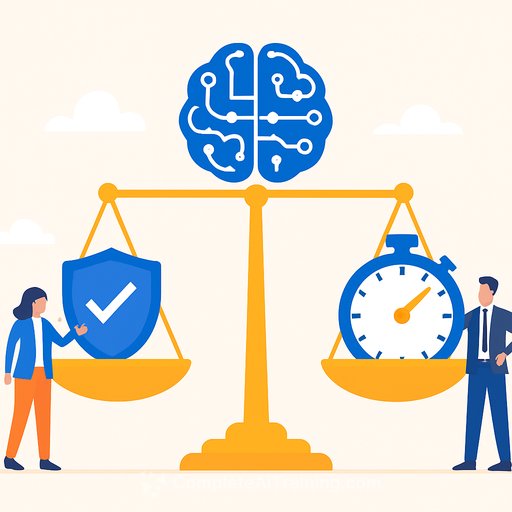
Speed helps the private sector compete. In public service, stability and trust come first. That means AI must be reliable every time, explainable, auditable, and compliant with law and policy.
The goal isn't to be first. It's to be safe, useful, and defensible. That's how you protect outcomes and public trust.
Practical next steps for agencies
- Keep piloting in low-risk, high-value areas with clear success criteria
- Invest in AI literacy for leaders and frontline teams
- Define ownership: who sponsors, governs, and approves AI work
- Borrow lessons from private-sector implementations-without importing their risk appetite
- Build secure, compliant infrastructure and data pathways before scaling
Leaders designing governance and risk-aware adoption plans can start with the AI Learning Path for CIOs to shape auditable, accountable programs.
A careful pace isn't failure-it's responsible stewardship. As the tech matures and rules tighten, agencies that learn through small, safe pilots will be ready to scale with confidence.
If you're planning a secure AI pilot or upskilling your team, explore role-based training paths and certifications here: Courses by job and Popular certifications.
Your membership also unlocks: