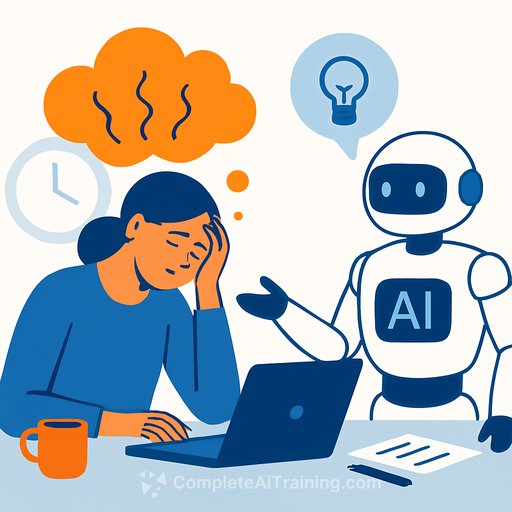
Creative burnout is forcing agencies to rethink talent strategy - and AI can actually help
Too many brilliant creatives are burning out. Not from a lack of care - from a system that stopped caring about how great work gets made.
High-volume output, constant context switching, and collapsing timelines have turned creative work into an endurance test. The thing that drew us in - deep thinking, exploration, cultural impact - is getting squeezed by "always on" expectations.
The data mirrors what teams feel. 84% of executives plan to redesign roles and teams around AI agents within five years, and 38% of C-suites expect AI to significantly reshape job roles. Yet only one in five organizations is actively rethinking how work gets done today. That gap between knowing and doing is where burnout grows - and where the opportunity sits.
The hidden cost of being "always on"
Agencies have over-indexed on throughput: more assets, more versions, more campaigns. Output became the goal. Process became the job.
Time for thinking gets traded for coordination. A senior creative polishes decks instead of shaping an idea. A strategist chases feedback across tools. A copywriter rewrites the same concept six times because preferences keep shifting, not because the work is getting sharper.
Over time, originality dips, confidence erodes, and what looks like disengagement is often creative capacity drained by work it was never meant to do.
What if AI took the weight, not the work?
Burnout rarely comes from the "big idea." It comes from operational friction - the invisible workload that burns cognitive energy before the real work even begins.
AI can absorb that weight. Turn meetings into clean action lists. Compile research into concise summaries. Generate early concept routes to beat the blank page. Draft schedules. Balance workloads. Track approvals. All without replacing judgment.
The goal isn't to hand over taste. It's to protect it. When teams can spin up routes quickly, effort shifts from grinding to refining.
Redesign roles without losing people
Creativity that lands in culture still depends on humans: strategy, cultural sensitivity, emotional intelligence, ethics, storytelling depth.
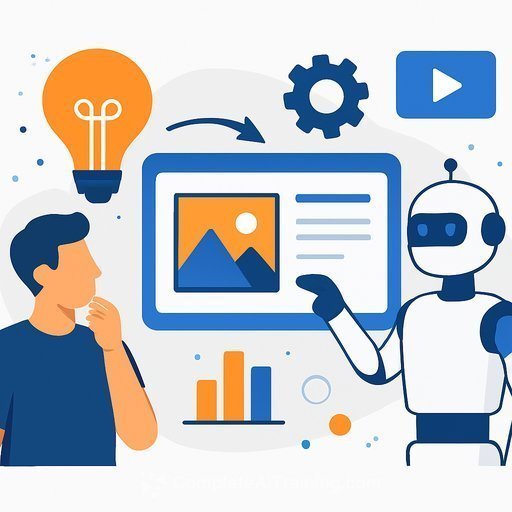
The winning model is hybrid. AI drafts and explores. Humans direct, edit, and add meaning. Work finds a healthier rhythm: think → prompt → refine.
That shift doesn't diminish creative value - it surfaces it. It pulls people out of the production spiral and back into judgment, direction, and taste.
From awareness to action: how to make this real
- Map the energy drains: List the recurring friction points (handoffs, versioning, approvals, status updates). If it repeats, it's a candidate for AI support.
- Define the "AI first draft" zones: Research summaries, moodboards, route starters, headlines, QA checklists, meeting minutes, status notes, and capacity planning.
- Protect deep work: Block 90-120 minute focus windows daily. Route pings to a shared inbox during those blocks. Treat it as sacred time for concepting and craft.
- Shift metrics: Move from hours and asset counts to outcomes and effectiveness. Cap WIP. Measure quality signals (clarity of brief, iteration count trend, client approvals).
- Redraw roles: Create new hats like "AI Producer" (workflow orchestration), "Prompt Lead" (exploration quality), and "Human Editor" (taste and standards).
- Add guardrails: Set rules for data privacy, reference use, voice, and bias checks. Keep a human in the loop for anything that ships.
- Reinvest the time saved: Use the margin for better briefs, research sprints, creative reviews, and recovery. Rest fuels originality.
- Upskill fast: Build simple internal playbooks and run low-stakes pilots. If you need a head start, explore practical programs built for creative roles here: AI courses by job and AI tools for copywriting.
Simple AI plays creatives can use today
- Meeting to actions: Auto-transcribe standups and convert to owners, deadlines, and risks.
- Research in hours, not days: Ask for a 1-page brief on a market, with sources and tension points to explore.
- Concept routes: Generate 10 angles for a single insight. Select 2-3 worth crafting. Kill the rest fast.
- Versioning at scale: Headline, CTA, and body variants by audience, tone, and channel - then you choose what sings.
- Brief clarity pass: Turn messy notes into a sharp creative brief with problem, audience, proof, constraints, and success metrics.
- QA and compliance: Auto-generate checklists by channel (length, brand voice, claims, legal lines), then spot-check manually.
- Capacity balance: Use AI to map who's overloaded and who has room before assigning another "urgent" task.
What changes if we get this right
Teams stop drowning in coordination and start shipping thoughtful work again. Juniors learn faster. Seniors spend time on direction, not decks. Clients feel the focus.
This isn't about replacing creativity. It's about removing the drag so creativity can breathe. The agencies that use AI to give time back - not squeeze more out - will keep their talent and build work that lasts.
Bottom line: Reduce operational friction, protect human judgment, and let AI handle the weight. That's how creative teams get their edge - and their energy - back.
Your membership also unlocks: