ByteDance + ZTE to launch an AI-Native Phone with a high-privilege Agent in early December
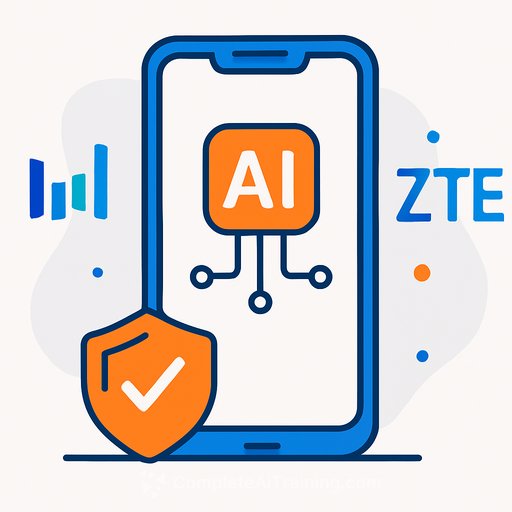
The quiet phone market is about to get interesting. Multiple supply-chain sources indicate ByteDance and ZTE will launch an AI-native smartphone in early December with an embedded, high-privilege Agent at the system level.
ByteDance defines the AI interaction and ships its Doubao large model; ZTE (via Nubia) handles hardware, product design, and manufacturing. Compared with today's "smartphone + AI app" approach, this device integrates AI across hardware, software, and even core OS layers. First-batch inventory is roughly 30,000 units, with a second-generation model planned for the first half of next year.
What the high-privilege Agent likely does
This isn't a standalone app. The Agent sits closer to the OS than typical applications, which means it can orchestrate actions across apps, chain tasks, and run proactive workflows with fewer handoffs. Expect multi-step commands like "Book my flight, file the expense, and brief me tomorrow morning," executed with minimal friction.
For developers, that implies new system hooks, deeper intents, and stricter permission patterns. It also raises the bar on observability, user consent, and rollback safety when an Agent touches multiple data sources and apps in one go.
Why ByteDance is doing hardware now
ByteDance's push started in early 2024. The original plan was to supply models and AI capabilities, but progress stalled. So they chose to deliver a phone where the model, interface, and system are built to work as one.
ZTE brings proven hardware R&D and supply chain execution. Nubia adds imaging and performance tuning experience. ByteDance's AI hardware "Ocean" team spans prior acquisitions (Smartisan mobile, PICO VR, Ola earphones), with parallel work on AI glasses and wearables.
Strategically, this mirrors what Google did by aligning chips, models, OS, and hardware. Control the entry point, control the experience. Doubao + system hooks + phone gives ByteDance the stack: Volcengine for compute, Doubao as the model, super apps (e.g., Douyin) for traffic, and devices as the physical gateway.
Market context: three camps are forming
- Pioneer camp: Honor, OPPO, Huawei - full-stack models with OS-level agents.
- Ecosystem collaborators: Xiaomi, vivo - focus on vertical scenarios and hardware innovation.
- Cross-border entrants: ByteDance + ZTE Nubia - push high-privilege Agents and new interaction patterns.
If ByteDance delivers distinct, agent-first experiences, it could reset expectations for how phones work. For ZTE, this is a chance to step forward in the AI era with deeper software + hardware co-design.
What this means for product and engineering teams
Build for agent-driven flows, not just taps
- Define clear, bounded "actions" your app can perform end-to-end without manual taps.
- Expose actions via deep links, share targets, and intent-like contracts so an Agent can reliably call them. For Android teams, revisit Intents and intent filters and App Links.
- Return structured results and explicit error states so Agents can retry, summarize, or ask for missing info.
Permission, trust, and guardrails
- Adopt transaction-level consent for sensitive actions (payments, sends, deletes). Make confirmation UX fast but unambiguous.
- Implement allowlists/denylists of Agent-accessible actions. Log every Agent-initiated operation with a user-readable audit trail.
- Provide "simulation/dry-run" modes so Agents can preview effects before execution.
Background execution and reliability
- Expect more background workflows; design for battery and network constraints. Use resumable jobs and idempotent endpoints.
- Make long-running tasks observable: progress events, checkpoints, and cancellation support.
- Cache last-known state locally to survive process death or radio drops, and reconcile on resume.
UX for intention, not just navigation
- Shift from screen-by-screen funnels to intent fulfillment. Group your core value into 10-20 named intents that cover 80% of user goals.
- Provide explainable confirmations: what will happen, which app is involved, expected cost/time, and how to undo.
- Offer compact summaries after completion with links to detail screens for verification.
Data boundaries
- Partition what can stay on-device vs. what must hit the cloud. Be explicit about what the Agent can read (notifications, clipboard, files) and under which conditions.
- Encrypt at rest, and rotate tokens the Agent uses for third-party calls. Treat the Agent as a semi-trusted client with least privilege.
KPIs for an agent-first product
- Intent detection rate and precision.
- Handoff success rate (Agent → your app → completion).
- Average steps per task, confirmation acceptance rate, and time-to-fulfillment.
- Rollback frequency and user trust signals (manual overrides, report rate).
Launch details to watch
The first model ships in small volumes (about 30,000 units). That's enough to validate the stack, not enough to strain ecosystems. The second-gen device is slated for the first half of next year with stronger AI and upgraded hardware.
Expect SDKs or partner docs for action schemas, cross-app orchestration, and Agent permissions. If they publish OS-level hooks, early adopters can lock in distribution and default-handler status for key intents.
Risks to plan for
- Over-automation that confuses users or causes silent errors - require confirmations for any irreversible action.
- Model hallucinations - constrain actions to verifiable inputs and sandboxed APIs.
- Policy shifts - be ready for app store or system policy updates that change what Agents can do in the background.
A 30-day readiness plan
- Week 1: List your top 15 user intents. Map each to a single action endpoint or deep link. Define required params and safe defaults.
- Week 2: Implement confirmations, dry-runs, and a user-facing action log. Add rollback/undo for risky operations.
- Week 3: Make actions idempotent. Add progress callbacks and structured results. Instrument KPIs.
- Week 4: Run cross-app scenarios. Test degraded networks, background limits, and error recovery. Document your capability schema for Agents.
Bigger picture
We're moving from "tap icons" to "state your intent." Phones that embed high-privilege Agents will favor products that expose clean, safe, automatable actions. Teams that adapt their apps for orchestration will win placements and usage quickly.
If you need structured upskilling for agent UX, automation patterns, and applied LLMs, explore curated developer tracks at Complete AI Training.
Your membership also unlocks: