Cal State's $17 Million ChatGPT Deal Faces Staff Revolt Over Austerity and Job Security
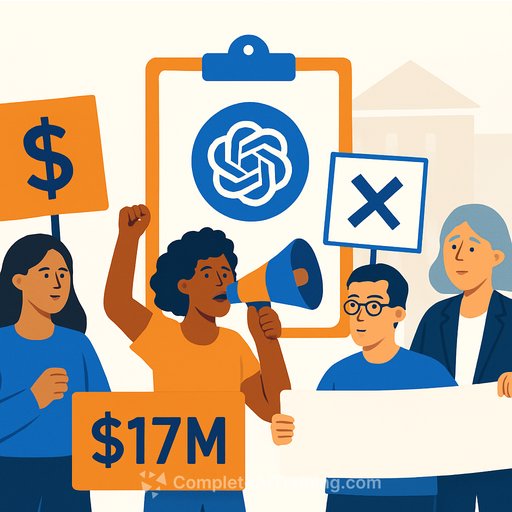
California State University announced a partnership with OpenAI in February 2025 to bring ChatGPT Edu to its 23 campuses. Sixteen months later, over 1,600 faculty, students, and alumni have signed a petition opposing contract renewal when it expires June 30, with more than 3,000 backing the effort overall.
The $17 million deal has become a focal point for broader tensions at Cal State: the system is cutting staff, closing departments, and merging campuses to address severe budget shortfalls, yet investing heavily in generative AI.
The Austerity Contradiction
Cal State faces a $144 million budget cut this academic year. Last year, the system merged Cal State Maritime with Cal Poly San Luis Obispo to avoid closure. Three other Bay Area campuses proposed merging administrative functions to save money.
"To put a broken technology into a broken system can only break it further," said Martha Kenney, a professor at San Francisco State University, part of the Cal State system.
Martha Lincoln, also at SFSU, framed the spending choice plainly: "That money is being thrown away" on a product that is essentially a free chatbot with minimal educational customization.
Inconsistent Classroom Policies Create Confusion
Cal State provided limited guidance to faculty on classroom implementation. Workshops focused on general AI applications rather than specific teaching strategies.
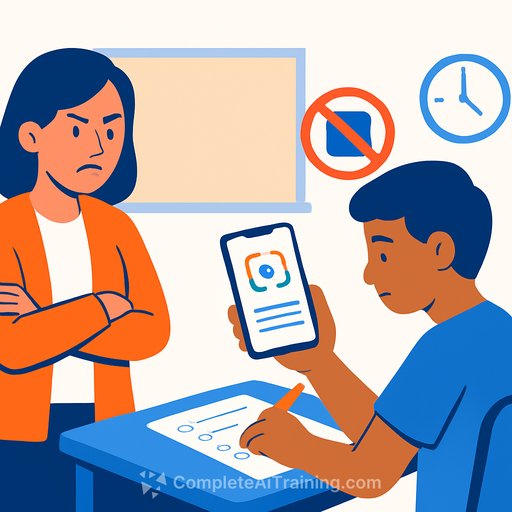
Professors received broad discretion over how to use the tools. As a result, AI policies now vary significantly across departments and courses - some encourage use, others ban it entirely.
"Every professor is left to fend for themselves and come up with policies for their classrooms, and that can be very confusing for students who are allowed to use AI in one classroom and not in another," Kenney said.
This inconsistency undermines faculty who oppose AI use in their classes. "We're trying to counter that spread among our students, but now our bosses are lined up against us too," said Brian Dolber, an associate professor of Communication and Media Studies at Cal State San Marcos.
Labor Negotiations Center on Job Protection
The California Faculty Association, the union representing professors, lecturers, librarians, and other Cal State workers, is in active contract negotiations. The union expired its previous contract last summer.
AI integration has become a central labor issue. Beyond seeking cost-of-living adjustments, the union is pushing for the right to opt out of new classroom technologies, data protection rules, and - most critically - guarantees against job displacement.
Dolber sits on the union's bargaining team. "You throw AI into that mix and we're in a very, very precarious position because we're now being told that in order for our students to be successful they need to learn how to use tools that displace our own labor," he said.
Broader Concerns About Educational Value
Petition signers cite research linking AI use to decreased cognitive ability, accuracy problems, and environmental costs from energy and water consumption.
OpenAI's recent Department of Defense contract intensified opposition. Over 250 Cal State faculty, students, and alumni signed the petition in the two days after that agreement became public.
"Continuing to partner with a company run by a fascist who has decided to partner with our government on an illegal 'war' is deeply immoral, and frankly, disgusting," said Kate Steffens, a senior assistant librarian at San Jose State.
Part of a Larger Pattern
Cal State is not alone. California's community college network signed its own deal with Google for chatbot services. San Francisco Unified School District recently contracted with OpenAI.
The University of California system has not yet reached a similar agreement, but faculty at UC San Diego are prepared to oppose one. "To introduce AI as a general tool for students, staff, and faculty to use unreflectively or unaccountably is a complete abdication of the responsibilities of an education system to society," said Lilly Irani, a professor at UC San Diego.
The American Association of University Professors, representing tens of thousands of faculty nationwide, has created sample contract language to help members protect against AI-related job losses and challenge educational tools they view as harmful to learning.
"We've needed to have better policy around technology in higher education for 15 years, if not longer," said Britt Paris, a Rutgers professor and chair of the AAUP's ad hoc committee on AI.
For educators navigating these decisions, resources like the AI for Education guide and the AI Learning Path for Teachers offer structured approaches to understanding AI's role in classrooms - distinct from top-down institutional mandates.
Your membership also unlocks: