California Attorney Avoids Sanctions Despite AI-Generated False Citations
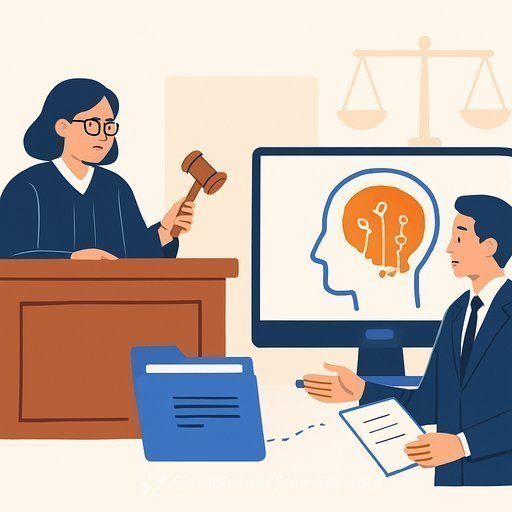
A California attorney escaped sanctions after using artificial intelligence to generate bogus legal citations in a civil rights case filing, according to a decision from the U.S. District Court for the Eastern District of California.
The case involved Kevin G. Little, whose office filed documents containing citations to cases that did not exist. The AI tool fabricated the references-a problem known in legal technology circles as "hallucination," where language models generate plausible-sounding but false information.
The court declined to impose sanctions, though the decision underscores a growing risk for lawyers who use AI without verification. Courts have increasingly scrutinized attorney use of generative AI tools, particularly when those tools produce unreliable results.
What Happened
Little's filing in the civil rights matter contained multiple false citations. The attorney did not catch the errors before submitting the documents to the court. Manning Kass, another firm involved in the case, brought the problem to the court's attention.
Rather than penalize the attorney, the judge chose to address the issue through other means. The decision reflects uncertainty in the judiciary about how to handle AI errors-whether they warrant sanctions or fall into a different category of attorney misconduct.
Broader Implications for Legal Practice
The case highlights a fundamental challenge: AI tools can produce work that appears legitimate but contains fabricated facts. For lawyers, this creates a verification burden that didn't exist with traditional legal research databases.
Courts expect attorneys to verify citations and legal authority before filing. Using AI without checking results does not excuse errors, even if the technology itself is responsible for the false information.
The legal profession is still developing standards for AI use. Some bar associations have issued guidance requiring lawyers to understand AI limitations and verify output. Others have not yet addressed the issue formally.
What This Means for Attorneys
Lawyers considering AI tools for legal research, document drafting, or citation generation should treat AI output as a starting point, not a finished product. Independent verification of citations and legal authority remains essential.
Training in AI tools and their failure modes is becoming necessary for legal professionals. Understanding where these systems are reliable-and where they are not-helps attorneys use them responsibly and avoid costly mistakes.
For those working in legal practice, AI for Legal resources can help build competency in evaluating and using these tools safely. Paralegals and other support staff may find value in AI Learning Path for Paralegals, which covers document review and research verification techniques.
The Eastern District of California's decision suggests courts will continue to hold attorneys accountable for AI-generated errors, even as the technology becomes more prevalent in law offices.
Your membership also unlocks: