
AI news ·
California bar disciplines three attorneys for submitting AI-generated filings with fabricated citations
Three California attorneys face State Bar discipline for submitting court filings with fake AI-generated citations. All three failed to verify citations before filing; one also hid his use of AI from the court.
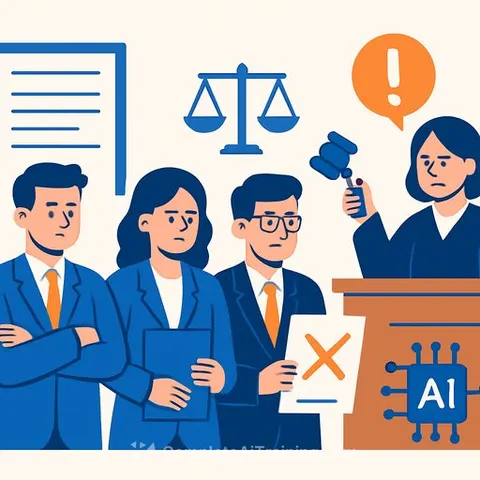
Three California Attorneys Face Discipline for AI-Generated Court Filings With Fake Citations
The State Bar of California has filed disciplinary charges against three attorneys for submitting court documents containing nonexistent and irrelevant legal citations generated by artificial intelligence tools.
The State Bar filed notices of charges against Omid Emile Khalifeh of Los Angeles and Steven Thomas Romeyn of Scottsdale, Arizona. The State Bar Court this month also approved disciplinary measures against Sepideh Ardestani of Beverly Hills, who was sanctioned for submitting false citations in a March 2025 federal court filing.
California law permits attorneys to use generative AI for drafting legal documents. The catch: attorneys remain responsible for verifying every fact and citation before filing.
What Happened
Khalifeh submitted a trademark case brief in April 2025 that included one nonexistent citation and two citations unrelated to the arguments they supported. He also failed to disclose his use of AI, violating a standing court order requiring such disclosure.
When the court raised concerns, Khalifeh claimed he had reviewed and verified all citations independently. The court flagged the same issues again. Khalifeh then admitted he could not verify one citation and withdrew it.
Romeyn submitted a personal injury case in October 2025 containing irrelevant and nonexistent citations. After the court flagged problems, he disclosed using AI and admitted he had not verified every citation before filing.
Ardestani submitted a wage-and-hour class-action complaint in March 2025 with erroneous citations. She claimed the errors came from handwritten notes on another matter but provided no supporting documents.
Why This Matters
George Cardona, chief trial counsel for the State Bar, said these cases show what happens when attorneys skip verification. "Courts and clients must be able to trust that the filings attorneys submit are accurate, supported, and compliant with professional standards," he said.
AI systems are known to "hallucinate" - generating plausible-sounding but false information, including fake case citations. The Eastern District of California noted that reviewing Ardestani's misconduct wasted "limited time and judicial resources in a district that has labored under a longstanding caseload crisis."
Potential Consequences
The State Bar Court will determine whether Khalifeh and Romeyn committed professional misconduct. Possible penalties include license suspension or disbarment, with the California Supreme Court making the final decision.
Ardestani received a 30-day license suspension and one year of probation. She must complete ten hours of continuing legal education focused on technology, including at least five hours on the benefits and risks of AI in legal work.
For attorneys using AI for Legal work, these cases illustrate a core professional obligation: independent verification remains non-negotiable. Tools can draft documents faster, but they cannot replace human judgment about accuracy.