
AI news ·
California creates the nation's first AI job-loss tracker
California launched the nation's first AI unemployment tracker to monitor job shifts. Data shows no statewide surge, but Bay Area tech sectors saw increases since 2022.
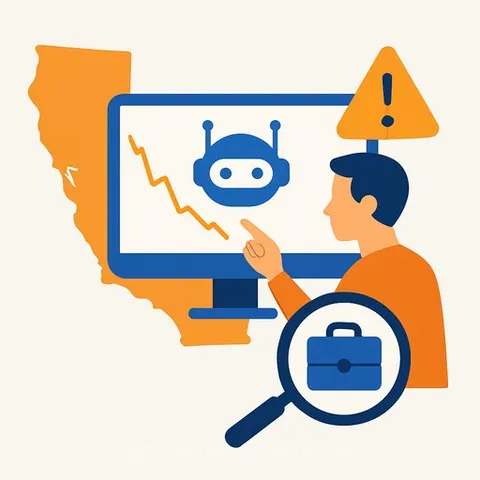
California this week launched the nation's first AI-Unemployment Tracker, a dashboard designed to give state policymakers a real-time view of how artificial intelligence is affecting the labor market. The initial data, released Thursday, shows no statewide surge in unemployment claims in AI-exposed occupations, though certain regions and tech-heavy sectors have seen increases since 2022.
Built on an executive order
The tracker was developed by the University of California's California Policy Lab in response to a May executive order from Gov. Gavin Newsom. The order directed state agencies to prepare for "economic disruption" as AI adoption accelerates and to explore policies that could help workers transition.
"California has always been a place that embraces innovation while taking seriously the responsibility that comes with it," Newsom said in a statement. "We're shaping the future - and charting the course for the nation. As AI advances, we aren't just watching from the sidelines; we're reimagining how we prepare California through strong governance and innovative policy."
Monthly updates and targeted interventions
The dashboard will be updated on a monthly basis, according to the governor's office. State labor officials plan to use the data to decide where to deploy job-search support, health-coverage assistance, and other training resources. Stewart Knox, secretary of the Labor & Workforce Development Agency, said the tracker "provides us with a clearer picture of how AI is affecting working people and jobs, and where we need to focus support and training."
What the data shows so far
Dr. Ben Hyman, senior researcher at the California Policy Lab and co-author of the tracker, said the early numbers do not point to mass AI-driven layoffs. "Right now, we are not seeing evidence of large-scale AI-related layoffs in California's labor market," he said. "But we do see patterns in certain regions like the Bay Area, in certain tech-heavy sectors, and among highly AI-exposed workers with college degrees."
The data indicates that the release of AI tools to the public coincided with an uptick in unemployment claims in the Bay Area and in technology sectors statewide since 2022. Those trends, while not yet a crisis, are concentrated enough to warrant continued monitoring, Hyman added.
Why this matters for government workforce planners
For state and local workforce agencies, the California tracker offers a model for using real-time administrative data to guide policy. Rather than relying on periodic surveys or anecdotal reports, officials can now spot employment shifts as they happen and target reemployment services before displaced workers exhaust their benefits. The approach underscores the value of data-driven intervention in an era when technology can change job requirements faster than traditional training programs can adapt.
Read the original story at The Mercury News.