California pilots "Poppy," an AI assistant built for state workers
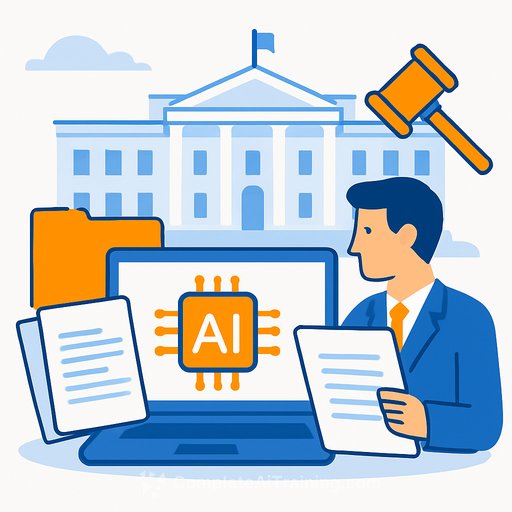
California's Department of Technology is testing an internal AI assistant called Poppy to make everyday work for state employees faster and less frustrating. It runs on the state's network, pulls from official state websites, and answers questions from the perspective of a government employee trying to get real work done.
Ask about a policy, a procurement rule, or an acronym-heavy process, and it gives a focused response with references to the right state resources. It's built by state workers for state workers-so it speaks your language.
What Poppy does
- Finds relevant sections in state policies and manuals (like the State Administrative Manual) so you don't spend hours skimming PDFs.
- Understands government acronyms and department-specific terms that often confuse public AI tools.
- Combines access to 11 large language models (including ChatGPT and Gemini) through agreements with Amazon, Google, Microsoft, and Oracle.
- Keeps chats and uploads inside the state network for added security.
According to the state's chief technology officer, when you ask about a policy, Poppy responds as if you're a state employee working through that policy-so the answers are specific and actionable.
Built for government work
Poppy lives on the state's network, similar to email. That means what you share in the tool stays in government systems. Off-the-shelf AI tools don't offer that level of control.
Because it's trained on information from department websites and state documents, Poppy produces responses that are more precise than a general model that isn't tuned to California government.
How it's being used right now
More than 2,000 employees across 50 departments are piloting the assistant. Lawyers and administrative staff have found it especially useful.
In a live demo, a question about software procurement led Poppy to point directly to the relevant pages in the State Administrative Manual-a document that's 500+ pages long. That kind of specificity cuts research time in a big way.
Teams are also using it to rewrite technical content for non-technical audiences, helping improve clarity without watering down the facts.
Timeline, cost, and what's next
The pilot runs through June. After that, the Department of Technology will decide whether to roll it out statewide. If expanded, the state expects it would still cost less than buying individual AI subscriptions for employees.
The pilot investment so far: about $62,000.
Practical ways to get value from Poppy
- Be specific: include policy names, form numbers, departments, or program acronyms in your prompt.
- Ask for citations or links to the exact section of the manual or policy page.
- Use it to draft variants of the same message for different audiences (executive, program, or public-facing).
- Paste long passages from state documents and ask for summaries, key points, or a plain-language brief.
- Keep sensitive details within the tool-Poppy's on the state network for a reason.
- Sanity-check outputs against official sources before finalizing anything public or high-risk.
Why this matters for your day-to-day
- Faster policy lookup means fewer bottlenecks in approvals, procurement, and compliance.
- Clearer communication reduces back-and-forth and avoids rework.
- Time saved on document digging can be reallocated to higher-impact tasks.
Sources and further reading
Level up your team's AI skills
For practical guidance on training and governance, see Research. If your unit is planning AI upskilling, structured training can speed up adoption and reduce errors. Explore role-based options here: AI courses by job.
Your membership also unlocks: