Caltech Researchers Release AI Tool for Cell Identification in Biological Images
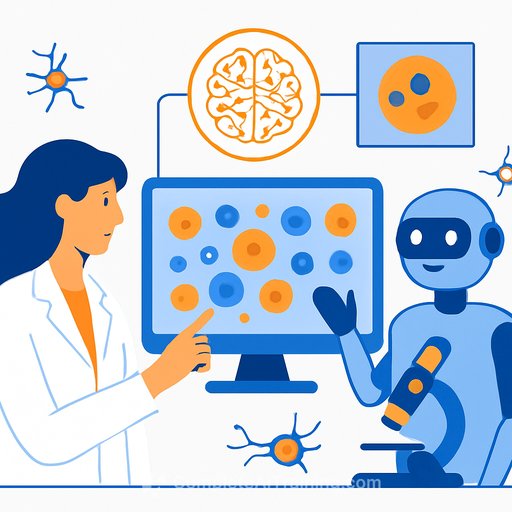
A team of Caltech researchers has developed an artificial intelligence algorithm that automatically identifies and labels individual cells in biological images, eliminating work that previously required hours of manual effort.
The tool, called CellSAM (Cell Segment Anything Model), works across different types of biological imaging. Researchers can use it to spot cancer cells in tissue samples, track immune cells attacking pathogens, or observe how bacteria respond to antibiotics.
David Van Valen, an assistant professor of biology and biological engineering at Caltech, said the algorithm reduces the time students spend correcting mistakes in cell identification. "Now, our single model can do that work for you in many different applications," Van Valen said.
Why This Matters for Research
Biological images vary widely in appearance and quality. CellSAM is the first model designed to handle this variety across multiple research applications without requiring retraining for each new use case.
The ability to process images at scale opens new research possibilities. Yisong Yue, a professor of computing and mathematical sciences who collaborated on the project, said researchers can now track millions of cells across different conditions. "When you can track millions of cells across many conditions, you can start probing things like how rare cell states appear or how subtle changes in cell shape relate to treatment response," Yue said.
This capability matters for understanding why certain cancer immunotherapies work for some patients but not others-a question that requires analyzing complex cell interactions at scale.
How It Works
The team trained CellSAM on large datasets of hand-labeled biological images. The researchers plan to continue improving the model by training it on additional types of biological data.
The tool is available free for researchers to use. The work appears in Nature Methods.
For research professionals working with biological imaging, CellSAM represents a practical shift in how labs handle image analysis. Rather than automating a single workflow, it addresses the fundamental bottleneck: identifying what's in the image in the first place.
Learn more about AI for Science & Research and AI Data Analysis applications in professional settings.
Your membership also unlocks: