Public Hearing Tuesday on Camden's Proposed Law Protecting City Government Jobs from AI
Camden City Council will hold a public hearing Tuesday at 5 p.m. in Council chambers on an ordinance that would commit the city to using artificial intelligence without displacing employees. The measure sets guardrails for how AI is introduced across municipal operations and outlines training for staff.
What the ordinance does
- Prohibits terminations, layoffs, or reassignments based solely on the adoption or deployment of AI systems.
- Commits the city to offer training so employees can understand and work alongside AI where appropriate.
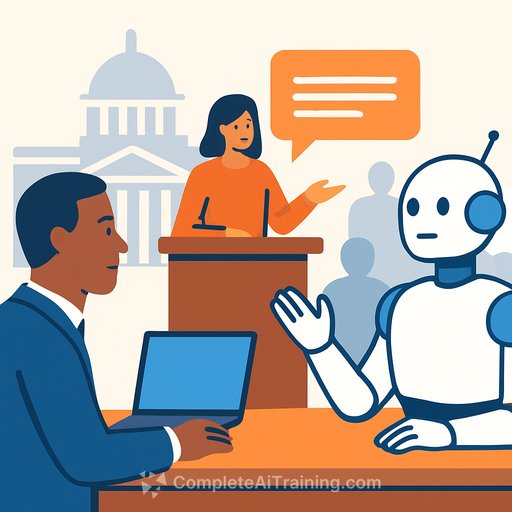
- Creates a five-member AI Advisory Committee to Council that includes:
- A rank-and-file member of the union representing city employees
- A representative of the Law Department with ethics expertise
- A member of the public with ethics or data privacy expertise
Committee members and departmental leaders may consult the AI Learning Path for CIOs for guidance on governance, ethics, and security best practices.
Why this matters for HR, legal, and operations
AI is already handling document processing, data analysis, and front-line inquiries in many agencies. A national survey cited in the proposal found that 37% of state and local employees have at least moderate concern that AI could replace their jobs, which directly affects morale and adoption.
Spelling out that AI will augment work-not be used as the sole basis for job cuts-reduces risk of grievances and unfair labor practice disputes. Pairing that stance with training and a formal advisory body gives departments a practical path to efficiency without eroding trust.
Economic rationale in the proposal
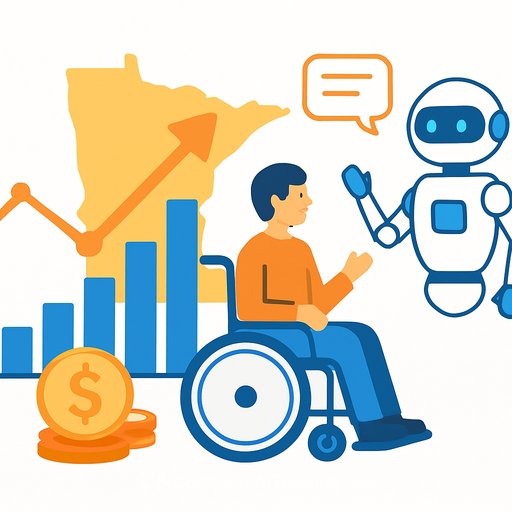
The measure notes a core point: AI doesn't earn wages, pay taxes, or spend in the local economy. Displacing public workers without a plan would undercut community spending and tax revenue-the very base that funds services.
The hearing
The ordinance, titled "Artificial Intelligence In Municipal Operations While Preserving The City Of Camden's Most Valuable Asset: Its Employees," is up for public comment Tuesday at 5 p.m. in Council chambers. Council President Angel Fuentes introduced the measure and has framed it as a safety net to get ahead of foreseeable risks.
Practical steps agencies can act on now
- Adopt a simple rule: no adverse employment action based only on AI outputs; require human review for any decision affecting a person's job.
- Map routine tasks where AI can assist (intake, summarization, routing) and set boundaries for sensitive work (discipline, eligibility determinations).
- Launch role-based training for supervisors and frontline staff; track completion and on-the-job use. For curated options by job role, see Complete AI Training. Project leads can also use the AI Learning Path for Project Managers to structure adoption, risk management, and training.
- Set up governance: use-case approvals, privacy and data retention rules, equity testing, procurement standards, and incident response for model errors.
- Engage unions early to define job redesign, retraining timelines, and metrics for productivity, service quality, and complaint rates.
- Anchor projects to an established framework to manage risk and transparency, such as NIST's AI Risk Management Framework (NIST AI RMF).
Bottom line
Camden's proposal sets a clear expectation: use AI to improve service, not to sideline city workers. For leaders in government HR, legal, and operations, the combination of job protections, training, and a standing advisory group is a pragmatic model to adopt or adapt at the local level.
Your membership also unlocks: