AI agents are set to run marketing by 2026 as campaigns give way to autonomous systems
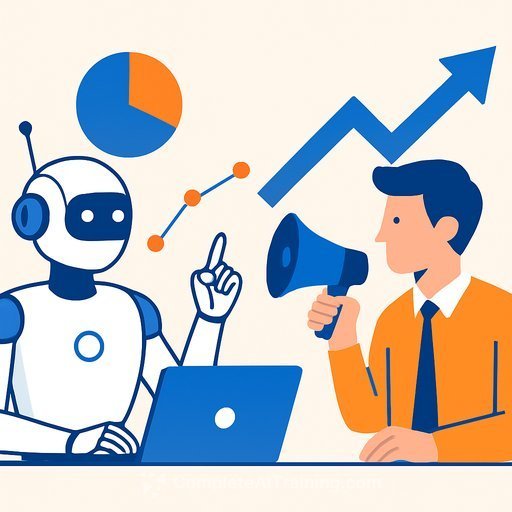
Marketing is on the brink of a structural shift. By 2026, coordinated AI agents will handle what teams and tools used to do with campaigns. Think continuous orchestration across channels, not bursts of activity. That's the core message of Netcore's Agentic Predictions 2026.
The report signals an inflection point in the next 12-24 months. Multi-agent systems outperform single-agent setups by 90.2 percent on complex tasks. More than half of organisations report better scalability, and about 50 percent say it creates clear competitive differentiation. Momentum is real, not theoretical.
From campaigns to continuous, self-optimising systems
Instead of episodic launches, agentic marketing runs all the time. It adapts to customer behaviour and business goals in real time, without waiting for approvals or batch cycles. The output is tighter feedback loops and fewer wasted touches.
- What agents cover: content generation, audience modelling, decisioning, budget allocation, channel mix, experimentation, and insights.
- How it works: specialised agents collaborate, debate options, and execute-then learn and iterate.
Shift from reach to relevance: meet your "Brand Twin"
The report introduces "Brand Twins"-always-on agents that represent your brand and deeply understand each customer's intent and preferences. This change is driven by attention collapse: 73 percent of people skim content; only 27 percent engage meaningfully. Average attention spans are down to 8.25 seconds, from 12 seconds in 2000.
The takeaway: less noise, more context. Fewer, higher-quality interactions that land at the right moment with the right offer.
- Build a living brand memory: product truths, tone, claims, proofs, and legal guardrails.
- Map intent signals: recency, frequency, value, and session context-not just demographic buckets.
- Shift to modular content so agents can assemble messages on the fly without breaking brand voice.
Agent-led commerce hits scale
E-commerce will feel this first. AI agents are expected to influence 20 percent of transactions by 2030. By 2028, 33 percent of organisations are projected to adopt agentic AI, and 15 percent of agents will make autonomous daily decisions.
Expect agent-to-agent commerce: the shopper's agent and the brand's agent negotiating price, promos, recommendations, and inventory in real time. Human oversight stays, but the negotiation moves to machines.
- Standardise product data, inventory feeds, and pricing rules.
- Expose clean APIs with clear policies for discounts, stock holds, delivery SLAs, and returns.
- Instrument every step for attribution and audit trails.
Attention becomes the growth bottleneck
As consumer agents filter options, your message must win twice: pass the machine's logic and resonate with human emotion. Technology won't be the constraint-attention will.
- Optimise for agent readability: structured offers, clear value, transparent policies.
- Optimise for human resonance: story, proof, and utility in a few seconds.
- Track new KPIs: agent pass-through rates, qualified attention minutes, conversion velocity, and LTV uplift.
Outcome-based pricing replaces martech sprawl
The report calls out waste in current stacks: 55 percent are unhappy with cost vs. value, 99 percent underuse their tools, 40 percent can't measure ROI, and 18 percent see no clear return. Cost sensitivity jumped from 37 percent in 2023 to 61 percent in 2024, with 47 percent citing stack bloat as the main barrier to value.
Vendors will shift to outcome-based pricing. Pay for results-conversions, revenue, and LTV-not seats or usage.
- Renegotiate contracts around guaranteed outcomes and shared upside.
- Run 90-day pilots with a clean control, causal measurement, and kill-switch rules.
- Consolidate overlapping tools and fund agentic experiments with the savings.
The CMO's role changes-fast
Sixty-five percent of CMOs expect AI to change their role within two years. The centre of gravity moves from campaign management to system orchestration and direct ownership of growth.
- New org needs: Agent Ops lead, data product manager, AI safety/governance, experimentation PM, prompt/policy engineers, and creative strategists.
- New rituals: weekly agent performance reviews, ethics checks, and portfolio-level outcome dashboards.
Practical 90-day plan to get agent-ready
- Weeks 1-2: Audit data access, consent, and content. Define decision rights, brand guardrails, and "never do" rules.
- Weeks 3-6: Pick one use case with clear ROI (e.g., lifecycle email, on-site recommendations, budget pacing). Stand up a small multi-agent workflow. Keep a human in the loop.
- Weeks 7-10: Add debate protocols between agents, safety checks, and fallback paths. Start outcome-based reporting.
- Weeks 11-13: Scale to a second channel. Negotiate outcome-based terms with at least one vendor. Publish your agent governance policy.
Capability checklist (use before you scale)
- Unified identity and permissions for first-party data.
- Content library broken into reusable blocks with tone controls.
- APIs for pricing, inventory, offers, and service policies.
- Experimentation framework: treatment/control, guardrails, and causal lift.
- Audit logs and review workflows for every autonomous decision.
The bottom line
Campaigns won't vanish, but they stop being the core operating model. Always-on agents will plan, create, test, and optimise in minutes. Your edge won't be access to AI-it will be attention, trust, and the discipline to run an outcome-led system.
Level up your team
- AI Certification for Marketing Specialists
- Latest AI Courses
- AI Learning Path for Business Unit Managers
Source: Netcore Agentic Predictions 2026
Your membership also unlocks: