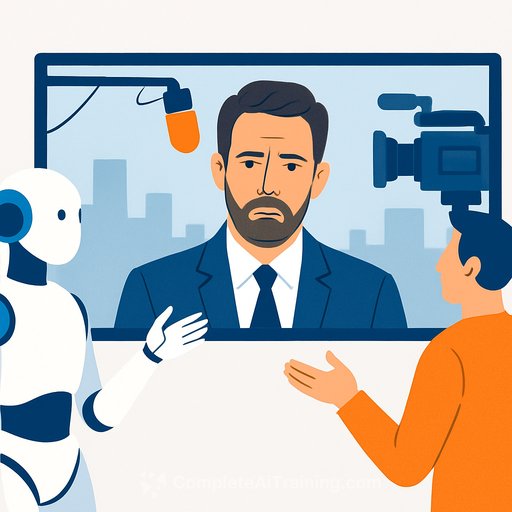
AI Movies Without Humans? Here's the Real Story
Could an AI-only film industry exist? Social feeds say yes-clips made with Seedance 2.0 are everywhere, from a Brad Pitt vs. Tom Cruise brawl to an alternate ending for The Lord of the Rings.
But the internet's hype isn't the industry's truth. And one of Hollywood's actual architects, Ben Affleck, just said the quiet part out loud: AI without human creativity is empty.
Affleck's Take: Useful, But Not a Writer
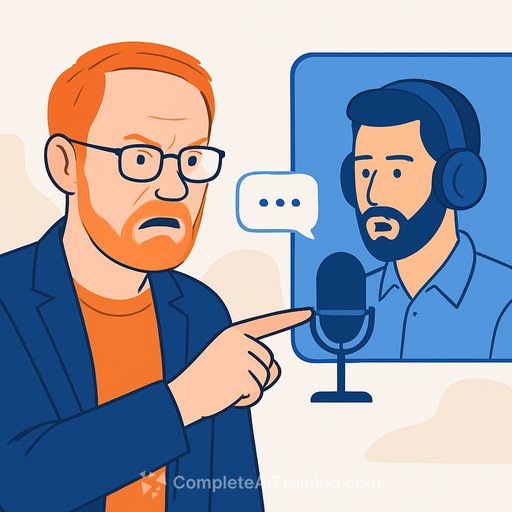
On a January episode of The Joe Rogan Experience, Affleck called AI-generated writing "shitty." His point wasn't polite, but it was precise: "By its nature, it goes to the mean, to the average… And it's not reliable. I mean, I can't even stand to see what it writes."
He pushed further: "I actually don't think it's very likely that it's going to be able to write anything meaningful or… making movies from whole cloth." In his view, AI will sit where visual effects sit now-a tool that supports the vision, not the vision itself.
Why The Panic, Then?
If AI is "just a tool," why the job-loss anxiety? Affleck points to fear marketing. Big promises, bigger doomsday predictions. It spreads fast because it pokes at something primal: survival.
Reality is more boring-and better for you. Adoption is slow. It's incremental. The work that sticks still comes from people with taste, standards, and a point of view.
For Creatives and Writers: What This Actually Means
AI will sit inside your workflow, not steal it. Your leverage comes from taste and judgment. Use the tech to speed up what's mechanical so you can pour more time into what's meaningful.
- Idea generation: Let AI pitch 50 bad takes so you can spot the one worth writing.
- Structure support: Test beats, outline options, character motivations. Keep your voice; borrow its speed.
- Visual exploration: Previz, moodboards, rough animatics to sell a scene before the budget exists.
- Coverage and notes: Quick summaries and alt phrasing for scenes-then you refine.
- Continuity checks: Catch repeated beats, dangling threads, and tone shifts early.
- Polish passes: Grammar, scene trims, loglines, and synopses-grunt work off your plate.
What AI Can't Do (And Why That's Your Advantage)
- It can't care. No lived experience, no taste, no risk appetite.
- It trends to average. Great art is the opposite of average.
- It fakes confidence. Hallucinations look plausible until they cost you.
- It can imitate. It struggles to originate in a way that feels true.
Protect Your Career While You Use The Tools
- Contracts and credits: Make sure AI-generated text isn't treated as "source material," and that human writers keep credit and compensation. See the Writers Guild's stance on AI use in writing here.
- Consent and likeness: For actors and creators, guard your voice, face, and style. Read up on union guidance about digital replicas and consent here.
- Data hygiene: Don't paste unreleased scripts or client material into public tools. If you must, mask details.
- Own your voice: Maintain a clear style guide, character bible, and theme stack. AI can assist, but you set the spine.
- Keep receipts: Document revisions and drafts. It proves authorship and protects you in credit disputes.
- Pitch with proof: Bring short AI-assisted previz, but anchor it in your human story. Buyers fund clarity and conviction, not filters.
How To Build A Future-Proof Creative Workflow
- Set a weekly "AI sprint": One hour to test prompts, tools, and workflows on low-stakes tasks.
- Create a reusable toolkit: Prompts for loglines, beat sheets, and character arcs you trust and refine over time.
- Prototype faster: Use AI video and image tools for tone tests and scene beats before building costly sets or VFX.
- Keep a taste journal: Capture references, shots, and lines that move you. That library trains you, not the model.
- Ship small, often: Shorts, scenes, proof-of-concepts. Speed builds opportunity-and feedback sharpens taste.
About Those Viral AI Scenes
They're fun-and they prove something useful. Visual flash is cheap now. Emotional truth is not. The audience still craves a human pulse: subtext, timing, friction, surprise.
If you write, direct, edit, or act, that should encourage you. The moat is your point of view, not your access to software.
A Practical Bottom Line
AI won't "make movies from whole cloth." It will sit beside the camera, not behind it. Use it to remove friction, not to replace your voice.
Let the hype machine do what it does. You do the work: clear intent, tight structure, strong choices, repeat. That wins.
Want Tools And Training That Actually Help?
- Explore curated resources on generative approaches to visual storytelling: Generative Video.
- Browse a structured learning path for designers and creative workflows: AI Learning Path for UX/UI Designers.
Use the tools. Keep the soul. That's the play.
Your membership also unlocks: