Creative Writing in the Age of AI: Inside Northeastern's Experiment
Some writers fear AI will replace the artist. Others see it as a new instrument - useful, but imperfect. At Northeastern University's Oakland campus, English professors Juliana Spahr and Stephanie Young are treating the issue as a studio problem: test the tool, question it, and decide what kind of writer you want to be alongside it.
"The idea was to start thinking about what AI can do and what it can't do," Spahr said. "But there's also a misunderstanding of what it can do because it's such a great mimic."
What AI does well - and what it misses
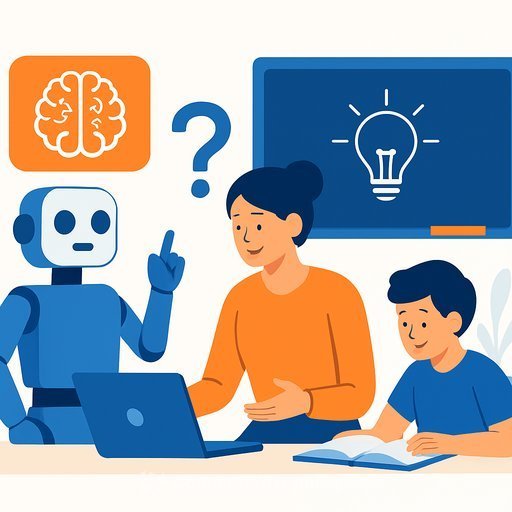
Spahr's course, Writing Creatively in the Age of Artificial Intelligence, treats generative models like a lab partner. Students probe its "computational" strengths - pattern recognition, stylistic remixing, proofreading - and test whether any "expressive" capacity shows up on the page.
"We know that it can produce endless variations on a sentence," she said. "It'll do a pale imitation of Carver, or Ray Bradbury, or Gertrude Stein. It can get to the surface of things." The point isn't to crown AI as a co-author. It's to see where the machine stops and the writer begins.
Agency, constraint and authorship
Young frames the work through avant-garde tradition. The Oulipo showed how constraints can free style: remove a letter, bind yourself to a number, force new choices. The class uses similar rules to locate voice under pressure - even with a chatbot in the loop.
"I'm AI-optimistic, specifically about writing pedagogy as a useful, critical tool," Young said. Students map where "authorship slips," what still feels like them, and what labor remains theirs. As she put it: "Constraint, randomness and collaboration have always been part of how writers make meaning. AI just makes those dynamics more visible."
Ethics, bias and the strange tone of chatbots
The courses don't dodge the hard parts. Students analyze copyright lawsuits and consent. They study bias in training data and how "safety" filters flatten style into a bland, mixed voice - helpful sometimes, hollow at others.
"After teaching this class three times, you really start to recognize what AI 'likes,'" Young said. That tells you what to accept - and where to push back.
Student perspectives: tool, not author
Ryan Huang, a biology major with a love for horror and sci-fi, sees promise and limits. He worries about the environmental cost of data centers, but uses AI to develop ideas: "a more fleshed-out version of your own thinking." His line in the sand: the art still needs to be made by the artist.
Tiffany Lee, a business administration major who took Young's class, came away pragmatic: AI can create problems; used well, it speeds drafting and revision.
Practical takeaways for working writers
- Decide your boundary: AI can brainstorm, outline and suggest edits. Keep core moves - voice, structure, final lines - in your hands.
- Write with constraints: limit vocabulary, syllables, POV shifts or time jumps. Tools change; the craft of decision-making stays yours.
- Use AI for breadth, not depth: generate options, contrasts and edge cases. Then choose with intent.
- Interrogate voice: ask, "Which lines sound like me? Which sound like the model?" Keep what's alive; cut what's generic.
- Track sources and consent: be clear about what you fed the model and what you expect back. Credit where needed.
- Audit bias: test outputs across characters, dialects and contexts. If it flattens or stereotypes, rewrite - or don't use it.
- Preserve difficulty on purpose: if the tool makes it easy, set a harder rule. Constraint builds agency.
Try this: a 30-minute studio exercise
- Define the aim: "Write a 700-word story where tension rises without dialogue."
- Set constraints: choose a banned word list (e.g., fear, dark, sudden), a rhythmic pattern (short-short-long), and a single image motif.
- Use AI once: ask for three outlines that meet your constraints. Pick what surprises you; discard the rest.
- Draft by hand: write the first 400 words without AI. Keep the pattern. Mark where your voice feels strongest.
- Targeted assist: ask AI for five variant endings that avoid cliché. Steal nothing whole; fuse two fragments in your style.
The core question
"We can't roll it back," Spahr said. "So the question becomes: what do you do with it?" For many writers, the answer is simple: use the tool, keep the art. Make deliberate choices. Let constraint sharpen taste. And measure your work by what only you would have written.
Resources
- AI for Writers - practical courses and workflows for draft, edit and publish with AI while keeping your voice.
- Prompt Engineering - techniques to get useful outputs and avoid generic responses.
Your membership also unlocks: