Is AI sovereignty possible? Balancing autonomy and interdependence
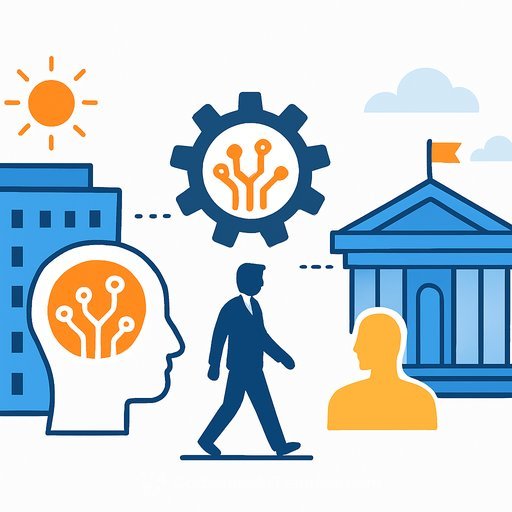
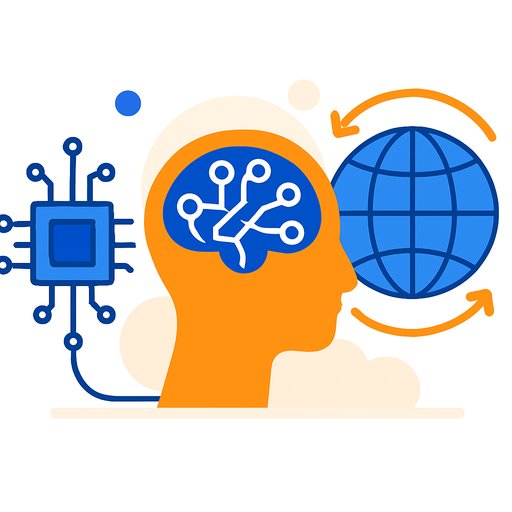
AI sovereignty is not about isolation. It's the capacity to set your own rules, secure critical capabilities, and reduce single points of failure-while staying connected to allies and markets that keep innovation moving.
Full autarky is unrealistic and expensive. Full dependence is fragile. The goal for governments: be sovereign where you must be, interoperable where you can be.
What AI sovereignty actually covers
- Compute: Chips, cloud regions, accelerators, energy, and secure key management.
- Data: Access rights, residency, portability, and lawful cross-border flows.
- Models: Open-source and licensed frontier models, evals, and update control.
- Assurance: Testing, red-teaming, certifications, and incident reporting.
- Supply chain: Semiconductors, firmware, toolchains, and trusted vendors.
- People: Skilled staff, research pipelines, and security-cleared talent.
The false binary: isolation vs openness
Pure self-reliance slows progress and drives up cost. Pure openness invites coercion, outages, and IP loss.
Strategic autonomy means deciding which functions must be controlled domestically, which can be shared with allies, and which can be sourced from the market with solid safeguards.
A practical framework for governments
- Map dependencies: List chips, clouds, models, data sources, and vendors for each critical system (defense, health, elections, justice, finance, energy).
- Set sovereignty tiers:
- Tier 1: Must-control (keys, identity, audit, sensitive datasets, critical decision systems).
- Tier 2: Allied control (shared compute, joint labs, co-development).
- Tier 3: Market-sourced (productivity tools with exit options and strict controls).
- Compute strategy: Combine domestic cloud regions with customer-managed keys, HSMs, confidential computing, and capacity agreements with allied providers.
- Data strategy: Enable lawful transfers with strong safeguards, plus privacy-enhancing techniques (federated learning, differential privacy, synthetic data) to reduce exposure.
- Model strategy: Use a mix of open models for transparency and proprietary models for performance. Require model cards, evaluation reports, and update/change logs.
- Assurance and standards: Adopt the NIST AI Risk Management Framework and align with ISO/IEC AI standards. Stand up independent testing labs and red-team protocols.
- Procurement: Mandate interoperability, SBOM/MBOM, data portability, escrow for critical assets, strong SLAs, and clear exit clauses.
- Talent and research: Fund scholarships, visas, fellowships, and public compute credits. Build joint programs with universities and allied labs.
- Alliances: Create MOUs for compute surge capacity, incident response, model sharing for safety testing, and mutual recognition of certifications.
Guardrails that matter
- Security by design: Least privilege, network segregation, and secrets management for training and inference.
- Evaluation and monitoring: Pre-deployment testing, continuous monitoring, and documented risk acceptance.
- Attack resilience: Defenses for data poisoning, model theft, and adversarial prompts; rapid rollback paths.
- Supply chain assurance: Vet toolchains, firmware, drivers, and third-party plugins.
- Export controls and compliance: Keep projects aligned with domestic law and allied restrictions without stalling key programs.
What to build at home vs source with partners
- Build domestically (Tier 1): Identity and access, key management, audit and logging, national evaluation labs, high-sensitivity datasets, and reference architectures for critical sectors.
- Source with allies (Tier 2): Chips, packaging, shared compute, base models for safety testing, and joint research projects.
- Leverage market (Tier 3): Productivity suites, copilots, and vertical apps-with strict data controls and clear exit plans.
Cost and trade-offs
Full sovereignty on everything is a budget sink. Focus on choke points: keys, identity, logs, sensitive data, and critical decisions.
Measure the premium you pay for independence against the risk of outages, coercion, and lock-in. Decide case by case, with documented thresholds.
12-month action plan
- 0-90 days: Appoint an AI security lead. Map dependencies for top 10 critical systems. Adopt a risk taxonomy. Update procurement with sovereignty tiers and exit clauses.
- 3-6 months: Launch a sovereign key service tied to approved cloud regions. Stand up a national AI evaluation lab. Pilot confidential computing for sensitive workloads. Join priority standards groups.
- 6-12 months: Fund compute capacity with allied surge options. Publish testing protocols and incident reporting rules. Establish data-sharing agreements using PETs. Require model and data attestations for new deployments.
Metrics that keep you honest
- % of critical systems with sovereign key control and audit logs.
- Mean time to exit or switch a key vendor without service loss.
- Supplier diversity index across chips, cloud, and models.
- % of AI deployments with independent safety testing and monitoring.
- Time to detect and contain model or data incidents.
Common pitfalls to avoid
- Over-localizing data in ways that stall research and public services.
- Compliance theater without real testing, monitoring, or incident drills.
- Ignoring SMEs and subnational agencies in procurement and standards.
- Duplicating allied capabilities without a clear security or cost case.
- Underfunding maintenance, updates, and decommissioning.
Bottom line
AI sovereignty is a spectrum, not a switch. Anchor control where failure hurts most, connect with trusted partners for scale, and keep fast exit paths from any single vendor or stack.
For policy and assurance frameworks, see the NIST AI Risk Management Framework here and the OECD AI Principles here. For practical upskilling, explore the AI Learning Path for Policy Makers and sector guidance under AI for Government.
Your membership also unlocks: