AI and Humor: Can Machines Truly Make Us Laugh?
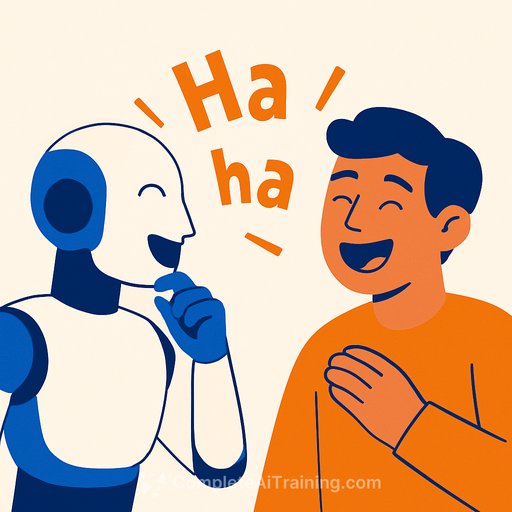
Humor is one of the most complex and uniquely human forms of communication. As AI tools advance, many wonder whether artificial intelligence can genuinely grasp and create humor, or if it will always fall short of human wit.
From Comedy Writer to AI Joke-Maker
Joe Toplyn, a seasoned comedy writer with decades of experience writing for late-night TV, combined his knowledge of joke structures with large language models (LLMs) to create Witscript, an AI-powered tool designed to generate jokes from user prompts. For a modest subscription fee, users can input headlines or image descriptions and receive punchlines, captions, or clever wordplay in return.
Toplyn tested Witscript in a “laugh off” alongside his own material. Both AI-generated and human-written jokes were performed live and measured by audience laughter. Surprisingly, the AI’s jokes performed on par with human ones, challenging the idea that humor was beyond AI’s reach.
Why AI Humor Is Different
Despite advances, experts stress that making people laugh and truly understanding humor are not the same. Humor’s subtleties—sarcasm, irony, timing, and social context—are difficult for AI to master. Human humor often involves social cues, hidden meanings, and emotional intentions that machines can’t fully perceive.
For example, if someone responds to a dread-inducing medical appointment with “Ugh, kill me now,” a human understands the exaggeration and emotional relief behind the phrase. Most AI assistants, however, might misinterpret such remarks if they lack deeper contextual awareness.
The Mechanics Behind a Joke
Humor often hinges on ambiguity and incongruity—a sudden twist that surprises the listener. Take the classic joke:
- Two fish are in a tank. One says, "You man the guns, I’ll drive."
This joke plays on the double meaning of “tank” and the absurd image of fish operating weapons. AI models like Witscript use algorithms to detect these linguistic patterns and generate similar wordplay.
Research has shown that AI can mimic satirical writing well. For instance, ChatGPT 3.5 produced headlines in the style of The Onion that readers found comparable to human-written content.
Limitations and Risks of AI-Generated Humor
AI humor can be hit or miss. It often requires human guidance to select the best material, since AI can produce uneven quality or inappropriate content. More concerningly, AI-generated jokes may reinforce stereotypes or biases. For example, research revealed that when AI was prompted to make images funnier, it sometimes introduced odd or stereotypical features, revealing underlying biases in training data.
Humor also depends heavily on context, audience, and social norms—areas where AI still struggles. While AI can generate punchlines, it lacks the emotional experience and intentions that give humor its nuance and social function.
The Human Edge in Humor
Humor is more than clever wordplay; it’s a tool for social connection, emotional expression, and navigating complex interpersonal dynamics. Humans use humor to test boundaries, signal intentions, and bond with others in ways AI currently cannot replicate.
Even when AI generates a joke, people tend to rate it less funny once they know it wasn’t crafted by a human. This suggests that humor’s power lies not just in the words, but in the shared human experience behind them.
Why Writers Should Care
For writers, understanding AI's capabilities and limits in humor can inform how they integrate AI tools into their work. AI can assist with brainstorming, generating ideas, or adding lighthearted touches, but it still requires a human editor’s judgment to ensure the humor lands well and respects social sensitivities.
As AI companions and assistants become more common, their ability to handle humor appropriately will impact user experience. Writers who learn to work with these tools effectively can enhance creativity and productivity while maintaining the emotional depth that only humans provide.
To explore more about AI’s role in creative writing and other fields, check out Complete AI Training’s courses for writers.
Final Thoughts
AI can produce laughter, but true humor remains deeply human. Machines excel at pattern recognition but lack emotional insight and intention. For writers, AI is a helpful collaborator, not a replacement, especially when it comes to humor’s subtle art.
In the end, the essence of humor—its ability to connect, surprise, and reflect our shared humanity—is something only people can truly wield.
Your membership also unlocks: