Will the Gulf's Push for Its Own AI Succeed?
The Persian Gulf is going all-in on sovereign AI. At the same time, US tech giants plan to pour more than $600bn into AI infrastructure this year. That's the backdrop, and the question is simple: can the Gulf bend this moment to its advantage?
From talk of multipolarity to building it
At Web Summit Qatar, one theme cut through the noise: sovereignty. The host framed it plainly-multipolar isn't a prediction anymore. It's here.
Doha set the tone with billion-dollar commitments for startups. A regional founder announced a TikTok challenger crossing 2.5 million users. Even the opening act-dancing robots from a Chinese firm-signaled where the center of gravity is tilting.
What "sovereign AI" means in the Gulf
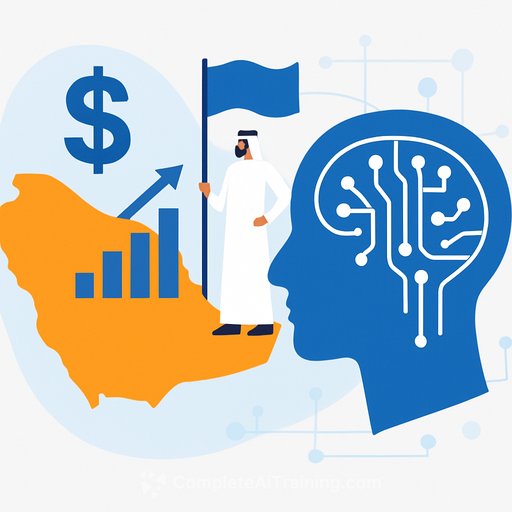
Qatar, the UAE, and Saudi Arabia want control of the stack: datacenters, training data, clouds, models, and eventually chips. The UAE inked a deal with the US to supply advanced chips for one of the world's largest datacenters near Abu Dhabi. Saudi Arabia's state-backed Humain is buying its way into a full-stack AI ecosystem.
Partnerships are a feature, not a flaw. A paper in Doha spotlighted a deal between Qatar's ministry of municipality and Jared Kushner's Brain Co to automate construction permitting. The pitch: pair Silicon Valley expertise with local priorities to build real services, fast.
The hard parts: chips, talent, and Arabic data
Chips are scarce, and access is political. Supply is improving, but it's a squeeze. Talent is the next hurdle. The region doesn't have enough senior engineers yet, though Doha is a strong pull for Indian developers on time zone and lifestyle alone.
Data is the third constraint. There's far less Arabic text online than English. That slows pretraining and weakens performance in core use cases unless governments and firms build serious, clean, bilingual corpora.
Money is picking sides
VCs are split. Some European investors see better entry prices across Europe and the Middle East as the US inflates valuations. Bay Area funds counter that Silicon Valley still has moats-talent density, proprietary data, and ecosystem effects that are hard to copy.
Europe's parallel push-and its tradeoffs
Europe wants digital sovereignty too, but it's constrained by policy and pace. The EU's AI regulation aims to protect citizens, yet founders say compliance drag hurts competitiveness. The question: will lawmakers water down rules to keep builders at home?
France is swapping US comms apps for a homegrown option. Belgium and the Netherlands remain vital in the chip supply chain, though they control only slices of it. Starlink's footprint pressures Europe's satellite bets while Eutelsat plays catch-up. One bright spot: ElevenLabs raised $500m and staked a claim in AI audio.
$600bn says Big Tech isn't slowing down
Alphabet, Amazon, Microsoft, and Meta told investors they'll spend more than $600bn this year, mostly on land, buildings, energy, and chips for datacenters. Rough breakdown: Alphabet $175-185bn, Meta $115-125bn, Microsoft ~$105bn, and Amazon jumping to ~$200bn. Even Tesla lifted its capex plan to ~$20bn despite thinner margins.
These are nation-scale budgets. And they'll likely grow. If you saw the wall of AI ads during the Super Bowl, you get the point: this market isn't settled yet. It's still a grab for compute, users, and distribution. Bloomberg has tracked this surge for two straight years.
So, will the Gulf's push work?
Short answer: partly-and fast-if they focus. Full independence from US supply lines is unlikely near-term. But owning local data, inference sites, and sector models is well within reach. That's where value accrues anyway.
Expect a hybrid strategy: US and Asian chips, regional datacenters, public-private data pipelines, and bilingual models fine-tuned for energy, logistics, construction, finance, and public services. Think "sovereign where it counts" rather than "sovereign everywhere."
What leaders should do now
For governments
- Pick your sovereign layers: Prioritize national datasets, local inference, and sector models before chasing chips. Secure multi-year GPU supply via state-level agreements.
- Build the data flywheel: Launch Arabic and bilingual data programs with clear licensing, privacy, and quality gates. Fund sector datasets (permits, ports, health, courts) with audit trails.
- Talent at scale: Fast-track visas for senior ML/infra engineers. Co-fund AI chairs at regional universities. Tie grants to in-country residency and mentorship quotas.
- Procurement that ships: Pre-approve model families and security baselines. Use outcome-based contracts with sandboxes, not 18-month RFPs that stall momentum.
- Energy and cooling: Lock in power and water for datacenters with long-term rates and heat-reuse incentives.
For enterprise IT and CIOs
- Budget like compute is oxygen: Treat GPUs, networking, and storage as strategic inventory. Model TCO across public cloud, regional cloud, and on-prem clusters.
- Go bilingual by default: Build RAG pipelines with Arabic and English. Own your vector indices. Measure grounding accuracy, not just model scores.
- Security and governance: Classify data, enforce retrieval scopes, and log prompts/outputs. Keep sensitive workloads on sovereign infrastructure.
- Latency and data residency: Place inference close to ops and regulators. Use multi-region failover tested under load, not on slide decks.
For developers and data teams
- Ship with constraints: Optimize for inference cost-quantization, batching, and distillation. Don't default to the biggest model.
- Data beats tweaks: Invest in Arabic tokenization, domain glossaries, and human-in-the-loop labeling. Track contamination and provenance.
- LLMOps is real work: Version data, prompts, and evals. Add canary tests for bias, jailbreaks, and hallucinations. Automate rollback.
- Career move: Learn retrieval, orchestration, and GPU basics. The teams that blend data engineering with model intuition win.
12-24 month outlook
- Multiple Gulf hyperscale datacenters come online; energy deals become the new moat.
- Tier-2 chips and accelerators gain share as teams squeeze costs without sacrificing quality.
- Bilingual foundation and sector models mature, with strong performance on Arabic public-sector tasks.
- More US-Gulf joint ventures for applied AI in construction, logistics, and finance.
Want to upskill for this shift?
Practical, job-specific training helps teams move faster without burning budget. Explore role-based tracks: AI Learning Path for CIOs, AI Learning Path for Technology Managers, and AI Learning Path for Software Engineers.
The Gulf can win meaningful ground by owning local data, compute placement, and sector outcomes. That's where AI creates leverage-less hype, more delivery. The rest is noise.
Your membership also unlocks: