Can AI Detectors Help Keep Online Writing Honest?
Most of our work now runs on text. A teacher reviews an essay that feels off. A hiring manager reads a cover letter where every line sounds polished in the same odd way. A shopper sees ten reviews that repeat the same phrases. The real question: who actually wrote this?
AI detectors promise an answer. They can help, but they won't give you certainty. Treat them like a smoke alarm, not a judge.
What AI detectors actually do
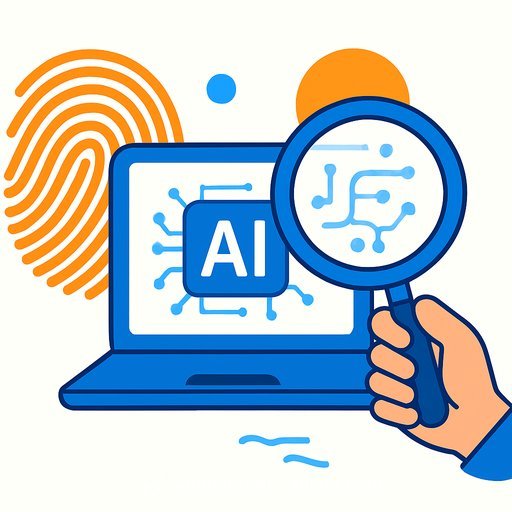
Detectors estimate how "predictable" the writing is. They look for patterns common in machine-generated text and flag probabilities. That's it-probabilities.
- Useful for triage: they surface suspicious passages for a closer look.
- Not proof: a high score doesn't equal guilt, a low score doesn't equal innocence.
- False positives happen, especially with short texts or simplified language from skilled editors or non-native writers.
- Heavily edited or paraphrased AI text can slip past many tools.
For context, even major labs have noted accuracy limits and pulled back on blanket claims. See OpenAI's statement on its retired classifier for why "AI or not" detection remains shaky here. Research into watermarking is active but not production-ready; a widely cited paper is A Watermark for Large Language Models.
Where detectors help editors and clients
- Screen large volumes fast: reviews, marketplace content, or applicant writing samples.
- Spot copy-paste phrasing and unusual repetition across multiple submissions.
- Prioritize what needs manual review, fact checks, or a quick "write a new paragraph live" request.
Where detectors fail
- Short text: a paragraph or two is too little for a reliable signal.
- High-quality edits: a human polishing pass can make AI text look "human."
- Paraphrase tools: simple rewrites can throw off detection.
- Stylized prose: minimalistic or formulaic writing can trigger false positives.
A practical workflow for writers who want to stay credible
- Keep receipts: save drafts, timestamps, outlines, and notes. Version history is your best defense.
- Show your process: include sources, interviews, and why you chose them. Link where possible.
- Use disclosure: one clear line beats suspicion. Example: "I wrote this and used AI for headline ideas and grammar checks."
- Prove voice: keep a portfolio of past pieces so editors can compare tone and structure.
- Add fingerprints: specific details, quotes, original examples, and personal observations that generic models rarely provide.
What editors and teams can do
- Ask for a short live revision or a paragraph from scratch on a call.
- Compare against past work and public posts for style drift.
- Pair detectors with basics: plagiarism checks, source verification, and logic passes.
- Reward good disclosure. Make it clear that honest tool use is fine; deception is not.
Policy, rights, and risk
- Make your guidelines explicit: what AI help is allowed, what must be disclosed, and what counts as original authorship.
- Watch for confidentiality and licensing. Don't paste client IP into public tools.
- Document consent for AI-assisted edits, especially for sensitive or regulated topics.
How to write pieces that pass any sniff test
- Lead with a clear point of view. Don't hide behind filler.
- Use concrete numbers, named sources, and quotes you actually obtained.
- Include decisions and trade-offs you made while writing. That's hard to fake.
- Cut generic phrasing. If a sentence could live in any article, rewrite it.
The takeaway for working writers
Detectors are a nudge, not a verdict. Your best defense is process: drafts, sources, and a voice with edges. If you use AI, say how-and keep the craft where it counts: structure, insight, and original detail.
If you want a practical overview of tools that support ethical output without flattening your voice, this curated list is a useful starting point: AI tools for copywriting.
Your membership also unlocks: