Carnegie Mellon Launches AI-Astronomy Fellowship Program
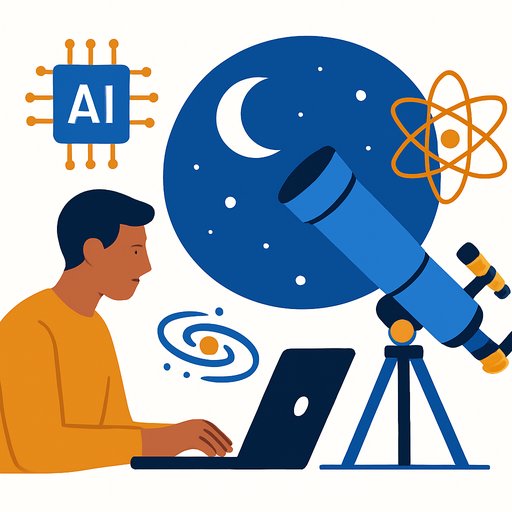
Carnegie Mellon University will launch the Keystone Astronomy & AI (KAAI) Visiting Fellows Program this spring, bringing together researchers in artificial intelligence, statistics, and astrophysics to accelerate discoveries in cosmology. The Simons Foundation is supporting the three-year initiative.
The program pairs visiting fellows with two mentors - one in astrophysics and one in machine learning or statistics - during monthlong residencies at the McWilliams Center for Cosmology & Astrophysics. Each residency concludes with a hands-on workshop that shares software, datasets, and workflows with the broader research community.
Six fellows will participate over the next three years. The program targets projects that integrate AI with theoretical and computational astrophysics, including large-scale simulations, computational modeling, and data-intensive analysis.
Structure and Outcomes
Carnegie Mellon graduate students will collaborate directly with visiting fellows, contributing to shared tools and workflows while gaining experience applying AI to astrophysics problems.
Tiziana Di Matteo, director of the McWilliams Center, said the program turns the institution's cross-disciplinary strength into a training platform. "AI is changing how we do science, and astronomy is where its impact will be felt first and fastest," Di Matteo said.
The program draws on expertise from Carnegie Mellon's Department of Physics, School of Computer Science, Department of Statistics & Data Science, and the Department of Machine Learning. Partners include the Pittsburgh Supercomputing Center and the University of Pittsburgh's Department of Physics and Astronomy.
Knowledge Sharing
Each fellow will co-organize a weeklong workshop showcasing machine learning methods for astronomy. These sessions aim to accelerate adoption of new tools across the international research community.
Barnabás Póczos, associate professor in Carnegie Mellon's Department of Machine Learning, will serve as the program's AI director. He said machine learning methods are reshaping how researchers explore large datasets, identify rare events, and test physical theories at scale.
Applications open later this spring. Fellows will gain experience applying trustworthy AI to astrophysics and build connections extending beyond astronomy.
Learn more about AI for Science & Research or explore AI Research Courses to develop skills in this area.
Your membership also unlocks: