AI Data Centers Are Reviving Commercial Real Estate
CBRE told investors it expects 2026 core EPS of $7.30-$7.60, edging past Wall Street's $7.36 midpoint. The driver: a surge in AI-fueled data center leasing, construction, and property management, supported by steadier interest rates that keep deals moving.
The numbers that matter
- 2026 guidance: core EPS $7.30-$7.60 vs. $7.36 midpoint estimate.
- Latest quarter: core EPS $2.73 vs. $2.68 expected; revenue up 12% to $11.63 billion (slightly below consensus).
- Facilities momentum: Building Operations & Experience revenue up 14.6% to $6.31 billion.
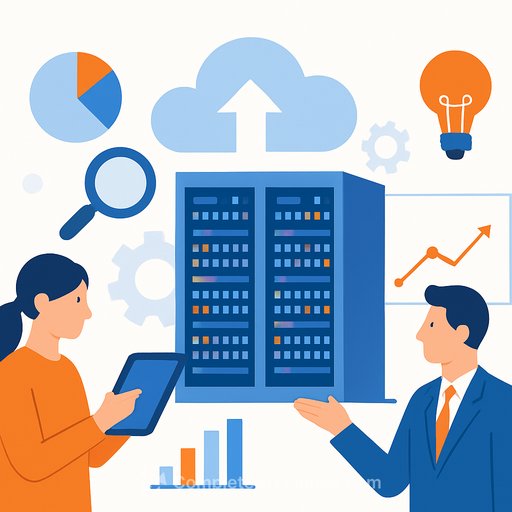
This isn't a one-and-done construction pop. Data centers sign long leases and then pay for ongoing maintenance, security, and tenant services. That creates durable, recurring fees for property-services firms-and steady work for builders and operators.
Why this matters for real estate and construction
- Recurring revenue beats lumpy sales. Integrated facilities management, critical environment ops, and security can scale as capacity comes online.
- Power is the new anchor tenant. Site viability is being set by interconnection timelines, substation proximity, and transformer lead times.
- Rate stability helps underwriting. When the Fed holds steady, buyers and sellers can agree on cap rates and financing, even if offices stay soft. See current policy signals from the Federal Reserve. For broader strategic and governance implications, see AI for Executives & Strategy.
Where the work is
- Developers & investors: Prioritize parcels with near-term megawatt access, fiber routes, and water rights. Stack incentives (tax abatements, sales/use tax relief) and secure interconnection queue positions early.
- General contractors & trades: Lean on modular builds, prefab electrical rooms, and phased shells. Lock transformers, switchgear, gensets, and liquid-cooling components with deposits to beat long lead times.
- Brokers & capital markets: Pursue land banking near transmission capacity, built-to-suit for hyperscalers, and sale-leasebacks with AI-heavy tenants. Credit diligence and NDA-heavy processes are the norm.
- Property & facilities management: Build SLAs around uptime, incident response, and compliance. Upskill teams on BMS/EPMS, access control, and sustainability reporting; align staffing to 24/7 critical ops. See operational best practices at AI for Operations.
Action plan for the next 6-12 months
- Power-first underwriting: Assess MVA per acre, interconnection queue status, and substation expansion paths. Target PUE benchmarks early to keep lifecycle costs in check.
- Speed-to-lease: Pre-negotiate entitlements and fast-track permits. Use phased shells to start interiors as gear arrives.
- Capital stack resilience: Blend fixed/floating, explore green loans and local abatements, and consider forward rate locks while volatility is muted.
- Vendor strategy: Dual-source critical equipment, maintain a spare parts inventory, and secure service contracts with defined response times.
- Talent & training: Hire and grow critical facility technicians, controls engineers, and security specialists. Build an internal training pipeline so you're not stuck paying surge rates for scarce skills.
Risks to watch
- Grid constraints and interconnection delays; study regional reliability outlooks from NERC.
- Community pushback over energy and water use; factor in mitigation and outreach costs.
- Supply chain slippage on electrical gear; expect long lead times to persist.
- Rate surprises that widen cap rate spreads and slow deal flow.
- Portfolio drag from weaker office assets even as data centers surge.
Bottom line
AI capex is landing in physical assets-leases, shells, and long-term operations. For teams positioned on power, speed, and uptime, that translates into multi-year contracts and steadier fee streams. Learn more about industry-specific implications at AI for Real Estate & Construction.
Your membership also unlocks: