India's Schools Add Computational Thinking and AI Ethics to Core Curriculum
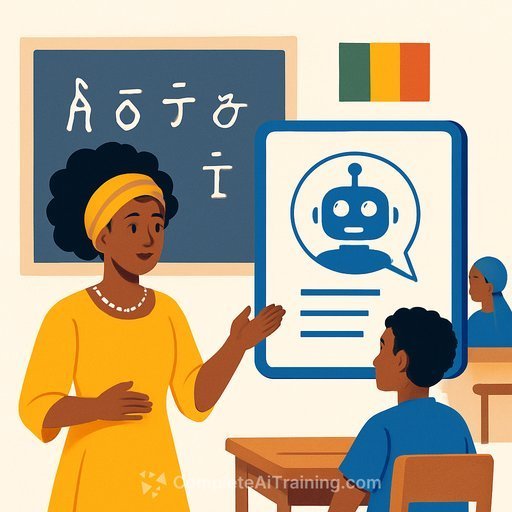
India's Central Board of Secondary Education (CBSE) has introduced a curriculum framework that requires schools to teach computational thinking and artificial intelligence concepts to students in classes III through VIII starting in the 2026-27 academic year.
The framework integrates these topics across existing subjects-mathematics, science, social science, and languages-rather than treating them as standalone courses. Officials say the goal is to strengthen logical reasoning, problem-solving, and pattern recognition while ensuring students understand the ethical use of technology.
What Schools Will Teach
Computational thinking forms the foundation. The curriculum positions it as a cross-cutting skill because the reasoning methods it teaches-breaking problems into smaller parts, identifying patterns, and designing step-by-step procedures-mirror how AI and machine learning systems work.
Rather than lectures, teaching will rely on puzzles, structured problems, collaborative projects, and real-world challenges. Students will tackle problems their communities face and develop solutions they can apply outside the classroom.
CBSE has released student and teacher handbooks available on its academic website. These are companion materials, not textbooks, designed to integrate computational thinking concepts into regular mathematics lessons alongside thinking-based questions that promote analysis and reasoning.
Teacher Training and Implementation
Schools will begin with district-level workshops where teachers and students explore hands-on, project-based learning. Some of the strongest ideas from these workshops may be showcased nationally.
Selected schools will host expert-led sessions conducted online or offline, supported by curated content including videos from PM e-Vidya Channel 15. CBSE's Centres of Excellence will run regional workshops to build educators' capabilities in integrating computational thinking and AI into classrooms.
For educators seeking structured preparation, AI for Teachers resources can help build foundational knowledge before implementing these new frameworks in the classroom.
The Broader Context
The initiative aligns with India's National Education Policy 2020 and National Curriculum for School Education. Officials frame it as preparation for students to engage with technology responsibly and think critically about real-world applications.
The framework emphasizes four focus areas: foundational concepts, interdisciplinary learning, real-world applications, and ethical considerations of AI.
For educators interested in the intersection of AI and education policy, AI for Education covers developments in how institutions are integrating these technologies into learning environments.
Your membership also unlocks: