
AI news ·
Cedars-Sinai develops AI tool that predicts tumor gene activity from biopsy images in minutes
Cedars-Sinai's Path2Space AI predicts gene activity across tumor tissue from standard pathology images in minutes, versus weeks with current methods. The tool also costs thousands less per sample, per a study published in Cell.
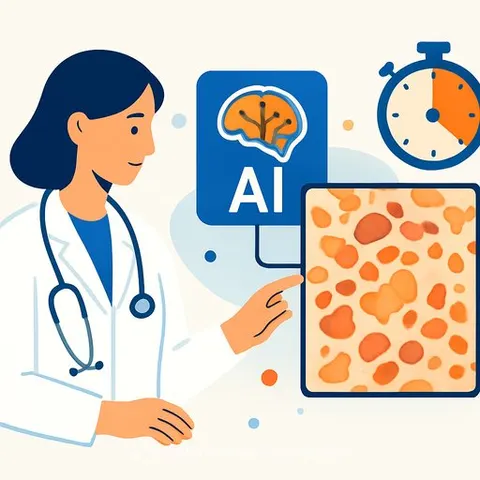
Cedars-Sinai AI Tool Cuts Cancer Analysis Time From Weeks to Minutes
Researchers at Cedars-Sinai have developed an AI system called Path2Space that predicts gene expression patterns in tumors from standard pathology images. The tool reduces analysis time to minutes and costs thousands of dollars less than current methods, according to a study published this week in Cell.
The system addresses spatial gene expression - how genetic activity varies across different areas within a single tumor. Scientists believe these variations may explain why some cancers respond differently to treatment.
Existing spatial gene expression profiling takes weeks and costs thousands of dollars per sample. Path2Space produces comparable results in minutes using images already captured during routine pathology work.
How the System Works
Researchers trained the model using breast cancer biopsy data, then tested it on additional patient datasets. The system predicted the activity of thousands of genes across tumor samples with results that closely matched laboratory measurements.
Lead researcher Eytan Ruppin said the technology allows scientists to study larger numbers of tumor samples than traditional methods permit. This scale could help identify biomarkers tied to treatment response or poor outcomes.
Clinical Implementation Timeline
Researchers emphasized the system requires further validation through clinical trials before hospitals could use it for patient care. The current work demonstrates proof of concept, not clinical readiness.
For IT and development professionals, Path2Space illustrates how AI data analysis can reduce computational overhead while processing complex biological datasets. The approach of training models on existing image formats - rather than requiring new data collection infrastructure - has direct implications for AI for IT & Development teams designing healthcare systems.