
AI news ·
Center for Humane Technology cofounder says AI incentive structures push toward an antihuman future
Pope Leo XIV's encyclical on AI and a new poll showing only 5% of Americans support unregulated AI development haven't slowed deployment. Tech critic Aza Raskin says the problem isn't the technology-it's the market incentives driving it.
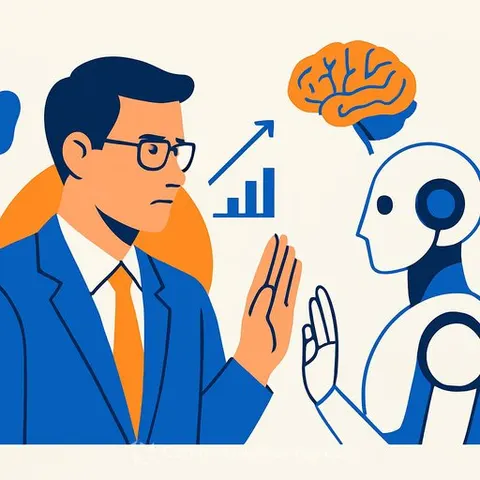
Vatican Warns on AI Incentives While Silicon Valley Races Ahead
Aza Raskin, cofounder of the Center for Humane Technology, says the Vatican's new encyclical on artificial intelligence reflects a shared concern: technology is encroaching on human dignity. The Catholic Church and tech critics agree on little else, but both see danger in how AI is being developed.
Pope Leo XIV released the encyclical Magnifica Humanitas days after Raskin's cofounder Tristan Harris visited the Vatican. The document signals institutional concern about where the AI race is heading.
The Real Problem Isn't AI Itself
Raskin distinguishes between the technology and the incentives driving it. The question, he said, is not whether AI is good or bad, but whether the incentives governing its deployment are good or bad.
OpenAI CEO Sam Altman recently reframed the resource question by comparing AI training to raising humans. Altman asked whether AI-which could deliver double-digit GDP growth and military advantages-deserves scarce resources more than people. That framing reveals the underlying logic, Raskin said: in a race where humans always lose.
The current trajectory treats AI as capital automating itself and reinvesting in itself. An AI system running in a loop has corporate powers and corporate money. Its intent is not family flourishing but market dominance and extraction.
Public Sentiment Doesn't Match Policy
Americans have grown wary of AI, yet deployment accelerates. Raskin compares this to COVID: stock markets soared while everyday people struggled. Capital is lifting off from labor completely.
A recent poll found only 5% of Americans support unregulated, maximum-speed AI development-which is what's happening. The public mood shifted from euphoria to caution, but that shift hasn't slowed anything down.
Social Media Offers a Cautionary Map
Social media's evolution tracks what happens when technology gets captured by market incentives. The platforms began as tools for connection-the possible. Then algorithmic optimization took over, and the probable emerged: polarization, anxiety, amplified extremism.
Social media is essentially a primitive AI system. It doesn't create content; it rearranges human content based on engagement signals. It optimized for reactivity, not flourishing. Raskin and Harris predicted this outcome starting in 2013 and 2014. Nearly everything they forecast has come true.
The pattern repeats: early technology escapes market incentives briefly, offering a genuine glimpse of possibility. Then capital captures it, and the system rewires toward extraction and control.
Inevitability Is a Self-Fulfilling Spell
Raskin rejects the argument that this trajectory is inevitable. Calling something inevitable removes agency-if it's destined, why act?
He points to The Day After, a 1982 television film about nuclear war. It was seen by 100 million Americans, including President Reagan. The film created shared knowledge of what nuclear proliferation would actually cost. That common understanding created space for the Reykjavik accords and nuclear de-proliferation-after Oppenheimer had declared it too late.
The difference between very hard and impossible matters. Raskin said: "Have we even tried?"
AI Isn't the Enemy-Market Logic Is
Raskin founded the Earth Species Project, which uses AI to translate animal language. He's not anti-AI. The technology itself interests him. But he's watched multiple technology waves get swallowed by incentive structures that prioritize engagement and profit over human welfare.
The Vatican's encyclical and growing public skepticism suggest people sense this mismatch. But sensing it and changing course are different things. The question now is whether institutions, regulators, and technologists will act before the probable fully replaces the possible.
For IT and development professionals building these systems, understanding the incentive structures matters. Generative AI and LLM Courses and Prompt Engineering Courses provide technical grounding, but the broader question remains: what are you optimizing for?