
AI news ·
Centre signals dedicated AI law as India prepares regulatory framework
India is drafting its first AI law to combat deepfakes and fraud. It would mandate AI-generated visuals to show a disclosure covering at least 10% of the screen.
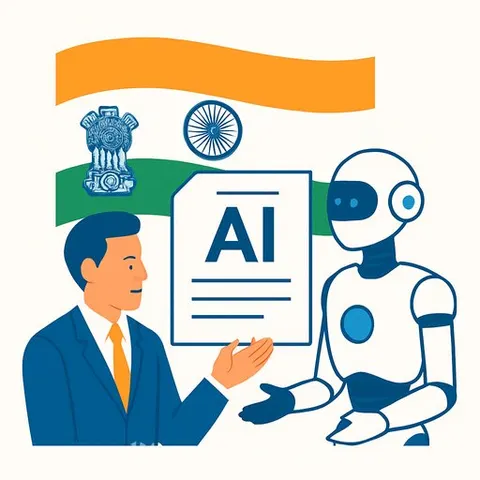
The Ministry of Electronics and Information Technology (MeitY) is preparing to draft India's first standalone artificial intelligence law, Secretary S. Krishnan said on Friday, signalling a departure from relying on existing statutes to address the growing risks of deepfakes, synthetic media, and online fraud. For legal professionals, the move opens a new regulatory front that will demand fresh compliance frameworks and advisory capabilities.
Krishnan's remarks came during an event where he said the government believes the time is "getting right" to move beyond current legal provisions. "We will look at AI regulation when the time is right. It appears the time is getting right and we will start," he said, adding that the ministry could now begin preparing a draft regulation. The government has so far used existing laws to manage AI-related issues, but the technology's quick evolution has made a separate law necessary.
Proposed transparency rules for AI-generated content
The legislative push follows months of work on mandatory disclosure requirements for AI-generated media. In December 2025, Krishnan said industry consultations on labelling AI content had concluded, with revised rules expected soon. Earlier, in October 2025, the IT Ministry proposed amendments to the Information Technology Rules that would require platforms like Facebook and YouTube to detect and flag AI-generated or modified material.
Under those amendments, visual AI content must carry a disclosure covering at least 10% of the screen, while audio clips must include an AI disclosure within the first 10% of playback. The measures aim to curb misinformation, reputational harm, election interference, and financial fraud made easier by convincing fake videos and synthetic voices. If adopted, these would be India's first mandatory transparency framework for AI-generated media.
The upcoming standalone law is expected to be supported by advisory bodies that will shape India's long-term AI governance strategy, indicating a more structured regulatory approach beyond piecemeal rule changes under the IT Act. For legal teams navigating these changes, staying current with AI for Legal developments can help identify compliance gaps and training needs.
Why this matters for legal professionals
Legal professionals will soon need to advise clients on compliance with the proposed AI transparency rules and the forthcoming standalone legislation. Understanding both the technical and legal dimensions of AI-generated content will become central to contract review, litigation risk assessment, and regulatory filings. The shift from existing laws to a dedicated framework also means in-house counsel and law firms must begin preparing governance structures for AI use in business operations, from employment screening to automated customer contracts.