AI Transformer Home Trailer: A New Solution for the Affordable Housing Crisis
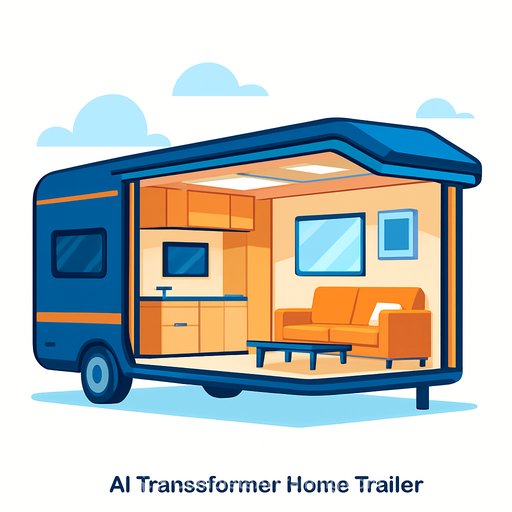
At CES 2026, AC Future introduced the AI Transformer Home Trailer (AI-THt): a smart, expandable electric home on wheels developed with Pininfarina. It's the company's first production product and a CES Innovation Awards 2026 Honoree in Vehicle Tech & Advanced Mobility. Initial deliveries are planned for the second half of 2026, with a starting price of $158,000 for the premium trailer.
"With the AI-THt, we are introducing our first product to market: a fully expandable smart home travel trailer that reimagines how people live, move, and connect," said Arthur Qin, Founder and CEO of AC Future. The concept is straightforward: combine AI, clean energy, mobility, and modern residential design into a deployable, self-sufficient living system.
For Product Teams: Why this matters
This isn't a weekend camper. It's an attempt to package long-term livability, energy independence, and software-driven automation into a manufacturable platform. For product leaders, it shows how a cross-disciplinary system can push beyond category constraints: residential-grade comfort in a mobile form factor, with the electrical architecture and software stack to support it.
Product snapshot
- Patented expansion system doubles livable space to roughly 360 sq ft when parked.
- Refined interior layout with premium, Italian-inspired materials (not traditional RV styling).
- New chassis and exterior built for performance, aerodynamics, durability, and weight efficiency.
- Off-grid package: 2300W+ solar, up to 90 kWh battery storage, EV DC fast + home AC charging, and integrated water recovery.
- Fully electric architecture enabling tow assist, auto-hitch, EV charging, and home backup power.
- AI-driven system managing energy, water, climate, and connectivity with behavior-based optimization.
- Always-connected: satellite internet (Starlink), 360° surround view, blind-spot and hitch monitoring, trailer self-parking, remote security, trailer-to-home and trailer-to-cloud connectivity.
Design to production: notable shifts
Developed with Pininfarina and recognized with a Red Dot Award 2025 - Design Concept, the AI-THt moves from design study to manufacturable product. The architecture suggests focus on DFM/DFX, weight targets, aerodynamics, and system integration across energy, thermal, and safety. That's the bridge from concept wow-factor to daily-use reliability.
For teams building similar platforms, the lesson is simple: Design language helps with desirability, but production wins on integration clarity-how the chassis, energy system, thermal envelope, and software stack play together under real-world load profiles.
AI system and UX
The AI layer manages critical resources and optimizes for comfort and autonomy. Energy and water management sit at the core; climate control and connectivity add usability; and proactive safety reduces friction while towing or parking. A clean UI/UX becomes more than cosmetic when users live in the product for months, not days.
For product development, this demands robust telemetry, OTA update paths, and a learning model that stays useful without creating user confusion. Expect heavy focus on state-of-charge accuracy, thermal forecasting, and predictive maintenance signals.
Go-to-market signals
- Target customer: buyers seeking flexibility and independence without giving up residential comfort.
- Price point: $158,000 (premium model) positions it in the high-spec trailer segment with EV-era features.
- Deliveries: H2 2026. Watch supplier readiness, certification timelines, and service network build-out.
- Channel moment: CES 2026 presence validates interest and early adopter demand. Consider tools and practices from AI for Operations to accelerate supplier readiness, logistics, and service network setup.
What product teams should validate
- Energy budget vs. real use: solar capture (location/season), thermal losses, and HVAC duty cycles.
- Weight and towing: range impact on common EV tow vehicles; hitch dynamics and safety redundancy.
- Water recovery efficacy: output rates, filtration lifecycle, and maintenance UX.
- Connectivity uptime: satellite transitions, failover behavior, and offline modes.
- Serviceability: modular components, diagnostics, and repair path for mobile technicians.
- Software lifecycle: OTA reliability, cyber hardening, and data privacy.
Where it fits
Housing constraints, grid instability, and climate volatility are pushing demand for flexible living. The AI-THt aims to meet that moment with true self-sufficiency and residential comfort. The long-term test will be unit economics and durability under real, full-time use.
See it at CES
Live demo: Wednesday, January 7 at 2 pm PST, LVCC North Hall, Booth 10321. The AI-THt is a CES Innovation Awards 2026 Honoree. For context on the program, see the CES Innovation Awards. For design background, explore Pininfarina.
Final take for product leads
The AI-THt packages a complex system-energy, water, mobility, and software-into one experience. The opportunity is clear: deliver all-day livability with low dependence on external hookups. The challenge is also clear: ship a platform that stays reliable and simple under messy, off-grid reality.
If your team is upskilling on AI systems for physical products, consider the AI Learning Path for Plant Managers to close skill gaps on data, modeling, and deployment workflows relevant to scalable production and site operations.
Your membership also unlocks: