ChatGPT Health and Claude for Healthcare: What Matters for Clinics and Health Systems
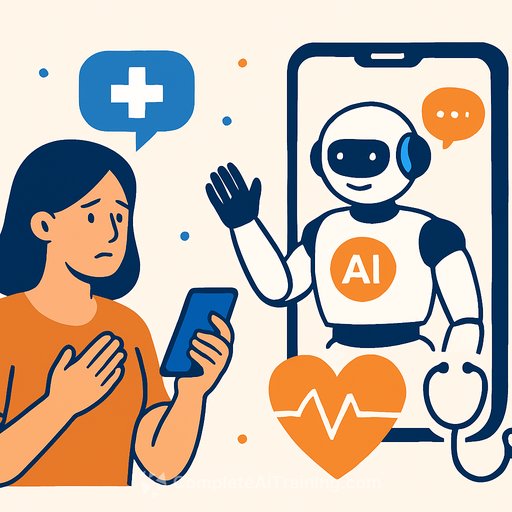
OpenAI has introduced ChatGPT Health, a dedicated space for health-related conversations inside ChatGPT. The move follows internal reports of over 230 million health questions asked each week. Health chats are separated from general conversations, and the assistant will prompt users to switch into the Health section if a topic turns clinical.
Inside the Health area, ChatGPT can reference prior interactions to keep context and improve continuity. It can also connect to personal data or medical records from wellness apps like Apple Health, Function, and MyFitnessPal. OpenAI says conversations in the Health section won't be used for model training.
According to OpenAI, the goal is to reduce friction in common pain points: cost, access, packed clinician schedules, and gaps in continuity of care. As put by Fidji Simo, OpenAI's CEO of Applications: "ChatGPT Health is another step toward turning ChatGPT into a personal super-assistant that can support you with information and tools to achieve your goals across any part of your life."
Why this matters for healthcare teams
Segmented health conversations create cleaner boundaries between casual chat and clinical topics. That helps with internal policy, auditing, and risk controls. The ability to pull from prior context can support patient education, care navigation, and follow-up instructions without repeating the same intake steps.
App connections open doors for data-driven guidance. Think trends from step counts, sleep, weight, or glucose logs informing self-management prompts. Still, any use with PHI requires clear consent, vendor due diligence, and alignment with your compliance framework.
Anthropic's Claude for Healthcare: A different angle
Shortly after OpenAI's announcement, Anthropic launched Claude for Healthcare. Like ChatGPT Health, it connects to data from phones and wearables. The company positions Claude as more operationally capable, with connectors to institutional resources and faster access to external databases.
Claude's connectors include the CMS Coverage Database, ICD-10 codes, the National Provider Identifier (NPI) Standard, and PubMed. That positions it for coding support, coverage lookups, literature queries, and provider directory tasks-while ChatGPT Health appears to lean more into patient-facing interactions.
Practical uses worth testing
- Patient education: plain-language explanations, prep/post-op instructions, lifestyle coaching tied to wearable data.
- Care navigation: benefits FAQs, clinic policies, referral steps, appointment prep checklists.
- Coding and coverage: ICD-10 suggestions, coverage criteria checks, prior auth summaries (verify outputs before use).
- Clinical operations: draft messages, reminders, follow-ups, and basic documentation scaffolding (human review required).
Governance and safeguards
- Define approved use cases and prohibited ones; keep diagnostic or treatment decisions with licensed clinicians.
- Set PHI rules: consent flows, data minimization, secure storage, and access logs.
- Evaluate model behavior on your clinical content; spot-check for bias, hallucinations, and out-of-date guidance.
- Track versioning and provenance: when outputs inform patient communication, document the human-in-the-loop review.
How to evaluate ChatGPT Health vs. Claude for Healthcare
- Data integrations: which connectors your workflows need now (coverage, coding, research, wearables, EHR bridges).
- Speed and reliability: latency under load, uptime SLAs, and escalation paths.
- Privacy posture: how health chats are isolated, what's excluded from training, audit trails, and admin controls.
- Fit for purpose: patient-facing vs. back-office tasks; each tool may suit different teams.
Getting started
Pick one or two contained workflows and run a time-boxed pilot with clear success metrics. Train staff on prompt patterns, red-flag scenarios, and documentation standards. Keep a human reviewer in the loop for any patient-facing output.
If you're building internal skills, this resource can help you ramp up with focused programs: AI courses by job.
Bottom line
ChatGPT Health pushes health conversations into a safer lane with context and app data, while Claude for Healthcare leans into connectors for coding, coverage, and research. Both can remove friction in patient communication and administrative work when paired with strong governance. Start small, measure impact, and keep clinical judgment at the center.
Your membership also unlocks: