OpenAI launches ChatGPT Health: practical implications for healthcare teams
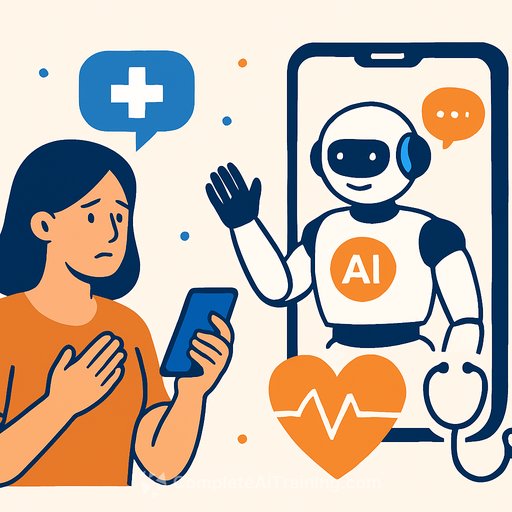
OpenAI introduced ChatGPT Health, a sandboxed tab inside ChatGPT for health-related questions. The company is explicit: it's "not intended for diagnosis or treatment."
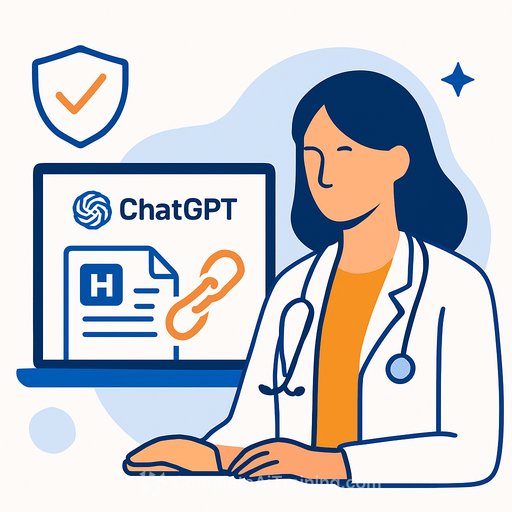
The new experience separates chat history and memory from the rest of ChatGPT and encourages users to connect personal medical records and wellness apps. The aim is more context-aware answers without mixing with general chats.
What it is
ChatGPT Health invites users to link medical records and apps like Apple Health, Peloton, MyFitnessPal, Weight Watchers, and Function. That data can be used to explain lab results, summarize visit notes, spot patterns in sleep or activity, and offer food or exercise guidance.
OpenAI partnered with b.well for back-end record integration, covering connections across roughly 2.2 million providers. Access is waitlist-based at launch, with a gradual rollout to all users regardless of subscription tier.
Why patients will use it
OpenAI reports that over 230 million people ask health and wellness questions in ChatGPT each week. In underserved rural communities, users send nearly 600,000 health messages weekly on average.
Most of these conversations happen outside clinic hours-about seven in ten. That tells you where demand is: immediate, after-hours, and context-specific.
Boundaries and risks
OpenAI repeats the limit: it's not a diagnostic tool. But once advice leaves the chat, real-world behavior is hard to control.
There have been safety incidents with AI advice before, including a reported hospitalization tied to following incorrect dietary guidance and well-publicized dangerous outputs in other AI systems. Mental health adds more risk: the company says it will direct users in distress to professionals and loved ones, and it tuned responses to be informative without being alarmist. Still, the product could aggravate health anxiety for some users.
Privacy, security, and compliance
ChatGPT Health runs as a separate space with enhanced privacy and multiple encryption layers. It does not use Health conversations to train foundation models by default. If a user starts a health chat in regular ChatGPT, the system may suggest moving it into Health for extra protections.
There is no end-to-end encryption. OpenAI acknowledges prior incidents, including a March 2023 breach exposing some chat titles and limited account details. The company may provide data in response to valid legal processes or emergencies.
HIPAA: OpenAI's head of health noted that HIPAA does not apply to this consumer product setting. For clarity on HIPAA scope, see HHS guidance here: HIPAA at HHS.
What this means for providers and health systems
Patients will bring AI-generated summaries, lab explanations, and plan ideas to visits. Treat it as a patient education tool-useful for preparation and comprehension-while keeping clinical decisions in licensed hands.
Build a simple, repeatable workflow for reviewing AI outputs, correcting errors, and guiding next steps. Clarity reduces risk and saves time.
- Set policy: AI can help explain labs and prep questions; it cannot diagnose, treat, or authorize medication changes.
- Consent and data hygiene: remind patients not to paste full charts or images with sensitive identifiers unless they accept consumer-level protections.
- Vendor review: if your organization explores integrations via b.well, map data flows, retention, and audit trails. Clarify what leaves your perimeter.
- Mental health safety: define crisis protocols. Redirect emergencies to local services or hotlines and document those pathways.
- Clinical guardrails: any medication, dosing, or differential changes require clinician confirmation. Keep prompts focused on education ("explain," "prepare questions").
- Staff training: give clinicians talk tracks for discussing AI summaries, pointing out inaccuracies, and documenting use in the note.
- Risk management: add portal disclaimers, a channel to report unsafe outputs, and escalation rules for high-risk topics.
- Equity: after-hours use is high. Offer clear guidance on when to message the care team, schedule a visit, or use urgent care.
- Measurement: track the impact on call volume, message load, preparation quality, and visit efficiency. Adjust scripts accordingly.
- Legal readiness: document retention, subpoenas, and patient instructions in your privacy notices and consent forms.
How to communicate with patients
- What it can help with: understanding recent tests, preparing for appointments, setting goals, and comparing insurance tradeoffs.
- What it cannot do: provide a diagnosis, start/stop medications, handle emergencies, or replace clinical judgment.
- Privacy note: it's a consumer product without end-to-end encryption and is not covered by HIPAA. Legal disclosure may occur under valid orders.
- Next steps: bring AI outputs to your visit; we'll review them together and decide on care plans.
Implementation checklist
- Publish a short AI usage statement on your website and patient portal.
- Add "Review AI summary" as a pre-visit intake option.
- Standardize a one-paragraph response for common errors (labs, imaging, meds).
- Provide a crisis footer for mental health and urgent symptoms across patient materials.
- Run a quick tabletop exercise on data requests and legal holds.
- Offer an AI literacy primer for clinicians and front desk teams. If you need structured training, see AI courses by job.
Bottom line
ChatGPT Health meets a real need: clear explanations, anytime access, and help preparing for care. The guardrails matter: no diagnosis, no treatment, and consumer-level privacy.
Healthcare teams that set simple policies, teach patients how to use it, and keep clinical decisions in the clinic will get the benefit without the fallout.
Your membership also unlocks: