
AI news ·
Chennai epidemiologist develops AI platform to verify clinical recommendations
Chennai's HIVE platform pairs AI with clinical expertise to deliver verified health recommendations. The free tool aims to improve preventive care for millions.
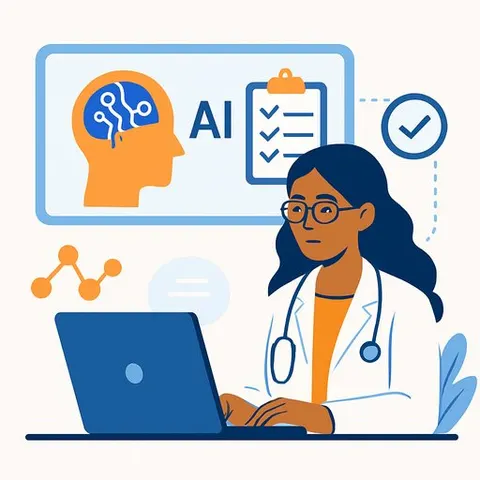
A Chennai-based epidemiologist has built a platform that pairs artificial intelligence with clinical expertise to deliver verified healthcare intelligence, aiming to strengthen preventive care across India. The Healthcare Intelligence and Verification Engine (HIVE), developed by Dr. Viduthalai Virumbi Balagurusamy of the Honeybee Population Healthcare Foundation, cross-references patient records, medical literature, public health data, and current guidelines to produce transparent, evidence-backed recommendations.
Unlike AI tools that generate responses primarily from open web data, HIVE integrates the treating doctor's clinical judgement. This means the intelligence is tailored to individual patients and is designed to be explainable, showing how each recommendation was verified across multiple sources. The platform arrives as millions turn to AI for Healthcare for health information, amid rising concerns over misinformation, delayed diagnosis, and inappropriate self-medication.
"Healthcare is not just about information. It is about trust, context and verification. HIVE has been built to ensure that healthcare decisions are supported by reliable evidence, clinical reasoning and patient-specific realities rather than generic responses," said Dr. Balagurusamy.
A verification engine, not just a chatbot
HIVE's architecture goes beyond single-source generation. The engine pulls in structured evidence from patient records, peer-reviewed medical literature, public health datasets, and clinical guidelines, then layers in the provider's own reasoning. The result is a verified thread of logic that can be audited-something missing from most consumer-facing AI health tools. This design matters in a setting where a single hallucinated fact can lead to a missed diagnosis or dangerous self-treatment.
Because HIVE makes its evidence trail visible, it lets clinicians see why a suggestion was made. That transparency is a hard requirement in healthcare, where decisions must be defensible and traceable to an authoritative source.
Supporting frontline workers and public health programs
The platform is also being positioned to assist community health workers in underserved areas where specialist access is scarce. It can help identify early warning signs for conditions such as maternal complications, anaemia, mental health risks, and non-communicable diseases. By equipping these workers with a verified decision-support system, HIVE aims to trigger earlier interventions and improve follow-through on screening and treatment plans.
"Artificial intelligence should not replace human judgement. It should strengthen it. Our goal is to create a system where technology, clinicians and public health workers work together to improve health outcomes for millions of people," said Dr. Balagurusamy.
The foundation currently offers HIVE free to individuals and at subsidised rates for doctors, clinics, and hospitals. The pricing model is meant to lower the barrier for resource-constrained settings while keeping the tool tied to a clinical verification workflow.
Why this matters for IT and development professionals
HIVE demonstrates a practical pattern for building AI in high-stakes, regulated domains: an inference pipeline that treats outputs as hypotheses to be verified, not answers to be trusted. For developers working on clinical decision support or any system where factual accuracy is mission-critical, the core lesson is the architecture of evidence layering. The system ties each recommendation to patient-specific data, published research, and clinical guidelines-then leaves the final call with a human expert.
That design choice-augmenting rather than replacing clinicians-reduces risk and aligns with regulatory expectations. It also makes the system easier to audit and iterate on, a concern that IT teams in healthtech frequently face. As AI models become easier to embed, the verification layer HIVE adds is a reminder that shipping a safe product means more than prompt engineering.