
AI news ·
Chicago journalists and voice actors sue Google, Amazon, Apple and others over AI voice training
Nine Chicago journalists and voice actors have sued Google, Amazon, Apple, Microsoft, Meta and others, claiming their voice recordings were used to train AI without consent. The cases test whether Illinois' biometric privacy law covers voiceprints.
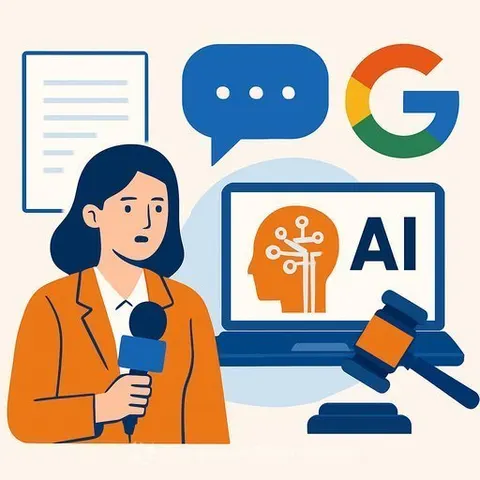
Chicago Journalists Sue Tech Giants Over Voice Data Used in AI Training
Nine class action lawsuits filed in federal court this week accuse Google, Amazon, Apple, Microsoft, Meta, Adobe, Samsung, ElevenLabs and NVIDIA of collecting voice recordings from Chicago-based journalists, podcasters and voice actors without consent to train AI systems. The plaintiffs include retired NBC 5 anchors Carol Marin and Phil Rogers, along with podcast hosts and audiobook narrators.
The cases represent a new application of Illinois' Biometric Information Privacy Act, a state law that has generated thousands of lawsuits and millions in settlements over the past decade. BIPA requires companies to obtain written consent before collecting biometric data - fingerprints, facial scans, or voice patterns.
What the lawsuits claim
The complaints allege the companies ingested voice recordings to build text-to-speech and voice synthesis models without notifying or asking the plaintiffs. None of the companies responded to requests for comment.
Attorneys argue a voiceprint - a digital fingerprint derived from pitch, timbre, resonance and speech patterns - is as immutable as a physical fingerprint. Unlike a stolen Social Security number, which can be reissued, a compromised voiceprint cannot be recovered.
"What we are seeing is an illegal and unethical exploitation of talent on a massive scale, and one of the largest violations of biometric privacy ever committed," said Ross Kimbarovsky, an attorney with Chicago-based law firm Loevy & Loevy.
BIPA's evolution
Illinois' biometric privacy law has primarily targeted employee timekeeping systems and facial recognition technology. Facebook paid $650 million in 2020 to settle claims it collected facial recognition data from users without consent.
As companies adopted compliance measures, litigation shifted to emerging technologies: smart security cameras, workplace safety systems, and virtual try-on software. AI voice models now appear to be the next frontier.
In 2023, Whole Foods - owned by Amazon - settled a voiceprint case with 330 warehouse employees for $300,000. That settlement marked the first BIPA payout specifically tied to voice data collection.
The identifiability question
Legal experts say the cases may hinge on whether voiceprints qualify as "identifiable" biometric information under BIPA. The lawsuits characterize voice modulation patterns as permanent identifiers that reveal biological and behavioral traits developed over a lifetime.
If courts agree, voiceprint litigation could become a major focus for BIPA lawyers - particularly as companies continue developing AI systems trained on public recordings.