
AI news ·
Children need to understand AI, not just use it, says LEGO Education executive
Schools are teaching kids to use AI but skipping the harder lesson: how it actually works. Half of U.S. computer science teachers lack confidence teaching AI, and that gap is holding students back.
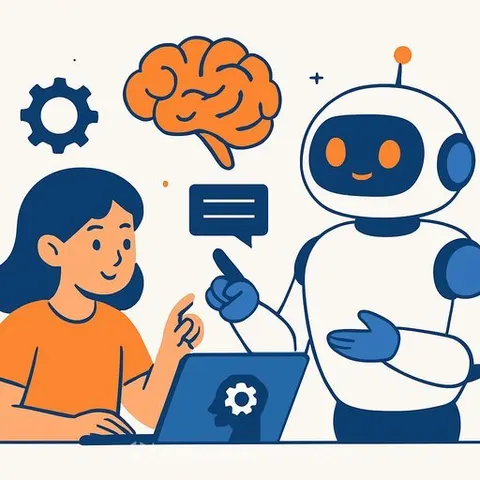
Schools Must Teach Children to Build AI, Not Just Use It
Education systems are integrating artificial intelligence into classrooms to personalise learning and improve outcomes. But schools are overlooking a more urgent priority: teaching children how AI actually works.
The gap matters. A survey of US computer science teachers found that nearly half do not feel confident teaching AI even after training. Students are already using these tools. Adults are catching up slowly.
The misconception driving current efforts is that AI education means deploying AI on children-adaptive tutors, automated lesson plans, chatbots. That is incomplete. It treats children as passive consumers of technology rather than builders of it.
From Passive Consumers to Active Builders
Foundational AI literacy means teaching children to understand how these systems work and where they fail. It means giving them a screwdriver to disassemble the box, not just showing them the finished product.
Decades of research shows children develop deeper understanding through building, testing, and reflecting on tangible objects. They learn by doing, not by passively receiving instruction.
Computer science should become core literacy, like reading and numeracy. If schools want children to build these technologies rather than merely consume them, they need to teach the foundations: computer science, probability, data, sensing, and algorithmic bias.
What Governments Must Do
Policymakers face a choice. They can use AI to optimise existing systems-grading tests faster, writing reports more efficiently. Or they can recognise this as a once-in-a-generation opportunity to redesign education itself.
That requires three things. First, national policy and funding that elevates computer science and data literacy to the same level as reading and numeracy. Second, a shift in how teaching works. Third, investment in teacher confidence.
Teacher self-efficacy is one of the strongest predictors of whether technology actually gets used in classrooms. When teachers feel confident, students become confident. The confidence gap is the bottleneck.
Teacher Training Must Be Sustained, Not One-Off
Effective professional development goes beyond technical workshops. It requires ongoing, curriculum-embedded learning that positions teachers as co-learners alongside students.
Teachers need ready-to-use, curriculum-aligned content and scaffolding to build their understanding progressively. They need permission to say "I don't know. Let's find out together" without losing authority.
Hands-On Learning Builds Critical Thinking
When a child builds a physical model and sees it work because of code they wrote or an AI model they trained, computer science becomes tangible instead of abstract.
The OECD's research on creativity and critical thinking found that students who develop their own solutions and iterate on ideas connect more deeply with subject matter. They develop the metacognitive skills essential for innovation: breaking down problems, reasoning about uncertainty, evaluating assumptions in systems.
This approach also widens participation. Computer science has long been perceived as a subject for a narrow subset-the "nerds." Connecting tools to what children care about-their passions, interests, communities-engages more learners.
Privacy, Transparency, and Human Creativity
If schools teach children to understand AI, they must also teach them how these systems can go wrong.
Children's data should never leave the classroom or train models. AI systems should not have faces, names, or be described as "creative." Research shows anthropomorphism leads to parasocial attachments, where children form bonds with AI systems and substitute those interactions for real human relationships.
Models children interact with should come with clear documentation describing the data used to train them and the biases they may contain. If the goal is understanding, transparency is non-negotiable.
The Real Question for Schools
AI will transform education. That is already happening. The question is whether schools will use this moment to simply optimise what exists, or to truly shift towards more effective teaching.
Equipping the next generation with foundational AI literacy, creative confidence, and critical judgment about when and how these tools should be used requires a different kind of classroom. More collaboration. More student voice. More hands-on building. Less isolation at screens.
For educators ready to develop these skills in their own practice, AI Learning Path for Teachers offers structured guidance on teaching AI literacy effectively.
The children are ready. The question is whether schools will move fast enough to meet them.