Chile Launches Latam-GPT: A Local-First AI For Latin America
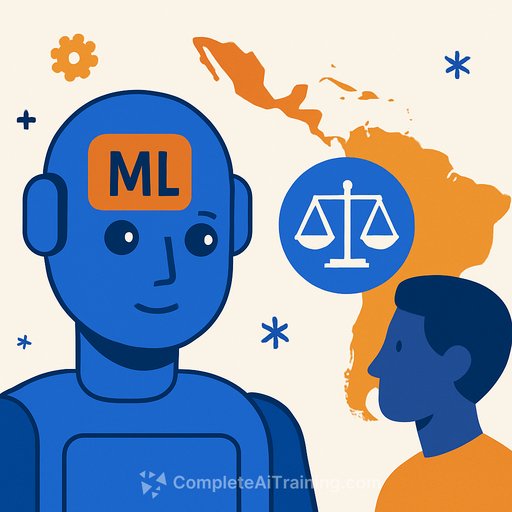
Chile is rolling out Latam-GPT, an open-source AI model built by the National Center for Artificial Intelligence (CENIA). It's trained on millions of Latin American data points to reduce stereotypes and capture real cultural nuance across the region. Latam-GPT is part of a broader wave of Generative AI and LLM efforts tailored to local contexts.
The goal is simple: stop one-dimensional depictions and make AI reflect how people actually live, speak, and work from Mexico to Patagonia. "The models developed in other parts of the world do have data from Latin America but it represents a fairly small proportion," said CENIA director Alvaro Soto. Science Minister Aldo Valle added that Latin America cannot stay a passive user of foreign systems without risking traditions and identity.
What Makes Latam-GPT Different
- Open-source and customizable: Developers can adapt parts of the model to local use cases.
- Regional data at the core: Trained on Latin American sources to reduce bias and clichés.
- Built with many hands: Backed by universities, foundations, libraries, government bodies, and civil groups from Argentina, Brazil, Chile, Colombia, Ecuador, Mexico, Peru, and Uruguay.
- Language coverage: Spanish and Portuguese now, with plans to include Indigenous languages.
Under the Hood
- Training corpus: more than eight terabytes (millions of books' worth).
- Budget: about $550,000, funded by CAF and CENIA resources.
- Infrastructure: first version on AWS; future training on a supercomputer at the University of Tarapacá in northern Chile.
Why This Matters
- For citizens: Fewer lazy stereotypes. More accurate responses to local questions, slang, and context.
- For governments: A public model you can inspect, adapt, and align with national standards for education, health, and public services. Learn more about AI for Government.
- For IT and data teams: A foundation model you can fine-tune with enterprise or public-sector datasets-without locking into a closed vendor. See training paths for AI for IT & Development.
- For development and NGOs: New paths to build language-access tools, civic services, and culturally aware applications on a tight budget.
Early Use Cases On The Table
Soto points to hospital operations-routing, logistics, and resource use-as a practical starting point. On the private side, Chilean entrepreneur Roberto Musso plans to use Latam-GPT for airline and retail customer service so people can write and get answers in local language and tone.
That includes slang, regional idioms, and even differences in speech rate-details that often trip up generic systems trained mostly on non-Latin American data.
How Teams Can Pilot In 30 Days
- Pick one process: Admissions triage, claims intake, contact center replies, or procurement Q&A.
- Assemble a small corpus: Policies, FAQs, historical tickets, and anonymized records with strict data controls.
- Prototype: Fine-tune or apply retrieval (RAG) on Latam-GPT with 200-500 examples. Keep it simple.
- Evaluate for bias and accuracy: Test across countries, dialects, and demographic groups. Track harmful stereotypes and falsehoods.
- Put guardrails in: Prompt rules, refusal policies, logging, and human review for sensitive actions.
- Go live in a narrow slice: One department, one channel, or one workflow. Expand only after metrics improve.
Governance Checklist For Public Institutions
- Data sourcing: Prefer local and multilingual corpora. Document licenses and consent.
- Safety: Red-team for bias, misinformation, and harmful outputs before production use.
- Transparency: Disclose model use in public services and provide appeal channels for users.
- Procurement: Require access to model cards, training data summaries, and fine-tuning logs.
- Continuity: Plan for updates as Indigenous language coverage grows.
Context: A Global Push For Public Models
US companies lead commercial AI, with China pushing cost-focused systems and Europe lagging in third. Other regions are building public models aligned with local norms-Singapore's SEA-LION is a recent example for Southeast Asian languages.
Kenya's UlizaLLama supports Swahili-speaking expectant mothers, showing how language-specific tools can serve public health. For those tracking the trend, here's more on SEA-LION from AI Singapore: SEA-LION overview.
What To Watch Next
- Indigenous language support: Coverage and quality will be a key test of impact.
- Public-sector pilots: Health and education use cases will reveal real-world tradeoffs.
- Open contributions: Community datasets, evaluation sets, and safety prompts from across Latin America.
Upskilling Your Team
If you're planning an internal AI program for public services or enterprise ops, map roles to practical training and certifications. A simple starting point is to align courses and hands-on practice to the specific workflows you intend to automate or support.
Latam-GPT won't outspend giant labs, and it doesn't need to. Its edge is cultural accuracy, open access, and a coalition of contributors who live the context it's built to serve.
Your membership also unlocks: