
AI news ·
China bristles at Anthropic CEO's comments about its AI development
China dismissed Anthropic CEO Dario Amodei's AI warnings as "fearmongering" aimed at maintaining a technology monopoly. Beijing aims to close the AI gap with U.S. firms by 2030.
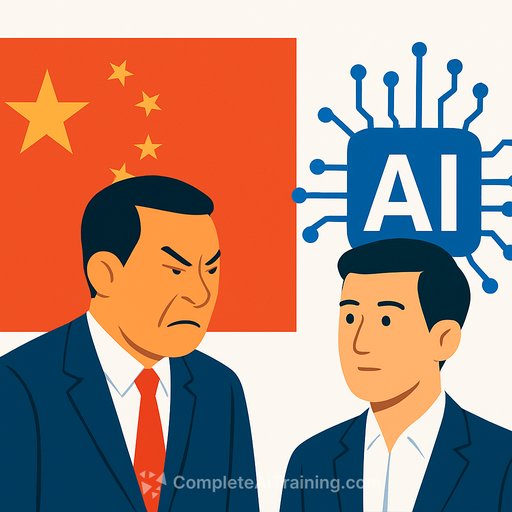
China has pushed back sharply against comments by Dario Amodei, CEO of AI company Anthropic, calling his warnings about the country's artificial intelligence development "fearmongering." The response came after Amodei raised concerns about the pace and direction of China's AI programs in international forums.
The diplomatic friction centers on how global AI competition is being framed. Amodei, whose company builds large language models including the Claude assistant, has publicly argued that unchecked AI development in China poses risks that Western governments are underestimating. Beijing's state-affiliated outlets described the remarks as an attempt to stoke fear and justify technology restrictions.
Beijing's official response
A spokesperson for China's foreign ministry dismissed the characterization as unfounded. "Certain individuals are deliberately hyping up the so-called threat from China's technological progress," the spokesperson said. "This is nothing more than fearmongering aimed at maintaining a monopoly on advanced technology."
The exchange reflects broader tensions between Washington and Beijing over semiconductor export controls, AI chip bans, and the strategic framing of AI as a national security domain. China has invested heavily in domestic AI capabilities, aiming to close the gap with U.S. firms by 2030.
Anthropic's position on AI risk
Anthropic has positioned itself as a safety-focused AI developer. Amodei has testified before the U.S. Congress on the catastrophic risks of advanced AI systems, including those developed by state actors. His warnings about China specifically reference the potential for AI to accelerate military modernization and disinformation campaigns.
Industry analysts note that both nations view AI leadership as central to economic competitiveness. The U.S. has tightened export rules on advanced chips, while China has accelerated its own semiconductor research and open-source model releases from firms like Alibaba and DeepSeek.
Why this matters for government, IT, and development professionals
For professionals working at the intersection of technology and policy, this dispute signals that AI governance will remain a flashpoint in U.S.-China relations. Government contractors and IT planners should anticipate continued export control adjustments and potential supply chain disruptions for hardware and cloud services. Development teams building on open-source models may face new compliance requirements as geopolitical lines harden around dual-use AI technologies.