China's NRTA Targets Abusive AI Mashups: What Managers Need to Do Now
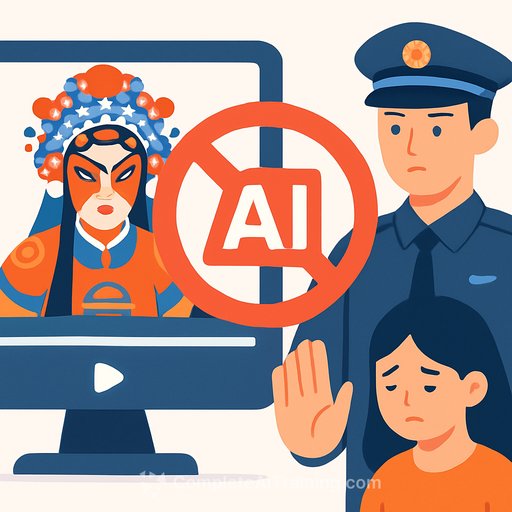
Starting January 1, 2026, China's National Radio and Television Administration (NRTA) will run a month-long campaign to curb the misuse of AI-altered videos. The focus: content that distorts classic literature, historical and revolutionary themes, national role models, and children's characters. Platforms are expected to review, remove, and penalize non-compliant content and accounts, with an emphasis on protecting minors. Afterward, the NRTA plans to evaluate results and move to long-term governance.
Scope: What's in the crosshairs
- AI-altered clips that twist the core spirit or character portrayals of classics like A Dream of Red Mansions, Outlaws of the Marsh, Journey to the West, and Romance of the Three Kingdoms.
- Distortions of historical and revolutionary themes, plus portrayals of heroes and role models.
- Content pushing vulgarity, violence, or sensationalism, or conveying distorted values that undermine public morality.
- Misuse of cultural symbols that could mislead audiences about history, culture, or national identity.
- "Cult-style" edits of beloved children's cartoons.
Prior guidance flagged examples such as turning Empresses in the Palace into gunplay, refitting A Dream of Red Mansions as a kung fu drama, or depicting the Monkey King riding off on a motorcycle. In November, AIGC, comics, emoticon-style mini-dramas, and other animated formats entered a categorized, tiered review system for pre-release checks and removals.
Who should act now
- Streaming and short-video platforms hosting user-generated content.
- Studios, MCNs, agencies, and creator networks monetizing or distributing AIGC shorts.
- Brands advertising against entertainment, culture, or youth content.
- Education and kids' content channels with high exposure to minors.
Immediate actions for managers (this week)
- Freeze distribution for obvious high-risk formats (classic IP parodies, historical themes, child characters) pending review.
- Stand up a pre-release gate for AIGC across shorts, mini-dramas, comics, and emoticon formats.
- Block keywords and cues tied to protected IPs and themes; auto-route flagged content to senior reviewers.
- Define penalties for repeat violators (rate limits, feature limits, demonetization, suspensions, bans).
- Strengthen kids' safety: age gates, stricter recs for minors, and higher review thresholds for child-facing feeds.
- Conduct IP and cultural checks for Chinese classics and national symbols before approval.
- Update creator contracts and platform terms to prohibit distortions that violate policy or morality clauses.
- Enable audit trails: who approved, when, with what evidence; retain logs and takedown records.
- Publish a clear appeals channel with tight service levels to reduce creator friction.
- Brief legal, policy, content ops, and trust & safety teams on the campaign and enforcement plan.
Operational safeguards to implement
- Label AIGC; watermark where possible; log model, prompts, and edit trails for forensics.
- Automate detection for protected IPs, historical terms, and national symbols; combine with human cultural review.
- Risk scoring: elevate review for violent, vulgar, or sensational edits; require senior sign-off.
- Minor-first policies: stricter thresholds for anything that could be shown to children.
- Vendor management: extend these standards to MCNs, post houses, and content partners; audit quarterly.
- Incident playbooks: criteria for removals, notifications, and account actions within defined SLAs.
KPIs to track
- Time to detection and time to removal for non-compliant AI edits.
- Pre-release catch rate for high-risk content; false-positive rate.
- Recidivism by creator/account after enforcement.
- Exposure of minors to removed content (impressions before takedown).
- Appeals volume, win rate, and resolution time.
Timeline and enforcement
The campaign runs through January 2026, with a review and transition to longer-term oversight expected. Treat this as the new baseline for your 2026 content governance plan. Build durable controls now, not one-off fixes.
Context and references
The NRTA has been tightening management of AI-altered content since late 2024, with explicit warnings against distortions of classic IP and cultural misappropriation. A November initiative brought AIGC shorts and animated formats into a tiered review system that emphasizes pre-release checks and removals to protect minors.
For broader regulatory context, see the NRTA's official site here and a widely cited translation of China's generative AI measures here.
If you need to upskill your team
Train reviewers and producers on AIGC risks, video tooling, and safe workflows. A quick place to start: curated tools and practices for AI video work here.
The takeaway: strengthen pre-release review, tighten kids' safety, and document everything. This campaign is short, but the governance that follows will be ongoing.
Your membership also unlocks: