
AI news ·
China launches national AI education plan targeting universal literacy by 2030
China will require teachers to pass AI certification exams and integrate AI instruction across all grade levels by 2030. The "AI Plus Education" plan also extends AI learning into after-school programs nationwide.
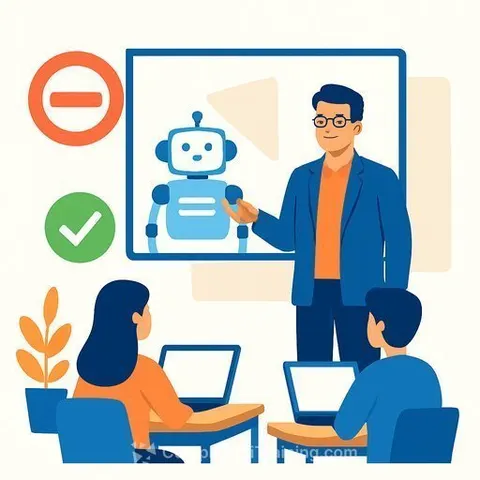
China mandates AI literacy for teachers, students by 2030
China has unveiled an education overhaul that will require teachers to demonstrate AI competency and teach students about artificial intelligence across all grade levels. The "AI Plus Education" action plan targets universal AI literacy by 2030, making AI knowledge a requirement for teacher certification and integrating the technology into school curricula nationwide.
Teachers will need to pass AI-focused qualification exams to maintain their credentials. The government expects educators to move beyond traditional teaching methods and use AI tools to manage assignments, ensure quality control, and provide tutoring support.
Regional education authorities must develop specific guidelines on what students should learn about AI, which topics to cover, and how much class time to dedicate to the subject at each grade level. AI instruction will extend beyond classrooms into after-school activities and study tours.
China is betting the education push will address a critical shortage of AI talent. The country now has more than 6,000 AI firms and ranked second globally in AI advancement after the United States as of 2024, according to Stanford University. By the end of 2025, China's AI sector had exceeded 1.2 trillion yuan (roughly $174 billion).
Zhang Changqing, a professor of AI at Tianjin University, said the move addresses a real need. "As AI technologies evolve quickly and integrate with a wide range of industries, there is a growing need for interdisciplinary professionals who combine technical expertise with an understanding of real-world applications," he said.
For educators, this shift means preparing for new professional requirements. Those seeking to understand how AI fits into teaching practice can explore AI for Education resources or consider an AI Learning Path for Teachers to develop the skills China's certification exams will soon demand.