China launches national AI platform for scientific research
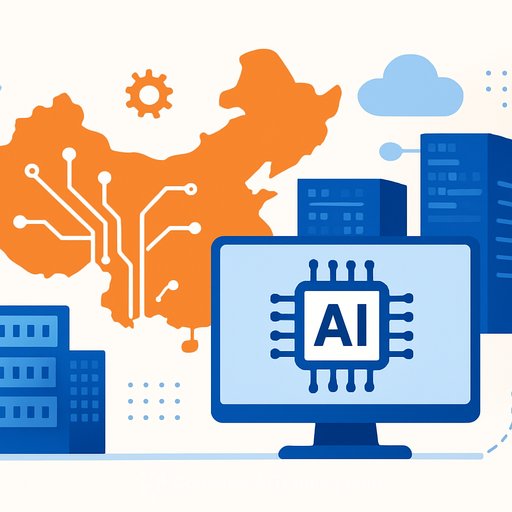
China has launched a national AI-driven research platform integrated with the National Supercomputing Network. It can run analyses, assist with study design, and generate draft reports - cutting the manual load on researchers and speeding up cycles from idea to result.
The platform is connected to 30+ supercomputing centers and is already available to more than a thousand institutes and labs across the country. Reporting on the launch has appeared in regional tech media, including SCMP.
What the platform does
The system ingests data from instruments, public repositories, and institutional stores, then handles cleaning, statistical analysis, and modeling; teams looking to upskill on these steps can consult AI Data Analysis Courses. It can run literature scans, suggest methods, and draft methods/results sections with citations. Provenance tracking and versioned workflows aim to keep analyses reproducible.
Compute backbone
By tying into the National Supercomputing Network, the platform can schedule work across multiple centers and hardware types. That opens capacity for large simulations, multi-omics pipelines, materials discovery, climate runs, and fine-tuning domain models with institute-level policies applied.
If you need a refresher on China's HPC footprint, see references on major centers and systems such as Tianhe-2.
Who gets access
Access is currently extended to 1,000+ institutes and scientific centers. Expect role-based controls, institute workspaces, and APIs for integrating lab pipelines. Onboarding will likely prioritize data-rich groups that can provide well-documented datasets and clear evaluation targets.
Why this matters for your lab
- Faster iteration: preprocessing, baselines, and model comparisons in hours instead of weeks.
- Shared workflows: reusable, versioned pipelines that improve reproducibility across teams.
- Governance centralization: uniform policies for access, audit, and compliance.
- Consistent reporting: drafts aligned to grant, journal, and preprint formats.
- Compute access: smaller labs can run workloads that previously required dedicated clusters.
Practical steps to get value
- Inventory your data. Fix metadata, units, and ontologies. Map sensitive fields and define retention rules.
- Start with low-risk workloads: data cleaning, literature triage, baseline models, and replication studies.
- Set policy early: access controls, PII handling, export restrictions, and IP agreements with collaborators.
- Build a test harness: gold-standard datasets, metrics, and statistical checks to compare AI vs. human baselines.
- Manage compute budgets: quotas, queue alerts, and escalation paths for time-critical runs.
- Assign a platform lead: one person to standardize templates, monitor drift, and maintain documentation.
Open questions researchers should watch
- Model transparency and bias controls across domains (clinical, social, geospatial).
- IP ownership for AI-generated methods, code, and figures within multi-institution teams.
- Data residency and cross-border sharing limits for human subjects and dual-use data.
- Reproducibility guarantees: versioned datasets, dependency locks, and exact hardware traces.
- Safety checks for autonomous or semi-autonomous experiments in closed-loop labs.
If you want training for your team
For labs formalizing AI workflows and evaluation, see practical training resources for researchers: AI Research Courses and an AI Learning Path for Biochemists.
Bottom line
National-scale AI plus shared supercomputing will change how projects are scoped, executed, and reviewed. If your institute has access, line up data, guardrails, and evaluation early - then move your highest-friction workflows first. If you're outside China, expect similar platforms to appear and plan for interoperability now.
Your membership also unlocks: