
AI news ·
China shock 3.0 is AI-powered robots
China is pushing AI-powered robots as its next major export. JD.com predicts the machines will replace its 700,000 delivery workers.
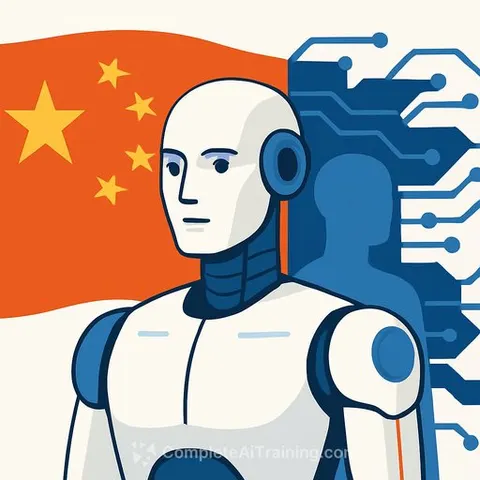
China's first export shock came from low-cost manufactured goods. The second wave sent high-end electric vehicles and batteries into global markets. Now, a third shock is taking shape-AI-powered robots destined for factory floors, delivery routes and service counters worldwide.
Chinese e-commerce giant JD.com has predicted robots will eventually replace its 700,000 delivery workers. At South Korean carmaker Hyundai, employees are threatening strikes partly over robotics roll-outs, a trend that underscores the growing role of AI Agents & Automation in logistics and manufacturing. These are early signals of a shift that could redefine global trade and labour, as Beijing positions AI-driven machines as the country's next major export.
The domestic push is already underway. Beijing wants 10,000 AI-powered robots operating in commercial settings this year alone. Its latest five-year plan stresses human-machine collaboration and robot deployment across the economy. The immediate goal is to offset a shrinking workforce: China's working-age population is projected to fall from a peak of 1 billion to just 300 million by the end of the century.
From models to machines
Many analysts see AI models as the main arena for economic leadership. But models alone do not generate enough economic value. That happens only when they are embedded into products, deployed at scale and woven into daily operations. The front line of the AI race is shifting from the model itself to the ecosystem around it: the power, infrastructure, applications and adoption needed to put AI to work.
China holds several advantages in this race. It has the manufacturing lead, the world's biggest training ground for real-world robotics and access to leading open-source AI models. These components, stitched together, create a stack where robots become the physical endpoint of AI.
The embodied AI opportunity
Embodied AI-melding large language models and vision systems with industrial and humanoid robots-will become the next frontier in the coming decade. Rather than generating text or images, these systems will manipulate objects, navigate spaces and interact with physical environments. This is where AI's economic potential could be realised at scale.
The shift from digital to physical raises the stakes for countries and companies that depend on manufacturing and logistics. The question is not whether robots will reshape supply chains, but how quickly and at what cost. China's combination of state backing, mass production capability and a domestic market hungry for automation puts it in a strong position to drive that transition.
Why this matters for IT and development professionals
For software developers, IT architects and operations engineers, the rise of embodied AI will change the skills that are in demand. Integrating large language models with robotic control systems, processing real-time sensor data and managing edge computing infrastructure will become core requirements. Professionals who build expertise in these areas early will be well placed to lead the next wave of automation-whether they work for manufacturers, logistics firms or the technology providers building the robot platforms themselves.