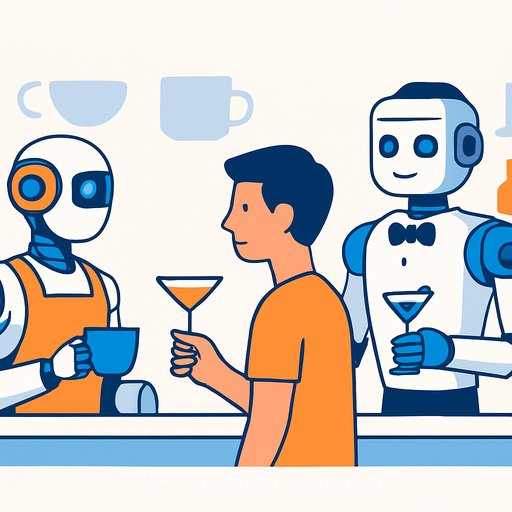
China Leads The Way: AI Coffee Machines and Bartender Robots Set to Transform Tourism
Hospitality is moving fast, and China is setting the pace. Shenzhen's First National Cultural Tourism Robot Tech Fun Festival put AI and robotics front and center for travel, attractions, hotels, and events. The message was clear: automate the routine, design for speed, and give guests memorable moments worth sharing.
What was on show
- Anno AI Robotics headlined with intelligent retail systems built for high-traffic environments: AI coffee machines, bartender robots, and dessert kiosks that queue, serve, and settle payments without friction.
- Robot Latte Art Printing Coffee Kiosk: precision latte art in ~90 seconds, hot and cold menus, self-ordering and payment, and a robotic arm that mirrors barista-style artistry.
- Robot Bartender: custom cocktails in ~45 seconds, mobile and self-service, fitting into roughly three square meters-ideal for crowded venues, festivals, and mixed-use lobbies.
Why this matters for hospitality and events
Labor costs are up. Staffing is inconsistent. Guest expectations keep climbing. AI and robotics take the repetitive work off your team and keep service running 24/7, so your staff can focus on higher-value moments-upsell conversations, problem-solving, and VIP care.
For properties and venues in high-demand markets, consistency is the edge. Automated kiosks deliver the same quality at noon or 2 a.m., reduce queue anxiety, and give you clean data on SKUs, dwell times, and basket size.
Where these robots fit
- Hotels: lobby coffee points, pool bars, late-night service corners, executive lounge overflow.
- Event venues: pre-function areas, VIP zones, sponsor activations, after-parties.
- Attractions and parks: entrance plazas, photo-op zones, peak-hour relief stations.
- Transit hubs and tourist streets: compact mobile bars for pop-up revenue.
Operations impact you can measure
- Throughput: 45-90 second serve times stabilize lines during peaks.
- Labor mix: reassign staff from pouring to hosting, merchandising, and guest recovery.
- Consistency: standardized recipes and visuals reduce refund and remake rates.
- Uptime: service windows extend into overnight hours with predictable costs.
- Data: item-level sales, hour-by-hour demand, and promo response for better forecasting - see Research.
Implementation playbook (first 90 days)
- Week 1-2: Pick a high-traffic test location with visible queues. Define 2-3 core KPIs (throughput, average check, queue time).
- Week 3-4: Finalize menu SKUs (10-20 items max), map cashless payments, and plan a small upsell path (e.g., signature drinks + add-ons).
- Week 5-6: Install, test, and train one "owner" per shift for hygiene, restock, and light maintenance.
- Week 7-10: Launch with social-friendly visuals; place clear signage and QR ordering. Track dwell times and capacity spikes.
- Week 11-12: Optimize SKUs, adjust pricing, and lock a repeatable schedule. Package the case study for internal rollout.
Guest experience and marketing
- Make it visual: latte art and robotic pours are highly shareable. Set up a photo mark and simple hashtag.
- Personalization: quick choices (sweetness, toppings, strength) without slowing the line.
- Promos: time-bound offers during session breaks or parade times to smooth peaks.
Costs, footprint, and staffing
The bartender unit's ~3 sqm footprint makes it viable where a full bar isn't. Coffee kiosks plug gaps in late-night or early-morning coverage without adding full shifts. You'll still need restock and sanitation routines, but you'll reduce idle time and cut waste through tighter recipe control.
China's push and what's next
China's domestic travel has been surging, and operators are building capacity with automation to keep service quality steady under pressure. Expect to see more compact, high-throughput units across venues, attractions, and mixed-use districts. For broader context on travel demand and spend trends, see the World Travel & Tourism Council's research hub: WTTC Economic Impact.
Action steps for hospitality teams
- Identify one location with recurring queues or labor gaps.
- Pick a single use case (coffee or cocktails) before expanding.
- Set clear KPIs, run a 60-90 day pilot, and decide on scale-up based on data.
Want to skill up your team on AI and automation for hospitality roles? Explore focused resources here: Courses by Job and Automation Guides.
Your membership also unlocks: