China's AI salary surge masks a structural talent gap
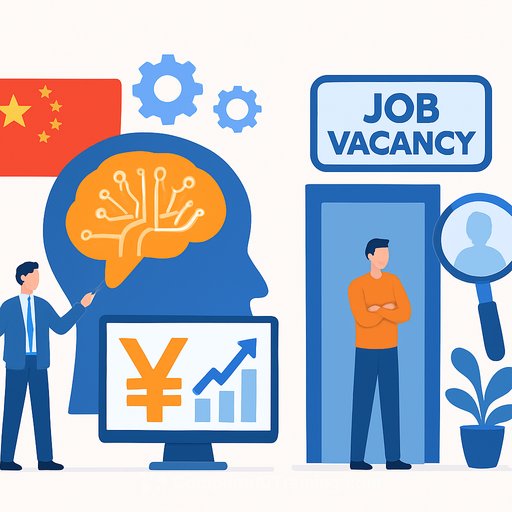
China's major tech companies are offering record salaries for AI roles, yet they still can't find enough qualified workers. Baidu, ByteDance, Tencent, and Ant Group collectively posted nearly 30,000 positions in recent weeks, with AI roles dominating the recruitment drive and average monthly salaries exceeding 60,000 RMB (US$8,625).
The competition reflects both policy momentum and market reality. China's government work report this year called for creating a "new forms of smart economy," giving official backing to AI expansion. Humanoid robotics companies are offering annual salaries exceeding 1 million RMB for multiple roles. ByteDance's Doubao unit advertised 1.28 million RMB annually for a large language model application architecture expert.
Fresh PhD graduates in Beijing and Shanghai now command 600,000 to 1 million RMB annually, with top-tier talent reaching 2 million RMB, according to Yuan Yijia, co-founder of Dada Consultants, a headhunting firm specializing in AI recruitment. "This year's AI talent market is quite staggering - it was nothing like this a year ago," she said.
Jobs outnumber candidates
The supply-demand ratio for AI positions stands at 0.97, meaning 0.97 people compete for each job. Jobs are waiting for talent. In other new-economy sectors, the ratio is 1.79, showing AI roles face far greater scarcity.
This is not a traditional talent war, but a structural shortage of high-end technical workers. The most sought-after roles are specialized positions where salary reflects a supply-quality mismatch rather than broad-based demand.
Universities have accelerated program restructuring. In 2025, China's Ministry of Education approved 29 new undergraduate majors including AI education and smart audiovisual engineering. But economist Ye Xiaoyang warned that simply adding "AI-labelled majors" without overhauling curricula, strengthening foundational training, and deepening industry partnerships could create new mismatches. Graduates could end up neither technically competent nor truly interdisciplinary.
AI reshaping job structures
Employment pressure stems from more than recruitment mismatches. AI threatens to displace workers in traditional roles while creating new positions. As university graduate numbers hit records, job market pressure deepens.
China's Ministry of Human Resources and Social Security stated during the Two Sessions that AI will create jobs and strengthen traditional roles, signaling a policy shift. The government no longer views AI employment impact as simply job cuts, but as structural reshaping.
China's 15th Five-Year Plan draft includes mechanisms to monitor AI's employment effects, strengthen job stability safeguards, expand retraining programs, and support workers in transition. Economist Pan Helin said AI may reduce labor demand in some areas while creating jobs elsewhere, but warned that without broad human capital investment in AI skills, "widespread AI substitution could widen the wealth gap, reduce low-income purchasing power, and trigger economic contraction."
For product development professionals, understanding this talent dynamics matters. The article shows where AI investment is concentrating and how product roles are evolving. Consider exploring AI Learning Path for Product Managers to understand how AI talent shortages affect product strategy and team composition.
Your membership also unlocks: