Festive freebies and fierce rivalry: China's AI giants are paying for attention
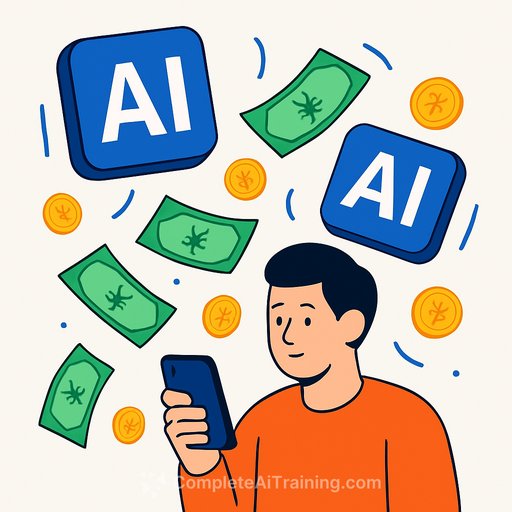
Lunar New Year is a gifting season in China, and this year the country's AI giants treated it like a national user-acquisition event. Over the holiday period ending March 3rd, they flung out coupons worth roughly 8bn yuan ($1.2bn) to get people to download and use their apps. Think digital hongbao, repackaged as growth spend.
The hook wasn't just cash. It was the promise of "agentic" features-bots that don't stop at chat, but complete tasks for you. Order a meal, book a courier, file a return-with a couple of spoken instructions.
What "agentic" actually changes
Agents shrink the gap between intent and outcome. That's a different value prop than a chat bot that hands you options. It feels like a concierge: tell it what you want, it gets it done.
For marketers, that shift moves the battleground from impressions and clicks to completed actions. The funnel is shorter, the attribution is clearer, and the experience trains habit-if the first few tasks land.
Why the cash burn makes sense-until it doesn't
Dropping 8bn yuan on coupons is rational if two things are true: the first tasks create a sticky habit, and the lifetime value can pay back the subsidy fast. In periods of platform formation, speed matters more than margin. Data, distribution, and default status are the prizes.
But subsidy wars run on a clock. As soon as payback stretches, compute costs bite, or promo-chasers dominate the mix, the tactics flip from "free for all" to "free with purpose."
Signals it's time to taper subsidies
- CAC payback exceeds 6-9 months on new cohorts.
- Day-30 habit isn't there: less than 25-30% of users complete a weekly task without a coupon.
- Task success rate (no human rescue) stalls below 85% on top use cases.
- Promo abuse and multi-accounting climb faster than net new actives.
- Compute per task rises while merchant take rates or affiliate fees flatline.
The playbook marketers can copy (without spending billions)
- Stack your launch on a cultural moment. Tie incentives to rituals people already act on-like hongbao during Lunar New Year-so promos feel native, not forced.
- Reward actions, not sign-ups. Pay on first three completed tasks with escalating perks (e.g., 30, 20, 10 units), then stop. Make habit, then monetize.
- Shorten time-to-first-outcome. Preload a template task, one-tap permissions, and a demo balance so the first success happens in under two minutes.
- Use merchants as co-sponsors. If an agent drives orders, ask vendors to fund part of the coupon. Your CAC becomes their CAC.
- Instrument the journey. Track time-to-first-task, tasks per WAU, and repeat tasks per use case. Don't guess-watch behavior.
- Guard against abuse early. KYC light, device fingerprinting, and action-based rewards reduce burner accounts.
- Tell outcome stories. Creatives should show "voice command → confirmation → delivery," not a static UI.
Metrics that matter for agentic apps
- Task success rate: Share of tasks completed without human fallback.
- Time-to-first-task: From install to first completed action.
- Weekly tasks per active user: Core habit indicator; aim for 3+ on your main use case.
- CAC payback: Months to breakeven on cohort gross profit.
- Compute per task: Cost to serve an average task; must fall with scale.
- Promo dependence: Percent of tasks tied to a discount; drive this down over time.
- Fraud rate: Share of subsidized actions flagged or reversed.
Sustainability: how long can the rivalry last?
Subsidies can kickstart behavior, but they can't prop it up forever. Eventually the winners are the teams that convert giveaways into routines, prune expensive use cases, and lock in merchant relationships.
Expect consolidation, partnerships, and sharper focus on profitable tasks. The firms that standardize a handful of repeatable, high-margin actions will keep share when the red envelopes close.
What to do next
- Map your top three agentic use cases and design the first-session path for each.
- Run a two-week "action ladder" promo that rewards first, third, and fifth completed tasks-then stops.
- Report weekly on task success rate, time-to-first-task, and CAC payback. Kill anything that doesn't move those three.
If you need a structured way to roll this out across your team, see the AI Learning Path for Marketing Managers.
Quick primer: what "agentic" means in plain terms
In short, you tell the system the goal; it decides the steps, calls tools, and closes the loop. More like a doer than a talker. For background, here's a neutral overview of agents: Intelligent agent.
The big picture: cash gets attention, outcomes build loyalty. Spend to spark the habit-then let the product do the heavy lifting.
Your membership also unlocks: