China’s Shifting AI Policy: From Catch-Up to Global Leadership
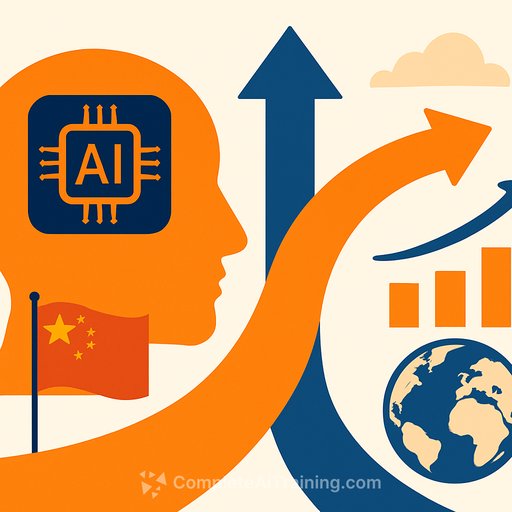
The launch of DeepSeek-R1 in early 2025 marked a turning point for China’s artificial intelligence ambitions. This model’s performance placed Chinese AI on par with top global competitors, signaling a new era of confidence among Chinese leadership. Unlike the period after ChatGPT’s release in 2022, when China focused on economic stimulus and regulatory leniency to catch up, the current moment reflects a strategic shift.
China’s leaders are now actively involving AI experts in high-level CCP meetings, pushing accelerated AI adoption across key infrastructure, and promising stronger AI laws. This new approach balances rapid technological growth with tightened control, a pattern consistent with Beijing’s historical cyclical thinking about technology policy.
Cycles of Control and Growth
Since 2017, Chinese AI policy has oscillated between phases that emphasize innovation and phases that stress ideological control. When the country feels technologically behind, the priority is economic growth fueled by innovation. When confident, the focus shifts to maintaining strict political and social control. DeepSeek’s arrival has created a unique challenge: growing technological confidence amid economic headwinds.
This intersection complicates policy decisions and makes China’s next moves less predictable. For IT and development professionals, understanding these cycles can clarify how China’s AI ecosystem may evolve and impact global tech standards and competition.
The Go-Go Era (2017 to Early 2020)
This phase began with the 2017 “New Generation Artificial Intelligence Development Plan” (NAIDP), which set ambitious targets backed by substantial investment and minimal regulation. China viewed AI as a key driver to close the technological gap with the U.S., aligning with broader economic reforms and industrial policies like Made in China 2025.
- Key Agency: Ministry of Science and Technology (MOST)
- Investment: Chinese AI equity investment hit 48% of the global total in 2017
- Economic Growth: GDP growth steady around 6.5%
- Policy Focus: Encouraging innovation through state planning and local government initiatives
During this era, China’s approach was to rapidly build AI capabilities without heavy regulation. The government mobilized resources across ministries, local authorities, and private firms. Companies like Alibaba, Baidu, and Tencent invested heavily in AI, especially in applications like facial recognition and industrial automation.
The regulatory environment was permissive, reflecting a belief that rapid development outweighed the risks of less control. However, emerging concerns about the social impact of AI—such as algorithmic influence on information flow and challenges posed by deepfake technologies—began to surface, setting the stage for future stricter governance.
The Crackdown Era (2020 to Late 2022)
Starting in 2020, China shifted toward a more controlling, regulation-heavy stance. This change coincided with President Xi Jinping’s consolidation of power and campaigns addressing inequality, self-reliance, and social stability.
- Key Agency: Cyberspace Administration of China (CAC)
- Policies: Regulations on Recommendation Algorithms and Deep Synthesis (deepfake) technologies
- Economic Context: GDP dipped to 2.3% in 2020 due to COVID-19 but rebounded to 8.4% in 2021
The crackdown targeted major tech companies through antitrust investigations, fines, and increased state oversight. The CAC took a leading role in AI regulation, focusing on controlling content and information flows rather than broader ethical or safety concerns.
Algorithms that personalized content posed risks to party control, leading to measures requiring transparency, user controls, and promotion of “positive energy” aligned with socialist values. Deepfake content was regulated via labeling and real-name requirements.
This era cemented content governance as the primary AI policy concern, with the CAC gaining significant influence. The regulatory groundwork laid here would later influence approaches to generative AI.
The Catch-Up Era (Late 2022 to Early 2025)
The release of ChatGPT exposed a gap between Chinese AI development and U.S. advancements. At the same time, China faced serious economic challenges: GDP slowed to 3.1% in 2022, youth unemployment soared, and public discontent grew, highlighted by protests against strict COVID lockdowns.
- Key Agencies: CAC and National Development and Reform Commission (NDRC)
- Policies: Interim Measures for Generative AI; Draft Basic Security Requirements for Generative AI
- Economic Indicators: GDP bounced back to 5.4% in 2023; youth unemployment hit 21.3%
External pressures, like U.S. export controls on advanced chips, also complicated China’s AI trajectory. Faced with these challenges, China softened its regulatory stance to prioritize catching up technologically and stimulating economic growth.
Initial draft regulations on generative AI were strict, demanding impossible standards for data truthfulness. However, after pushback from experts and companies like Baidu, the final Interim Measures reflected a more balanced approach, providing clearer compliance pathways for developers.
This period emphasized avoiding development setbacks as a security risk. The government delayed a comprehensive AI law, focusing instead on incremental regulatory updates aligned with international trends and national goals.
What This Means for IT and Development Professionals
China’s AI policy oscillates between growth and control, reacting to both internal confidence and external pressures. For professionals working with or competing against Chinese AI technologies, understanding these cycles is key to anticipating regulatory shifts and market dynamics.
As China moves toward global AI leadership, its governance approach—prioritizing information control but increasingly accommodating innovation—will influence global standards and competition. Staying informed about China’s evolving AI policies can help businesses and developers adapt strategies effectively.
For those interested in expanding their AI expertise amid these global changes, exploring up-to-date training resources can be valuable. Platforms like Complete AI Training offer current courses tailored for AI professionals navigating this dynamic landscape.
Your membership also unlocks: