China's Healthcare AI Faces a Structural Problem Technology Alone Can't Fix
China is deploying artificial intelligence across its healthcare system to address workforce shortages, uneven rural-urban access, and mounting chronic disease burden. Yet experts warn the technology cannot solve the system's core problem: misaligned financial incentives that discourage hospitals and clinics from working together.
The fragmentation runs deeper than data silos. China's healthcare splits across three dimensions: service delivery, where hospitals have little reason to coordinate with primary care; data, locked separately within the National Healthcare Security Administration, National Health Commission, and individual hospitals; and governance, where payment decisions sit in one agency and service delivery in another.
AI cannot fix these incentive problems on its own. A recent joint directive from the NHSA and National Health Commission signals movement toward capitation and bundled payments-a structural change that could actually encourage coordination. Without this shift, AI risks digitizing existing inefficiencies rather than correcting them.
Convenience Is Not Quality
China's tech platforms are scaling rapidly. Ant Group's Afu became the country's most-downloaded health app by integrating with payment systems and training specialist AI models on doctors' diagnostic histories. Some models now handle tens of thousands of patient interactions daily.
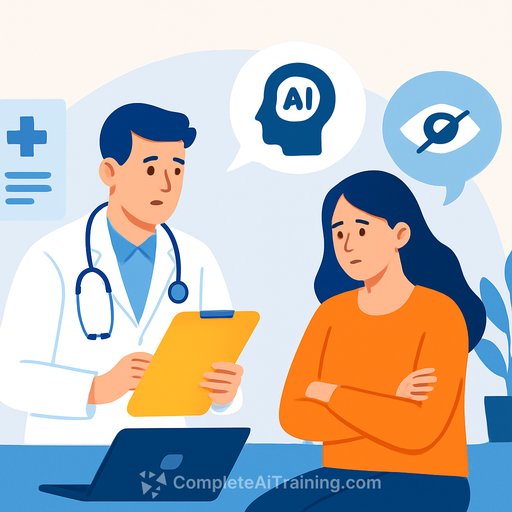
But speed creates risk. If AI models learn from existing prescribing patterns-which are not always appropriate or cost-effective-they may reinforce overuse. Healthcare differs from other sectors because patients trust providers they cannot fully evaluate. That information imbalance matters.
AI currently delivers convenience, not necessarily safety or quality. Tools trained on data from large urban hospitals may not work in rural settings where resources and clinical practices differ. Whether AI reduces inequality or widens it depends on whether systems can integrate data across regions, whether local governments can implement them, and whether both patients and doctors can actually use them.
Where AI Shows Real Promise
Chronic disease management offers the clearest case for AI. Care standards are established, and wearables can reduce travel burden for elderly patients. Delivery workers visiting homes help older adults use health apps-a practical workaround for digital literacy gaps.
Medical imaging and some therapeutics already match or exceed human performance in specific tasks. Mental health services, which rely on communication rather than complex clinical judgment, adapt well to online delivery while reducing stigma through anonymity.
Early experimental work using AI to support cognitive health in dementia and Alzheimer's patients shows promise. A shift from episodic care to continuous monitoring through wearables can detect deterioration earlier and reduce hospital pressure.
The Business Model Problem
China has no national reimbursement pathway for AI or online healthcare. Major platforms operate at razor-thin margins, offering consultations for just a few yuan-well below sustainability. Without strong evidence that AI healthcare generates net savings, government funding remains uncertain.
The structural issue: payers and beneficiaries are often different people. Users accustomed to free or near-free services resist paying more, making it difficult to build sustainable payment models even as platforms scale easily and cheaply.
Rigorous comparative studies are needed to move beyond current experimentation and identify what actually works. Policymakers may eventually consider broader social benefits like improved access and reduced travel time, not just direct cost savings.
Accountability Remains Unclear
Current guidelines create ambiguity about who bears liability when AI makes a mistake. Errors from standalone AI applications fall on the company; mistakes involving physician use of AI are borne by the doctor. This uncertainty is creating resistance among providers.
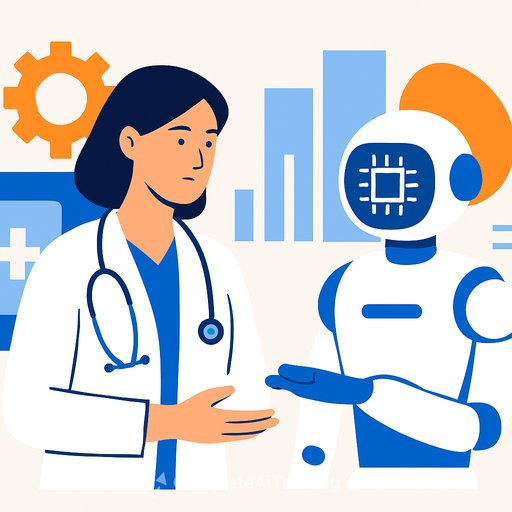
Medical care is not purely technical. While AI handles standardized tasks, it cannot replicate the judgment and human connection patients expect. Physicians will not be fully replaced.
What This Means Beyond China
Many Global South countries face similar health challenges: fragmented systems, workforce shortages, aging populations, and rising chronic disease. If China succeeds in building scalable, cost-effective models, the lessons will be directly relevant to countries with comparable patient profiles.
China's experience may also serve as a warning. Its ability to improve efficiency, control costs, and work around infrastructure constraints makes its digital health trajectory highly relevant for developing countries-but only if it addresses the structural incentive problems that no amount of technology can overcome on its own.
The next five years will test whether technology can enable the shift toward integrated, primary care-based delivery that has long been sought but difficult to implement. How that transition unfolds will offer important lessons globally.
Your membership also unlocks: