
AI news ·
Chinese web novel platforms impose daily word limits and stricter standards to curb AI-generated fiction
Chinese web novel platforms are capping daily word limits to combat AI-generated fiction. In June, Tomato Novel alone rejected over 104,000 low-quality submissions.
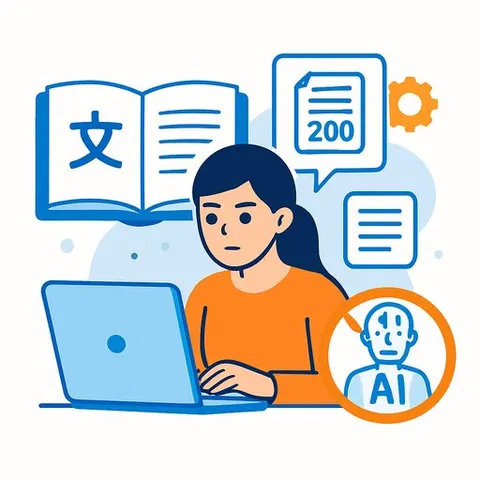
Chinese web novel platforms owned by ByteDance, Tencent, and Baidu have begun enforcing daily word limits and stricter quality checks to combat a flood of AI-generated fiction, following reader complaints about poor-quality automated stories and author concerns over plagiarism. The restrictions mark a sharp reversal from the platforms' earlier encouragement of AI writing tools and raise new questions for authors about how much machine assistance is too much.
A surge of machine-written fiction
Gordon Sheng, a 32-year-old civil engineer, spent two decades reading web novels before turning to AI. He used DeepSeek to sketch a dramatic divorce plot and then generated the full story in five minutes with an AI writing tool. Published on ByteDance's Tomato Novel, the short story attracted over 5,500 reads in 10 days. "No matter how bad the AI writing is," Sheng said, "it does a better job than I would."
Sheng is part of a growing wave of creators that originated from China's 1990s internet forum culture. Web novels are typically serialized, smartphone-friendly tales packed with revenge arcs, time-travel twists, wuxia battles, or romance. Tech giants earn billions of dollars annually from these platforms through advertising and subscriptions, and they pay authors based on readership.
AI tools have lowered the barrier to entry dramatically. Junxian Ma, a Beijing-based developer, built InkOS-an automated fiction-writing system where a group of AI agents handle outlining, chapter writing, and logic checks. The system, powered by Generative AI and LLM technology, lets a human author step in only occasionally to steer the plot. Over 50,000 users have downloaded it, and some earn money publishing AI-generated stories on Tomato Novel, Ma told Rest of World. "Now humans have more time and energy to think about what kind of stories they want to tell," he said.
Reader backlash and plagiarism fears
The proliferation of AI writing has angered some readers. On social media site Xiaohongshu, users shared screenshots of AI prompts accidentally left in the middle of a novel, while others flagged strange metaphors or repetitive phrasing as telltale signs. Yang Zhou, a software developer and fantasy novel reader, put it bluntly: "It's a waste of my time reading something that's produced very fast. But if a novel is written and updated slowly over time, I would take my time appreciating it."
Authors, too, worry about copyright infringement. In 2024, writers protested after Tomato Novel required them to hand over work for AI training; the platform later offered an opt-out. Some AI tools even extract the plotlines of popular stories and rewrite them as "new" novels, enabling a form of plagiarism that platforms now struggle to police.
Platforms tighten the rules
In response, major platforms are introducing curbs. Jinjiang, the women's fiction site owned by China Literature, told authors in 2025 to limit AI use to research and proofreading, and asked readers to report suspected machine-written novels. Its founder, Huang Yanming, conceded it is difficult to determine how much of any story is AI-generated.
Tomato Novel has capped the daily word count each account can publish. In June alone, the platform said it rejected over 104,000 "low-quality" submissions, including those written with AI. The free-to-read app, which profits from advertising, is more tolerant of AI than subscription-based sites like Jinjiang, where quality must justify reader payments. Xiang Ren, a researcher at the University of Sydney, told Rest of World that platforms are trying to balance AI's productivity boost with the need for authentic storytelling.
Where authors draw the line
Writers who embrace AI say it fills a gap left by a lack of formal training. Sheng acknowledged that while the tool wrote the text, the values and logic behind the story were his own. He also had to fix AI errors-in one case, a father character sent a text message to his daughter even though they were standing next to each other. "Many people have the spark for a story, but don't know how to express it," Sheng said. "AI has closed that gap for us."
Why this matters for writers
The crackdown by Chinese platforms signals that the industry is moving beyond sheer output volume and back toward editorial standards, even as AI for Writers continues to advance. Writers who rely on generative tools may face new restrictions on daily word counts, stricter quality filters, and the possibility of having their work flagged or rejected. At the same time, the debate over AI in fiction underscores that authenticity and slow-paced craft still hold value with readers. For any author using AI, the emerging rules suggest that measurable originality and human oversight will become not just competitive advantages, but requirements for staying on platforms like these.