
AI news ·
Christian authors argue that claiming credit for ghostwritten and AI-generated books is dishonest
AI generates full book drafts in minutes, complicating ghostwriting ethics in Christian publishing. 75 writers previously signed a letter condemning the practice.
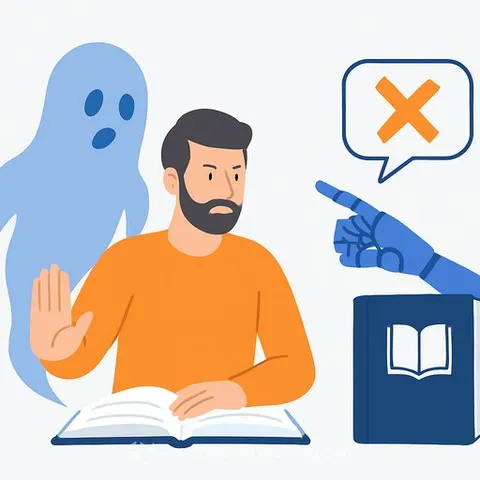
Publishers and ministry leaders have quietly relied on ghostwriters for decades, but the arrival of AI tools that can produce entire book drafts in minutes is forcing a reckoning over what it means to call yourself an author. The ethical line that once depended on a hidden human collaborator now extends to software that has no name to credit-making the deception harder to trace and easier to justify.
The Longstanding Ghostwriting Debate
In Christian publishing, ghostwriting has drawn sharp criticism because the message often centers on a Bible that condemns deceit. An article titled "The Scandal of Evangelical Dishonesty," published in 2002, called the practice a moral problem for both the celebrity and the ghostwriter. The core argument was straightforward: putting your name on work you did not produce is lying, even if the actual writer consents to remain uncredited.
Angela Hunt, a novelist, once received a call from an editor asking her to ghostwrite a novel for a well-known Bible teacher. The teacher would not supply materials or even an idea. Hunt turned down the project. Later, she saw online chatter about it in a writing group. Another member of that group posted a link to the 2002 article, and Hunt read it. She decided to stop ghostwriting unless she was named on the cover or title page. "It doesn't belittle them to admit they're not professional writers," Hunt said. "Many secular writers refuse to ghostwrite for the same reason we Christian writers do-it's not honest, and it disparages the work of the writer who has worked hard to learn the craft."
Seventy-five writers from the group signed a letter to editors and publishers asking them to stop using ghostwriters for fiction. The letter, finalized in January 2007, quoted Proverbs 20:10: "False weights and unequal measures-the Lord detests double standards of every kind." Some publishers became defensive; others promised to tighten practices. No industry standards emerged.
Karen Swallow Prior, an English professor, sees ghostwriting as misrepresentation. "I don't pretend to be a pastor giving sermons, so I don't know why pastors pretend to be writers," she said. The problem intensifies when a pastor or speaker turns in sermon notes that are then crafted into a book by someone else. If the named author did the initial work and an editor proposes wording changes, crediting the editor in the acknowledgments can be enough. But when the celebrity does a small fraction of the work-or never even reviews the manuscript-readers are being misled about who wrote the book.
A widely cited line from a book on money and eternity frames the stakes: "If we're not telling the truth about who wrote the book-on the cover in large print-why should people believe what's inside the book, in small print?"
AI as the New Ghostwriter
AI removes the need to find and pay a human ghostwriter. Someone can feed a few notes or a prompt into a tool-say, "Write a 25,000-word evangelical Christmas devotional with quotes from Martin Luther, John Calvin, and C.S. Lewis"-and receive a polished draft. Editing it, or not, and then listing oneself as the sole author is becoming common. The result is a book that no human being wrote, yet the named author takes full credit.
This matters for the same reason ghostwriting always mattered: the reader has a right to know whether the person on the cover produced the work. If a celebrity's name sells the book but the content came from an undisclosed source, the transaction rests on a false premise. The fact that the source is a machine rather than a person doesn't erase the dishonesty; it merely removes the one party who might have objected to being hidden.
The Skills AI Cannot Build
Writing a book involves thousands of hours of research, thinking, and word selection-disciplines that shape a person's mind over years. When AI generates the prose, the named author skips that formation. The shortcut doesn't just produce a book; it robs the writer of the skills that come only from doing the hard work. No technology can create a fake sprinter or marathoner, but AI can create fake researchers and writers, and it is being used that way.
Even the ghostwriting industry itself may now be outsourcing drafts to AI, layering one deception on top of another. A book might be credited to a celebrity who didn't write it, while the ghostwriter who was paid to produce it used AI to generate the manuscript. The chain of authorship becomes a hall of mirrors.
For writers exploring how to navigate these tools without sacrificing integrity, resources on AI for Writers can offer practical guidance on where to draw the line between assistance and automation that replaces authorship.
Why this matters for writers
The ghostwriting debate, now amplified by AI, is ultimately about trust. When a reader buys a book, they assume the person whose name is on the cover did the work. If publishers and authors normalize the idea that the byline is just a brand rather than a statement of fact, they erode the credibility of every writer who actually sits down to research, draft, and revise. For working writers, that devalues the craft itself. Protecting the meaning of authorship isn't just an ethical abstraction-it's a defense of the profession's economic and intellectual foundation.