AI Isn't Failing. Companies Are.
Organizations are spending billions on artificial intelligence without seeing the financial returns their boards expect. The problem isn't the technology. It's that most companies treat AI as a series of isolated pilots rather than embedding it into how work actually gets done.
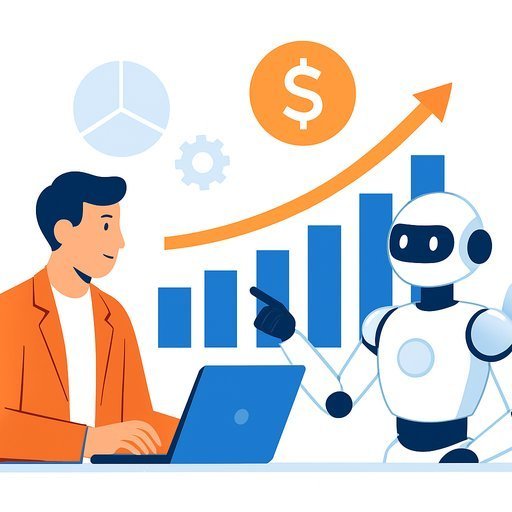
AI spending will reach $2.52 trillion in 2026, a 44 percent increase year-over-year, according to Gartner. Yet executives report a widening gap between investment and measurable business outcomes. Boards and CEOs are asking CIOs a new question: not whether AI works, but who owns the return on AI investment - what experts call ROAI.
The Execution Gap
ROAI means the financial results that matter: revenue growth, cost reduction, margin improvement and risk mitigation. It also includes the workforce factors that sustain those returns - productivity gains, better decisions, and organizational resilience.
When ROAI stalls, the cause is rarely technical. It stems from gaps in change leadership, workforce readiness and how the organization actually operates. Deployment speed doesn't equal adoption speed. A company can implement an advanced AI model in weeks, then watch employees revert to familiar processes because the technology wasn't woven into their daily workflows.
This challenge defines modern CIO leadership: moving from experimentation to monetization.
The Strategic Quad
Closing the AI Execution Gap requires a shift in how executives work together. The board-CEO-CFO-CHRO relationship with the CIO must move from functional handoffs to shared accountability for results.
High-performing CIOs are establishing what amounts to a command unit - a Strategic Quad - with explicit ownership of ROAI. The CIO ensures technology enablement and reliability. The CHRO drives workforce adoption, skills and behavior change. The CFO measures and validates financial outcomes. The CEO aligns priorities to enterprise value.
When these four operate as a single accountable unit, AI transforms from isolated deployment to sustained, measurable enterprise performance.
Where Value Actually Lives
Most companies apply AI to customer engagement or revenue initiatives because they're visible. These efforts rarely produce sustained financial impact.
Sustainable value is created within the operating fabric - the processes, technologies, data, governance structures and workforce behaviors that determine how work gets done. This includes human capital management systems, productivity platforms, workflow orchestration, enterprise resource planning systems, data and analytics platforms, and governance tools.
When AI is embedded in this fabric, adoption becomes natural rather than optional. Employees can't easily resist or sidestep it.
The Roadmap
Successful CIOs sequence AI enablement to maximize ROAI impact. The roadmap starts with workforce enablement - without adoption, value doesn't materialize. Research from Stanford shows that employee-facing AI augmentation produces the highest economic return.
Productivity and collaboration platforms come next, delivering immediate efficiency gains. Workflow orchestration follows, enabling scalability across functions. Only after these foundations are established should AI be deeply embedded in ERP systems, where financial outcomes can be measured and validated. Advanced analytics and governance frameworks come last.
This sequencing transforms pilots into a scalable enterprise capability.
The CIO's New Role
Boards no longer evaluate CIOs on system uptime, modernization speed or cybersecurity alone - though these remain essential. The single measure that increasingly determines CIO political capital is ROAI.
The CIO role has shifted from managing technology to owning enterprise value. This means overseeing the entire AI cycle, from funding to governance, and operating as a trusted partner delivering financial results.
CIOs who fail to bridge the AI Execution Gap risk being seen as IT managers rather than enterprise leaders.
The Board's Question
The question before enterprise leadership is no longer whether AI can create value. It's whether the board, CEO and CIO are prepared to govern and operate it with the same rigor applied to capital, risk and performance.
Sustainable returns happen only when intelligence is embedded into the daily flow of work - shaping decisions, compounding productivity and making enterprise performance repeatable rather than episodic.
For CIOs, this is the defining leadership moment. Those who activate the Strategic Quad, own workforce transformation and steward AI as a true enterprise capability will convert AI from promise into performance.
Learn more: AI Learning Path for CIOs and AI for Executives & Strategy cover the strategic implementation and organizational alignment required to close the AI Execution Gap.
Your membership also unlocks: