
AI news ·
CISOs say internal misalignment, not external threats, is the top security challenge in modern software development
Security and development teams remain misaligned on priorities, creating vulnerabilities that tools alone can't fix. A CISO roundtable identified five core gaps, from identity management to AI code oversight, driving the problem.
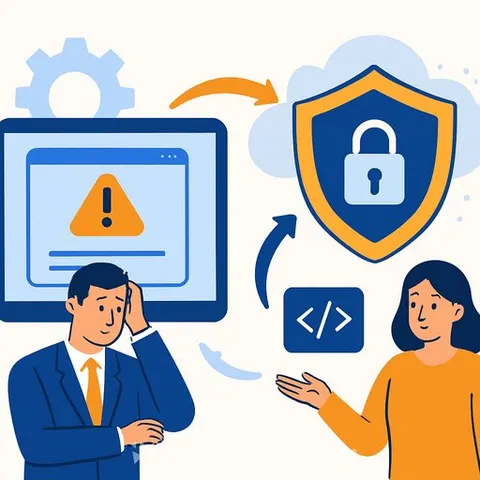
Security Teams and Developers Are Misaligned on What Matters Most
Organizations are investing heavily in security tools yet still face persistent vulnerabilities. The real problem isn't external threats-it's internal misalignment between speed and control, between developers and security teams, and between legacy processes and modern workflows.
That's the finding from a recent roundtable of CISOs and top IT security managers convened by the CyberRisk Collaborative. The group identified five core challenges that organizations need to address to secure modern software development.
Security Must Move Into Developer Workflows
Traditional security checkpoints that happen after code is written no longer work. Security needs to be embedded directly into where developers actually work-inside CI/CD pipelines and development environments.
This means integrating static and dynamic testing, software composition analysis, and secrets detection into the tools developers use every day. When security is a separate gate, it slows delivery and gets deprioritized. When it's part of the workflow, it becomes friction-free.
AI-Generated Code Requires Rigorous Oversight
AI-assisted coding tools accelerate development, but they also introduce new risks: insecure code patterns, outdated dependencies, and intellectual property concerns. Organizations cannot treat generative code as inherently trustworthy.
Accountability remains with developers and their organizations. This requires validation, governance, and oversight of AI-generated output. AI amplifies both productivity and risk in equal measure.
Identity Management Is the Real Attack Surface
Excessive permissions, orphaned accounts, and poorly governed service identities create a vast, often invisible attack surface. In cloud and hybrid environments, identity is the primary control plane.
Poor identity hygiene-privilege creep, lack of visibility into who has access to what-leads to systemic vulnerabilities. Organizations need to enforce the principle of least privilege, implement just-in-time access, and conduct ongoing entitlement reviews, all supported by automation.
Developer Incentives Drive Security Behavior
Developers prioritize what they're measured on: speed and feature delivery. Security, which can slow both, gets deprioritized. Changing this requires changing the incentives themselves.
Organizations should embed security into performance metrics, provide continuous feedback on code quality, and build a culture where secure coding is integral to success, not an obstacle to it.
Compliance Frameworks Need to Match Development Speed
Traditional audit models were designed for slow, linear release cycles. They don't fit rapid, iterative CI/CD environments. The result: inefficient dual processes and superficial compliance.
The solution is to automate compliance within pipelines, enabling real-time evidence collection and continuous assurance instead of point-in-time audits.
Alignment Across Teams Determines Success
Secure development is not purely a technical problem. It requires aligning security, development, and governance into a unified operating model.
Organizations that embed security into workflows, enforce identity discipline, realign developer incentives, and modernize compliance will be positioned to innovate securely. Those that treat security as a separate function will continue to struggle.
For development teams, this means understanding how security fits into your daily work and how your incentives shape your choices. Learn more about integrating security into modern development practices through the AI Learning Path for Software Developers.