Rare-Disease Mom's Startup Builds AI Infrastructure for Patient Care
Citizen Health raised $30 million in Series A funding led by 8VC, bringing total funding to $44 million since December 2023. The company is not building another health app. It's constructing infrastructure for rare disease care-a distinction that separates linear growth from exponential adoption.
The thesis centers on a structural problem: rare disease families carry unsustainable cognitive load. They manage years of medical records, coordinate dozens of specialists, and hold every detail in memory because missing one detail could mean a missed diagnosis or wasted appointment.
Nasha Fitter, Citizen Health's co-founder and chief business officer, lived this problem. When her daughter Amara was diagnosed with FOXG1 syndrome at 9 months old, Fitter quit her job running edtech company Schoolie to find a cure. She co-founded the FOXG1 Research Foundation with other parents. That work led her to Citizen Health's team, where she recognized the problem extended beyond her family.
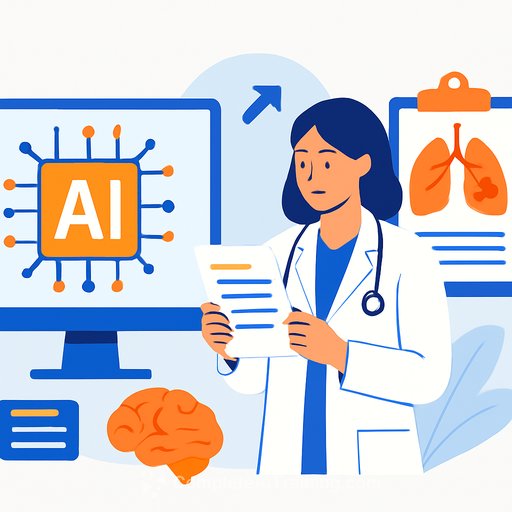
The company's AI Advocate product addresses the cognitive load directly. Families upload medical records and receive plain-language summaries they can bring to appointments. One parent described the effect: "For the first time, I got to be just Mom. I could be with my son. I could be present to hear what the doctor was saying."
Why This Matters Beyond Rare Disease
Nearly half of American adults have at least one chronic illness. Rare disease patients represent the most engaged, most knowledgeable, most forced-to-be-their-own-case-managers population in healthcare. They function as the canaries in the coal mine for a patient-powered future.
The healthcare AI industry has built extensively for providers, payors, and health systems. Citizen Health is asking who builds for patients. Over 300 million people worldwide live with rare diseases-six times as many as have been diagnosed with cancer in the last five years. That's a structural inflection point, not a niche.
The platform aggregates clinical data, genetic information, imaging, and patient-reported outcomes into a unified layer. This creates network effects: more families uploading records make the AI smarter for everyone. Every shared experience adds to the collective knowledge base. The architecture suggests the company is aiming for the S-curve-where value accelerates with each additional user.
The Infrastructure Play
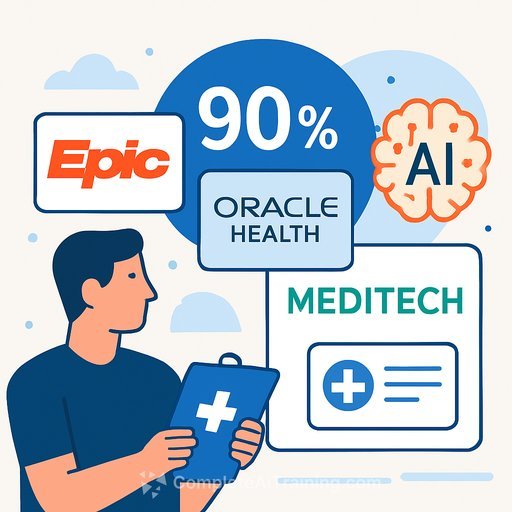
8VC's involvement signals institutional confidence in the infrastructure thesis. The firm backs infrastructure plays across tech and healthcare. This is not a consumer app layered on broken systems. It's a bet that Citizen Health becomes the operating system for rare disease families, similar to how Epic and Cerner became the operating system for hospitals.
The Chan Zuckerberg Initiative's Rare As One Project partnership reinforces this positioning. CZI's project supports patient-led organizations working to accelerate research and improve lives. The alignment signals that patient advocacy organizations view Citizen Health as infrastructure, not a competitor.
CEO Farid Vij framed the vision in the funding announcement: "Today's patients aren't waiting-they're searching, deciding, and expecting more. They deserve the same clarity, personalization, and intelligence in healthcare that they get in every other part of their lives."
What Could Accelerate the Thesis
FDA guidance on real-world evidence acceptance would validate Citizen Health's data infrastructure as a research tool. The agency's recent announcement on rare disease trials could position patient record platforms as critical intermediaries for trial recruitment.
Expansion beyond FOXG1 demonstrates platform scalability. Citizen Health is working with advocacy groups to build disease-specific ontologies for rett syndrome and mitochondrial disease. The metric to watch: how many disease-specific ontologies deploy in the next 12-18 months. Each new condition represents a new patient population and validates extensibility.
The 10-year opportunity may lie in research. If the platform connects patients to trials and accelerates natural history studies, it could become the de facto data layer for rare disease research. Pharma companies could pay for access to natural history data. Academic institutions could license the platform for multi-center studies. Clinical trial sponsors could pay for patient recruitment. That's the infrastructure revenue model.
What Could Derail the Thesis
EHR vendors pose the biggest competitive threat. Epic, Cerner, and athenahealth already hold patient data and existing relationships with health systems. If they launch patient-facing AI tools that integrate directly with their systems, Citizen Health becomes a feature rather than a platform.
Regulatory risk is real. The platform handles sensitive genetic and medical data requiring ongoing HIPAA compliance and adherence to evolving AI-in-healthcare regulations. Any data breach or compliance failure could destroy adoption momentum.
Failure to expand beyond initial conditions would weaken the thesis. If Citizen Health remains primarily a FOXG1-specific tool, the infrastructure play collapses into a niche solution.
The infrastructure layer thesis is clear. The execution risk is real. The next 18 months will determine whether Citizen Health becomes the permanent layer for rare disease families or a useful tool that competitors can replicate.
Your membership also unlocks: