OECD warns: uncritical classroom use of AI can weaken core learning
Generative AI is now mainstream in upper secondary and higher education. The OECD's latest analysis says that if schools lean on it as a shortcut, we risk dulling the very skills education exists to build: critical thinking, evaluative judgment, and original thought.
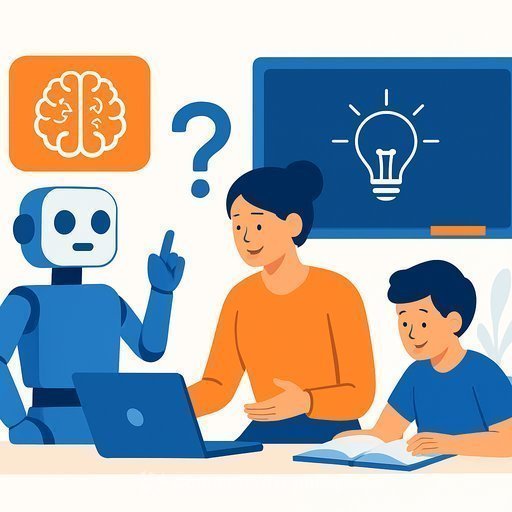
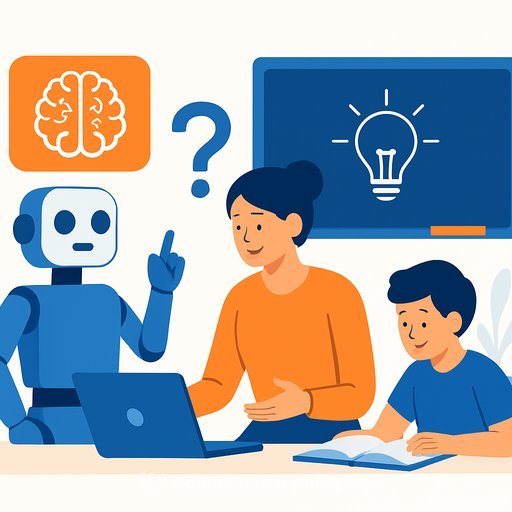
The message isn't "don't use AI." It's "use it the right way." When AI supports inquiry, reflection, and feedback, students and teachers benefit. When it replaces cognitive effort, deep learning suffers.
Key risks called out
- Displaced effort: instant answers reduce productive struggle and weaken reasoning over time.
- Passive learners, supervisory teachers: overreliance turns students into consumers and teachers into overseers.
- False mastery: polished AI outputs can mask shallow understanding.
- Creativity drop: dependence on direct solutions narrows original thinking and voice.
- Professional skill erosion: heavy AI use by teachers can blunt planning, explanation, and assessment expertise.
Shift from generic chatbots to purpose-built tools
The OECD Digital Education Outlook 2026 urges a move away from off-the-shelf chatbots in favor of educator-designed systems that prompt exploration and reflection. The goal: AI that scaffolds thinking, not substitutes for it.
If you're selecting tools, favor ones that surface metacognition (prompts, drafts, rationale), log learning processes, support feedback cycles, and let you tune constraints to your curriculum.
Assessment must evolve
As AI use grows, product-only grading loses reliability. You need visibility into how work was produced, not just what was submitted.
- Collect process evidence: drafts, prompt history, notes, version timelines.
- Require reflection: "What did you ask the AI? What changed your mind? Where did you disagree?"
- Blend formats: short oral defenses, in-class checkpoints, and practical demonstrations.
- Score reasoning and decision quality, not just final polish.
- Use authentic tasks tied to local data, lived context, or tools not easily faked by AI.
Practical guardrails for classroom AI
- Define allowed use cases: brainstorming, outline feedback, misconception checking, rubric-aligned revision.
- Ban shortcutting: no end-to-end answer generation on graded tasks without explicit permission and citation.
- Make AI use visible: require an "AI activity" section with prompts used, outputs received, and how they were judged.
- Teach critique: have students compare AI suggestions against sources, then justify what they kept or rejected.
- Rotate no-AI moments: timed writes, whiteboard proofs, and think-alouds to exercise unaided reasoning.
Teacher workflow without losing your edge
- Use AI to draft first passes (rubrics, exemplars, question banks), then revise with your professional judgment.
- Generate varied practice but tag items by skill and difficulty; pilot with a small group before full rollout.
- Ask AI for misconceptions and distractors, not just answers; test them against your students' patterns.
- Keep human feedback central on higher-order work; let AI handle low-stakes practice.
Leadership and policy moves
- Adopt process-oriented assessment policy and update academic honesty language to include AI use and citation.
- Set procurement criteria: privacy, logging of learning processes, educator controls, bias and safety checks.
- Run time-boxed pilots with clear success metrics (learning gains, teacher time saved, student agency).
- Provide PD on prompt design, AI critique, and process assessment; model it in staff learning. Teams building assessment or analytics tools should consider the AI Learning Path for Data Scientists.
- Track equity: device access, language support, and offline alternatives.
What to look for in education-first GenAI
- Prompts students to explain reasoning, compare alternatives, and reflect on choices.
- Captures and exports process data for assessment.
- Aligns to your standards and rubrics with adjustable constraints.
- Transparent data practices and easy-to-read safety documentation.
Quick checklist for your next unit
- Define where AI is allowed, why, and how students must document use.
- Include at least one task that requires original data, in-class thinking, or an oral component.
- Provide a reflection prompt that asks students to evaluate AI output quality and their own decisions.
- Update the rubric to score process and judgment, not just presentation.
- Plan a brief "no-AI" checkpoint to verify independent skill.
Bottom line
Treat GenAI as a learning partner, not a shortcut. Build in reflection, make process visible, and keep human judgment at the center. Do that, and AI can raise the ceiling without lowering the floor.
For context on AI and education policy, see the OECD's education resources: OECD - Education.
If you're building staff capability, browse practical AI training paths for educators: AI Design Courses.
Your membership also unlocks: