Writers vs. AI Training Without Consent: What Cleveland's Story Means for Your Work
Large language models don't think. They remix. And a lot of that remix comes from books and essays scraped without consent or pay.
That's not abstract. Cleveland authors - Thrity Umrigar, Dan Chaon, Paula McClain, Claire McMillan, Connie Schultz and Susan Orlean - have seen their work used to train chatbots without permission. Lawsuits and debates over fair use followed, and the fallout is shaping how writers protect their work, teach students and run their careers.
What's happening
AI companies trained models on massive text datasets that included published books. Writers weren't asked. Writers weren't paid.
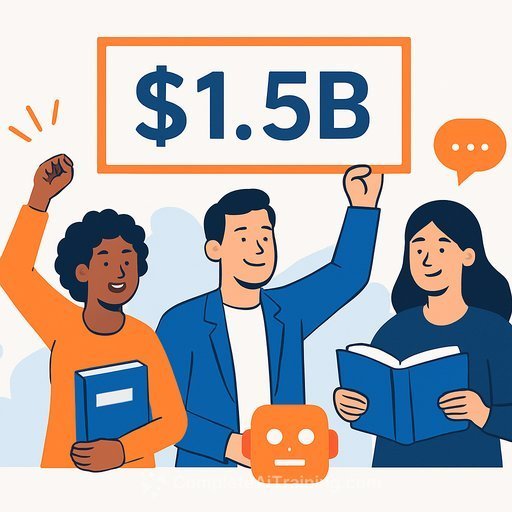
One case targeted the company behind Claude. A group of authors, including Dan Chaon, alleged their books were copied to train the model. A settlement in 2025 reportedly paid authors a lump sum - a number that looks big in headlines but averages out to a few thousand dollars per book. The signal is clear: compensation is still far from what most writers consider fair.
How it feels on the page
Dan Chaon tested a model with "write a story in the style of Dan Chaon." It obliged. He called the output "a stereotyped and cartoonish version" of his work - like tossing his books in a blender.
His larger point cuts deeper: "Here is this theft that happened and somebody's making a lot of money off of stealing from artists." Beyond money, he worries AI flattens the human exchange that keeps literature alive.
The bond readers actually want
People read novels and poems for a person's mind on the page - the risk, the lived texture, the moral weather only a human can bring. AI can pattern-match voice. It can't carry a lifetime of attention.
That relationship is your moat. Protect it. Lean into it.
Inside the classroom
Akron poet and fiction writer Mary Biddinger found her work inside AI training sets too. She calls it unethical - and she's channeling the frustration into teaching.
Her policy is simple: background research with AI is one thing; generating prose is another. If a student uses AI for words on the page, they must disclose it. Most still prefer ink and paper. They want their own sentences.
Community matters more than ever
At Literary Cleveland, Matt Weinkam is building space for both skepticism and curiosity. The plan: classes that explain how AI works, where the harms show up and how to engage responsibly.
His reminder lands: "If ChatGPT gives you feedback on your writing, it won't show up to your launch party." Humans will. That network is still the best engine for a writing life.
What to do now (practical steps for working writers)
- Audit your footprint. Search your name, book titles and excerpts. See how models imitate your style. Document evidence with dates and links.
- Register key works. Copyright registration strengthens your leverage if you ever need it. Keep clean records: drafts, timestamps, contracts and ISBNs.
- Set boundaries on your site. Add clear "no AI training" language in your terms and headers. Block known crawler user-agents in robots files. It won't stop all scraping, but it sets expectations and helps enforcement.
- Tighten your contracts. Ask publishers and platforms to ban AI training use without explicit, paid licenses. Add clauses covering dataset use, derivative models and attribution.
- Label your process. If you use AI for outlines, fact checks or line polish, disclose it. Keep human-byline work human - your readers will value the integrity.
- Protect your voice. Write distinctively, publish consistently and show up for real readers. Style imitation is cheap; a living body of work is hard to fake.
- Teach the next cohort. Create an AI policy for workshops and classrooms: what's allowed, what must be disclosed and why originality still matters.
- Watch the policy front. Laws and norms are moving. Track official updates and author advocacy to stay ahead of contract and licensing changes.
Useful resources
- U.S. Copyright Office: AI policy and guidance - plain-English updates on registration, authorship and how AI factors into copyright decisions.
- Ethical AI skills for your role - curated courses to use tools responsibly without giving up your voice or rights.
Bottom line
Consent and compensation should be the floor, not the finish line. Until the market and the law catch up, protect your catalog, be explicit about your terms and keep your community close.
The work that lasts will still be the work that only you could have written.
Your membership also unlocks: