AI helps detect kidney cancer faster - validated in clinical practice
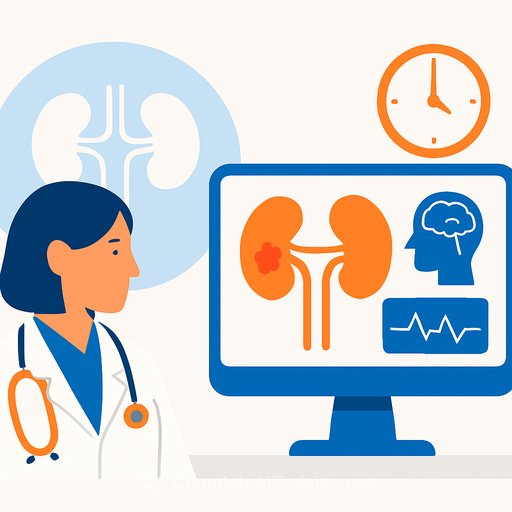
Researchers at the University of Tartu, together with radiologists from Tartu University Hospital and engineers at Better Medicine, built an AI assistant that speeds up kidney cancer detection on CT scans. The tool, called BMVision, was validated in a study published in Nature Communications Medicine and is now being integrated into routine workflow at Tartu University Hospital.
The goal is straightforward: help radiologists catch malignant and benign renal lesions earlier and measure them more consistently, including on scans performed for unrelated reasons like trauma or abdominal pain.
Why this matters
Radiology demand keeps rising while the number of radiologists does not. That strain shows up in reporting times, backlogs, and variation across readers. Tools that reliably assist interpretation can reduce pressure and improve consistency without removing the radiologist from the loop.
What was built
BMVision analyzes contrast-enhanced CT images and flags potential renal lesions, providing measurements and visual guidance. It's meant to act as a second set of eyes so clinicians can move faster on the cases that truly need attention.
How it was validated
The team ran a retrospective study at Tartu University Hospital. Six radiologists each read 200 abdominal CT scans twice-once unaided and once with AI assistance-yielding 2,400 readings. The study compared multiple clinical indicators: diagnostic sensitivity, tumor measurement accuracy, reporting speed, and inter-radiologist agreement.
Results were clear. With AI, the time to identify, measure, and report malignant lesions dropped by roughly one third. The assistant supported faster, more reliable reads while keeping the radiologist in control.
Clinical perspectives
"This study adds to the growing body of evidence that modern AI tools developed in research labs can make a real impact in clinical practice and support doctors in their daily work. We are very encouraged by these results, which show that AI research in medicine is not only meaningful, but it can truly be used for good," said Associate Professor in Artificial Intelligence and co-founder of Better Medicine, Dmytro Fishman.
Professor of Radiology at Tartu University Hospital, Dr Pilvi Ilves, noted that the AI assistant may improve diagnostic quality and enable earlier detection. "While the solution has so far been used at Tartu University Hospital only for research purposes, it is now being integrated into the clinical workflow. In the future, all abdominal CT scans performed at our hospital will be processed through BMVision."
Regulatory status and availability
Better Medicine obtained a CE marking for BMVision, confirming compliance with environmental, health, and safety standards in the European Economic Area. This makes it the first AI tool available on the market that helps detect kidney cancer early and assess it more accurately.
- Journal reference: Nature Communications Medicine (link)
- About CE marking for medical devices: European Commission (link)
What healthcare leaders can do next
- Run a pilot: Select representative abdominal CT workflows (including incidental findings) and measure reporting time, sensitivity, and inter-reader agreement with and without AI.
- Plan integration: Map PACS/RIS connectivity, image routing, and governance for AI outputs (e.g., overlays, measurements) to avoid workflow friction.
- Define guardrails: Set policies for acceptance/rejection of AI findings and escalation criteria for complex cases.
- Track outcomes: Monitor turnaround times, adherence to follow-up recommendations, and stage at diagnosis for incidentally detected renal masses.
- Train the team: Short, case-based sessions help radiologists and residents understand strengths, limits, and failure modes.
If you're building AI capability across your clinical or research teams, these curated resources can help: AI courses by job role and AI Research Courses.
Source: University of Tartu, 22.12.2025
Your membership also unlocks: